
Asesinitos


The news was saying the world was getting “interdependent” thanks to private meetings between leaders and tycoons in Switzerland. Me? Back then, I was a reporter for an independent station, and I started following the trail.
“Can you believe this, Rodrigo?” a colleague said to me as we sipped coffee in an empty Bogotá bar. “Nobody talks about national politics anymore. Everyone just parrots what those guys say at the World Economic Forum.”
It was 2031, and even if it sounded like cheap conspiracy theory, there were hard facts: scheduled blackouts in multiple cities “for maintenance,” movements of private troops in Africa and South America, and the opening of some mysterious complex on the Moon’s far side.
Governments denied everything… until the first full moon night, millions of us saw it live: a white, liquid portal opening over the Sea of Tranquility, and from it emerged a silhouette over four meters tall, clad in black armor and a cloak made of smoke.
They called him the Dark Lord. But what came next erased any attempt to name him.
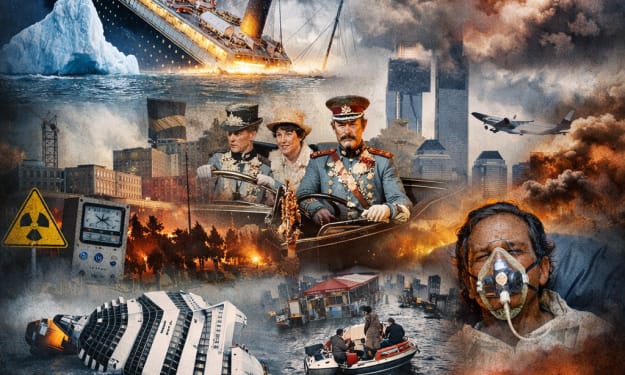
Within hours, the planet went blind. The global power grid collapsed like someone flipped a switch. No internet, no radio, no satellites. Planes fell like flies. Cities filled with screams and sirens that slowly faded to silence.
Then came the catastrophes: tsunamis that wiped out entire coasts, earthquakes that split capitals in two, volcanoes roaring where geological records showed none should exist. Survivors were marked—not with fire or tattoos, but with absolute fear.
The Dark Lord’s mercenaries appeared in every country. They weren’t regular humans: their eyes glowed like burning coals, their voices had a metallic echo. They claimed to carry “the spirit of the eternal army.”
They separated adults from children. Those kids were dragged to forced recruitment zones, naked as a symbol of submission. The ugliest were the most valuable: hosts for a new demonic race.
It was in that hellscape that I first heard of the “Little Assassins Squad.”
Behind a burned-out school in a forgotten Medellín neighborhood, four figures crouched.
Albita, fifteen, dark-skinned with piercing eyes, was breathing fast, covering her tiny mosquito bites with her dark hair, though traces of dried menstrual blood marked her vulva.
Pedrito, barely ten, clung to Albita’s leg like a lifeline.
Camila, eleven, had singed hair and a dirty face.
And Josefino, seventeen, tall, lean, with a fresh scar on his forehead, shouted at them:
“We’re not giving up! If they’ve got an army, we’ll have ours… small, fast, lethal. We’re hitting Don Bernal’s gun shop! It’s empty since he ran.”
“What if they catch us?” Camila asked, swallowing hard.
“They detect any kind of fabric touching skin.”
“But…”
“I’m fine like this. It’s hot anyway. But yeah, I’m scared of getting caught. They say only the ugly survive.”
“Then we take a few with us,” Josefino replied. There was something in his gaze now—not teenage, but warrior.
They crossed smoky streets, dodging mercenary patrols dragging prisoners. Pedrito murmured:
“I saw one of them swallow a lamplight… like soup.”
“That’s why we gotta kill ‘em fast,” Albita said. “Before they see us.”
In the shop they found two old revolvers, a shotgun, and limited ammo. Not war-grade, but enough for what they had in mind: ambush a patrol, free the captured kids, and vanish into the mountains.
The ambush hit at dawn. They hid among rubble, breathing smoke and fear. When the armored vehicle rolled past, Josefino fired first, blowing out the front tire. Camila and Pedrito ran to open the back while Albita covered them with the shotgun.
Of the three mercenaries, two went down. The third—a giant with a left eye glowing red like lava—almost caught Pedrito… until Albita shot him point-blank. The body disintegrated into a black cloud screaming like a hundred voices.
They freed six kids. One, nine years old, kept repeating:
“The portal… the portal… they’ll open it again at the next moon.”
The Little Assassins didn’t fully understand what that meant, but they knew one thing: if the Dark Lord crossed again, there’d be no planet left to save.
That night, hiding in an abandoned warehouse, Josefino raised his gun and said:
“We won’t die as victims. We’re gonna be a legend.”
And that’s how the story of the smallest… and deadliest squad in the world began.
The sky was burned. No stars, only a deformed moon, cracked and bleeding black light. On Medellín’s main avenue, the pavement was littered with bones and scrap. In the shadows, the demons advanced. Two hundred hunched figures, skin like scorched leather, mouths too wide, teeth long and wet.
Albita raised the shotgun and looked at her team.
“Remember what we saw in Seven Samurai… form barriers, split the enemy.”
Josefino nodded.
“And what they did in Saving Private Ryan: shoot, fall back, cover each other.”
Camila barely smiled.
“What if it doesn’t work?”
Pedrito, revolver shaking in his hand, said:
“Then we do Terminator… and don’t stop until nothing’s left.”
The demons roared in unison, a deep sound that rattled broken windows. They charged like a starving pack.
Albita fired first, taking down one crawling on all fours. Josefino threw an improvised grenade made from a bottle and gasoline: fire devoured six creatures, but twenty more ran over the burning bodies without slowing.
Camila climbed the roof of a flipped bus, shooting down at eyes. Pedrito crouched behind a ruined wall, reloading with trembling hands.
“Defensive circle!” Josefino shouted.
Back-to-back, they spun, shot, and struck. Demons fell, others climbed over bodies, claws tearing flesh like paper.
One demon threw Albita against a post, breaking her lip and nearly dislocating her shoulder. Still, she raised the shotgun and blew the attacker’s head off.
Camila took a deep thigh cut; blood soaked her leg, but she kept firing, screaming like the pain fed her.
Josefino’s left forearm dangled, opened to the bone, but his right hand swung a rusty machete cutting black tendons.
Pedrito, the smallest, got clawed in the back; he screamed, but stabbed the demon attacking him in the neck with a kitchen knife.
The Little Assassins were exhausted. The circle tightened. The creatures roared, drooled, stretching claws like hooks.
Albita gasped.
“We’re not getting out of this.”
Josefino, with a half-bloody smile, said:
“Sure we are… we’re not dying today.”
Then a crash: broken bottles, broomsticks, human screams.
From the shadows emerged a group of naked adults, dust and scars covering their bodies. No firearms, just splinters, rusty pipes, chains, and shards of glass. Sweat and rage glistened on them.
“For the free earth!” they shouted, charging the demons.
The street became a whirlwind of violence. One adult bit a demon’s ear off. Another, with a broken bottle, slit a creature’s belly, releasing a foul smoke. The kids, seeing the chance, joined in.
Pedrito shot point-blank. Camila stabbed knees to immobilize. Albita, shotgun empty, used the butt as a hammer. Josefino, machete in hand, decapitated one of the leaders.
One by one, demons started retreating. Roars turned to shrieks. The few left fled into darkness, dragging their fallen comrades.
The air smelled of blood and hot iron. Adults leaned against walls, gasping.
“We’re not free yet,” one said, face streaked with soot. “More are coming.”
Albita looked at her companions, all hurt, all soaked in black and red blood.
“Then let’s heal fast,” she said, “’cause tomorrow… we hunt them.”
The adults nodded. And in the Little Assassins’ eyes, despite pain and fear, burned something stronger: the certainty they could still win.
Ten years later…
The world had no cities, no borders, no money.
What was left of humanity lived in huge camps over deserts where oceans once were. No electricity, no satellites, nothing the Dark Lord could control.
Only what he hadn’t destroyed: free human bodies, and a ferocious drive to repopulate the Earth.
Albita, now twenty-five, was the youngest and most respected commander of the Free Army. Sitting on a rock, nursing her two kids, she faced a line of new recruits awaiting orders. All were naked, as the resistance tradition dictated: a sign that they could hide nothing, their bodies a banner.
“…And we started as four kids,” she said, voice hoarse but firm. “Four against two hundred demons. And we didn’t just survive… now we’re millions. We’ve inspired all of humanity to fight back.”
A murmur of approval ran through the crowd. She raised her hand for silence.
“And here’s the good news: Josefino and my team are closer than ever to taking a rocket and heading into the final fight—straight to the lunar portal. This war’s about to end…”
A shout cut the air:
“You’re crazy, old bitch!” a deep voice roared.
From the crowd, a man twisted, skin tearing open, revealing black scales and glowing eyes. An infiltrating demon. But before he could strike, ten million naked humans swarmed him like a living wave, beating him with sticks, stones, and bare hands until his body was reduced to burning dust carried off by the wind.
The entire desert roared in unison:
“The Earth is ours! Go back to hell!”
Albita smiled, stroking her child’s head as she spoke:
“All we want is a place to breed and have fun… and we won’t stop until we get it.”
Thousands of kilometers away, deep on the Moon’s far side, the Dark Lord watched Earth from his obsidian throne. His claws drummed on stone.
“Let them breed,” he murmured. “More bodies for my next army.”
And he began plotting another attack, one that wouldn’t come from the sky… but from beneath the Earth.
The desert camp burned under the sun as Josefino gathered the improvised engineers. For months they’d worked in secret, melting scrap, assembling solid-fuel engines, recycling parts from downed planes. No blueprints, just grit and the need to win.
Pedrito, now twenty with a leather eye patch, tightened fuselage bolts as sweat and grease ran down his face. Camila, arms scarred, welded the heat shield by hand, sparks lighting her eyes like fire.
“If this doesn’t survive reentry, we die before seeing the bastard,” she said, wiping her brow.
“Then it better survive,” Josefino replied, tapping the rocket’s hull. “We didn’t get this far to fail now.”
The launch was at dawn. Ten million naked humans surrounded the makeshift runway, singing and yelling as if each voice pushed the ship skyward. Albita, children by her side, looked at Josefino and yelled:
“Bring back his head for a trophy!”
Josefino grinned.
“Better… a bigger prize.”
The rocket tore through the atmosphere in a storm of fire and screeching metal. On reaching the Moon, the portal glowed like a liquid ocean hanging in the void. Josefino, Pedrito, and Camila landed armed: Pedrito with an automatic knife, Camila with an iron chain, Josefino with his rusty machete—the same one from the first battle.
The Dark Lord waited. Bigger than ever, horns like spears, tail whipping the air, kicking up clouds of lunar dust.
“Little insects… came to my throne,” he roared.
“We came to end the plague,” Josefino replied.
The fight was a whirlwind. Pedrito dodged swipes, lunging at the monster’s legs with the automatic knife, trying to pierce tendons. Camila spun around, entangling the Dark Lord’s tail in her chain to immobilize it.
Josefino, sweating, gasping, charged with the machete. The rusty blade sliced through one horn with a dry snap. The roar shook the ground.
Victory wasn’t instant: the monster grabbed Josefino by the neck, lifting him off the ground. Air was gone. Vision blurred.
“I’ll break you,” the Dark Lord growled.
Before he could, Camila seized the moment. She ran, climbed the monster’s back, and with the same tail she had trapped, strangled the Dark Lord. She clung with all her might as he writhed, scratching lunar dust.
Pedrito, knife in hand, plunged the blade into the demon’s glowing chest.
The final roar was like thunder in the void. The Dark Lord’s body collapsed, and a warm, clean light poured from the portal, consuming him in seconds until only floating ash remained.
When the three returned in the rocket, Earth greeted them with a sea of bodies and screams. Men, women, children danced on the sand, free for the first time in over a decade.
Albita ran to them, tears streaming down her cheeks.
Josefino staggered off the ship and she hugged him tight, bodies pressed, breathing the same air as if for the first time in years.
Camila and Pedrito joined the embrace. They laughed, cried, kissed the foreheads of the survivors.
Improvised drums and voices filled the desert. Amid the fire of bonfires, Albita and Josefino locked eyes with an intensity that needed no words.
“Promise me we’ll never be apart again,” she said.
Josefino, still hand on the machete, whispered:
“I promise… to stay, and build a world where we can have fun forever.”
She kissed him, deep, salty with tears and warm with triumph. The rest of the camp celebrated—dancing, hugging, fucking, others kissing—as if the end of the world had finally been defeated.
Under the stars, with no portals or looming shadows, humanity began to repopulate its space.
About the Creator
Stephen Betancourt
poems have different melodies, which shapes their theme; they are meant to be read soft or in a strong voice but also as the reader please. SB will give poetry with endless themes just to soothe and warm the heart.
Keep reading
More stories from Stephen Betancourt and writers in Earth and other communities.
Recycle Planet
In the distant cosmos, on a lonely planet devoid of life, the ethereal beauty of the celestial realm painted a canvas of solitude. It was a desolate place, with arid landscapes stretching as far as the eye could see, devoid of the vital essence of life: oxygen. The atmosphere was thin, its precious breath virtually nonexistent.
By Stephen Betancourt2 years ago in Earth
No Word Comes Near Enough
The English language has its limits. I learned this when I became a student of the Bible and looked up the Greek and Hebrew definitions behind the Scriptures I loved. Some languages have so much more depth and power than the one I use to convey my thoughts. But, even so, I don't think any word could ever come close to describing this void and pain I am journeying through. I don't know how to swim through its murky waters.
By Shirley Belk4 days ago in Poets



Comments
There are no comments for this story
Be the first to respond and start the conversation.