
Are You a Philocalist Too?
Someone who finds beauty in everything


I go on daily nature walks, irrespective of seasons. It's my therapy, antidepressant, and dopamine kick.
I feel sad and anxious, if I can't go to nature, due to personal reasons or hostile weather conditions..
The honeybees on clover, the rosemary scent, the senescing leaves of Indian hawthorn, the soaring swallows, the tangerine sunsets..
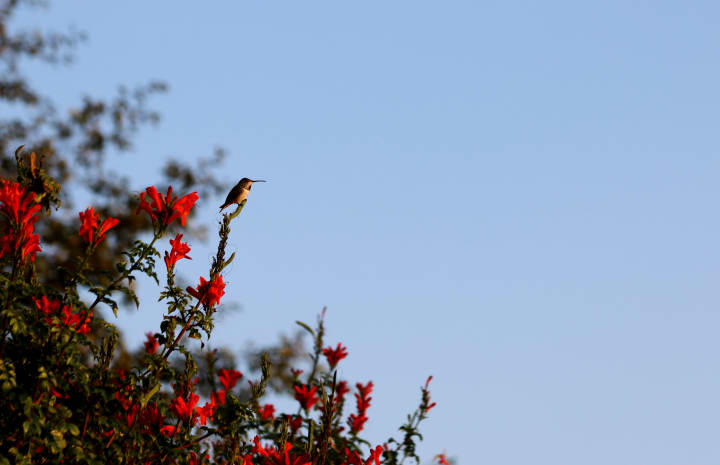
The lungful of fresh air, the emerald plumage of hummingbirds, the backlit sycamore, the rising moon, the yellow blossoms of palo verde…
The floating clouds, the smell of gardenia, the surreal fog, moss on a rock, a chrysalis, amber oozing from a tree trunk, dandelion seed-head, the petrichor aroma, shrill sound of crickets..
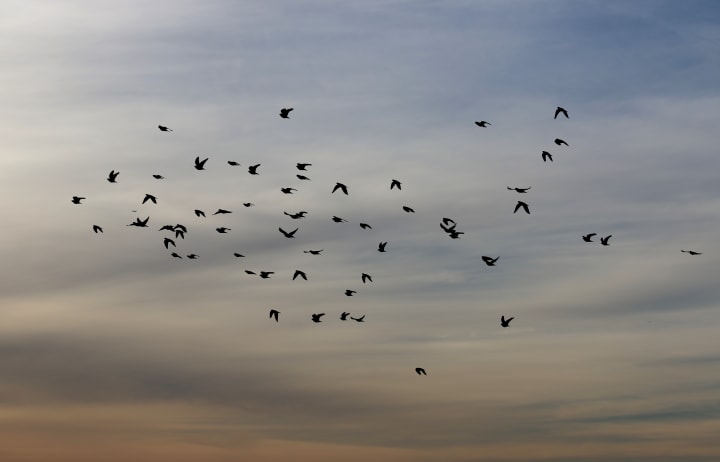
Above things make me so joyous. I feel enchanted, even delirious.
The other day, I was out on a neighborhood nature walk with my kids. As usual, I noticed everything with mindfulness. It was magical. Happiness was flooding through my body. I felt enriched.
I turned to my child and asked, "Why do I find beauty in everything? Is this a thing? Do other people feel so?"
Back home, I searched the internet to see if there was a word for people like me - those who find endless beauty in the natural world.
And yes, there is a term! I discovered that those who appreciate beauty in all things are called philocalists.
Let's break down this Latin word. Philo means "loving," and kallos (or cali) means "beauty."
Isn't that fascinating? I'd never heard this word before, but I instantly understood it. What a lovely word - philocalist!
I believe being a philocalist is good for our well-being. It's a form of gratitude. A form of mindful living. It's saying without saying, I feel privileged to be alive and getting to experience this wonderful world.
In modern hectic life, people are too busy to appreciate nature. They commute at sunrise and sunset, and spend the day in enclosed spaces, where the air is scented and the light is harsh. It's truly unfortunate and deeply regrettable.
Any culture that values nature tends to live a more contented and balanced life.
In Japan, for example, haiku are short poems that depict the subtle beauty of nature. Here's one by the famous poet Matsuo Bashō:
The old pond -
a frog jumps in,
the sound of water.
How beautiful is that? Our souls need the embrace of nature, for it was our cradle in our long path of evolution.
The eminent writer Tolstoy believed that living in harmony with nature was crucial for fulfillment.
Even the great scientist Albert Einstein said:
"Look deep into nature, and then you will understand everything better."
It's true -
As I observe things unfolding in nature, my brain begins to trace patterns.
Often, these insights resolve my doubts and dilemmas about life's complexities.
For example, I saw a tree that was tilted by gusty wind. I had both blossoms and senescent leaves at the same time.
It quietly said to me:
"You can be exhausted, yet you can bloom."
"You can carry both joy and sorrow in the same moment. Just like that tree, you can have blossoms (happiness) and withering leaves (grief) all at once.
Nobody teaches wisdom like nature does.
So, let's sculpt a lifestyle that leaves room for nature exploration. When you step outside, let your focus be on nature.
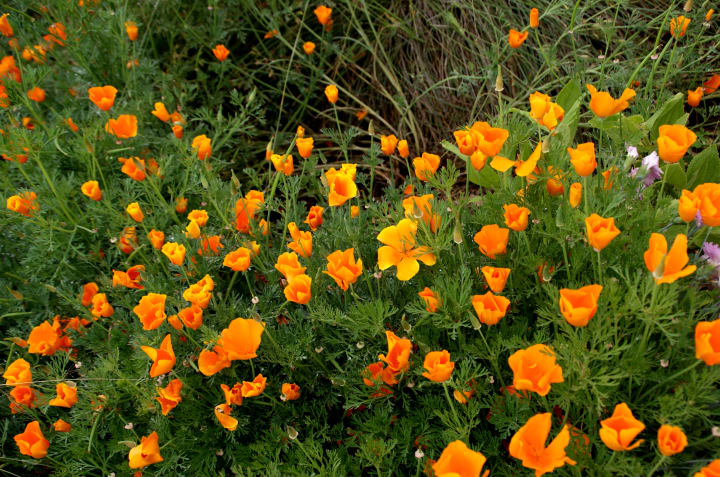
Notice…
the dew-studded cobweb,
the mushroom poking out of mulch,
the mourning dove blending into the tree bark
the mistletoe cluster hanging from the sycamores…
All of it is waiting to be seen - if only we slow down enough to look.
Are you a philocalist too? I suggest you to, be one.
As artist Rembrandt said "Choose only one master - nature."
Let me know your thoughts.
About the Creator
Seema Patel
Hi, I am Seema. I have been writing on the internet for 15 years. I have contributed to PubMed, Blogger, Medium, LinkedIn, Substack, and Amazon KDP.
I write about nature, health, parenting, creativity, gardening, and psychology.
Keep reading
More stories from Seema Patel and writers in Earth and other communities.
Inside Trump's $11 Billion Health Plan to Replace “Neo-Colonial” USAID
In the landscape of global health aid, few proposals have stirred as much debate as former President Donald Trump’s ambitious plan to restructure American assistance abroad. Dubbed an $11 billion health initiative aimed at replacing USAID’s current framework, the plan seeks to pivot away from what Trump and his allies have criticized as the “neo-colonial” approach of U.S. foreign aid. While the plan promises greater efficiency and impact, experts are split on whether it is a practical solution or a politically driven gamble. Trump’s Critique of USAID The United States Agency for International Development (USAID) has long been a central pillar of American foreign assistance, distributing billions in aid annually to address health crises, food insecurity, and development challenges worldwide. However, Trump’s administration and its supporters have often described USAID’s approach as bureaucratic, inefficient, and reflective of a “neo-colonial” mindset. In public statements, Trump argued that the U.S. was spending taxpayer dollars on programs that benefited foreign governments or contractors more than the intended local communities. Critics of the plan say that while USAID has flaws—as any large bureaucracy does—its extensive networks and decades of experience provide an unmatched capacity to deliver aid efficiently and safely. The Core of the $11 Billion Proposal At the heart of Trump’s proposal is an $11 billion fund designed to consolidate, modernize, and streamline U.S. health aid. Unlike the traditional USAID model, which relies heavily on long-term partnerships with governments and NGOs, the new plan emphasizes: Direct Impact Funding: Allocating resources to frontline health workers and local initiatives rather than intermediaries. Data-Driven Investments: Using real-time health data to target outbreaks and crises more efficiently. Private Sector Partnerships: Leveraging U.S. pharmaceutical companies, tech firms, and healthcare startups to deliver vaccines, treatments, and medical infrastructure. Shorter Program Cycles: Moving away from multi-year funding commitments in favor of more flexible, results-oriented programs. Proponents argue that this approach could reduce bureaucratic overhead and ensure U.S. aid reaches communities faster. By “cutting out the middlemen,” Trump supporters claim, America can avoid the pitfalls of slow-moving aid programs that sometimes fail to adapt to crises. Reactions from the Global Health Community Global health experts, however, have expressed concern about both the logistics and philosophy of the plan. Dr. Melissa Ortega, a senior researcher at the Global Health Policy Institute, explained, “The idea of bypassing established structures like USAID may sound appealing on paper, but in practice, it risks undermining decades of institutional knowledge. Health systems are complex, and short-term projects cannot replace long-term capacity building.” Some critics have also questioned the characterization of USAID as “neo-colonial.” While U.S. foreign aid has historically been tied to geopolitical interests, many programs today are designed collaboratively with recipient countries and local organizations. Reducing oversight could unintentionally increase the risk of misuse, corruption, or health inequities. On the other hand, supporters of Trump’s plan point to examples of inefficiency in USAID programs, citing cases where aid was delayed or mismanaged. By introducing more direct funding models, they argue, U.S. taxpayer dollars could achieve a higher “return on health outcomes.” Political Implications Trump’s health aid overhaul proposal is not just about international development—it is also deeply political. Framing USAID as a “neo-colonial” institution resonates with a populist narrative that America should prioritize its own citizens and assert greater control over how taxpayer money is spent abroad. Domestically, the $11 billion plan faces scrutiny from Congress. Lawmakers from both parties have questioned whether dismantling USAID’s systems could destabilize ongoing health programs in countries where the U.S. has long-term commitments. The potential impact on global health security—including the fight against pandemics like COVID-19—adds another layer of concern. Internationally, U.S. allies and partner nations are watching closely. Sudden shifts in aid delivery could disrupt health programs in low- and middle-income countries, many of which rely on predictable funding cycles to maintain vaccination campaigns, maternal health services, and disease surveillance. Possible Benefits and Risks If executed carefully, the Trump-backed model could bring several benefits: Faster Response Times: Direct funding could accelerate delivery of vaccines, treatments, and emergency support. Innovation Boost: By partnering with private sector companies, the plan could accelerate development of new health technologies. Accountability: With performance-based metrics, the plan may better measure the impact of U.S. aid. However, the risks are equally significant: Disruption of Existing Programs: Abrupt changes could destabilize ongoing health projects. Loss of Expertise: USAID’s decades of experience in navigating local governance, supply chains, and community engagement may be hard to replace. Geopolitical Fallout: Allies accustomed to collaborating with USAID might see the move as destabilizing, reducing cooperation on global health initiatives. Looking Ahead As Trump and his allies continue to advocate for this $11 billion overhaul, the debate over the future of U.S. health aid is intensifying. Proponents view it as a necessary modernization of an outdated system, while critics fear it could undercut decades of carefully built infrastructure and global partnerships. Ultimately, the success of this plan will hinge on its ability to balance efficiency with stability, innovation with oversight, and political objectives with humanitarian needs. For now, the proposal remains controversial, representing a dramatic departure from traditional approaches to U.S. foreign aid. Whether it will reshape global health for the better—or simply create more uncertainty—remains to be seen. In the end, the Trump health plan is as much about ideology as it is about dollars. It challenges the conventional wisdom of international development and asks whether a more streamlined, results-focused approach can truly replace a system built over decades. As the world watches, the stakes could not be higher: the future of U.S. global health aid—and the lives it touches—hangs in the balance.
By Muhammad Hassan3 days ago in Earth
Nitrogen is necessary for young tropical rain forests to combat climate change.
By absorbing carbon dioxide from the atmosphere and storing it in wood, tropical rainforests contribute to the slowing of climate change. Forests that develop quickly are even more important because they absorb carbon more quickly.
By Francis Dami2 days ago in Earth



Comments
There are no comments for this story
Be the first to respond and start the conversation.