
Are We Alone? Exploring the Evidence and Mysteries of Alien Life
From Mars and mysterious radio signals to UFO sightings and Pentagon reports — here’s what we really know about aliens.


📌 In this article you’ll discover:
🌌 Why scientists believe life beyond Earth is possible
🔭 Famous cases like Roswell, Phoenix Lights, and Rendlesham Forest
📡 Strange signals from space — including the famous “Wow! Signal”
🚀 NASA’s search for habitable worlds and missions to Mars, Europa, and beyond
📖 Religious and philosophical views on extraterrestrial life
❓ Why discovering aliens could completely change our future
Are We Alone? The Search for Aliens and the Signs We Cannot Ignore
Since the beginning of time, humans have looked up at the night sky and wondered: Are we really alone in this vast universe? The stars, galaxies, and endless mysteries above us have always sparked curiosity. Today, with modern science, technology, and some strange unexplained events, that question feels more important than ever.
---
The Science Behind the Search
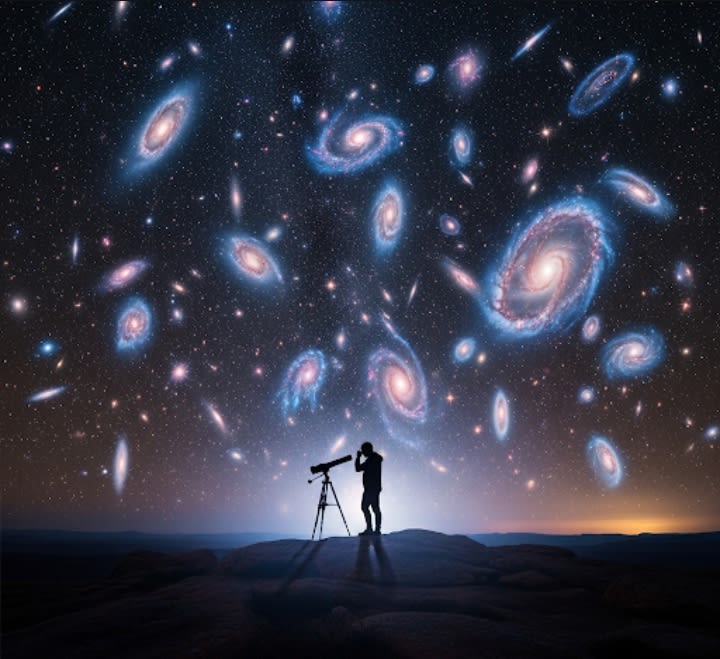
Astronomers estimate that there are more than two trillion galaxies in the observable universe, each containing billions of stars and planets. Logically, it feels almost impossible that Earth is the only place with life. Scientists at NASA and other research institutions actively search for planets in the "habitable zone"—places where water can exist and life could survive.
Mars: NASA rovers have discovered evidence of ancient riverbeds and possible underground water. Life may once have existed there—or still might, in microbial form. The discovery of methane bursts on Mars, which could be linked to biological activity, has only deepened the mystery.
Exoplanets: Telescopes like Kepler and James Webb have found thousands of planets orbiting distant stars. Some are similar in size to Earth and exist in conditions where liquid water is possible. For example, Kepler-452b has been called “Earth’s cousin,” sparking debates about its potential habitability.
Mysterious Signals: In 1977, astronomers detected a strange radio signal now known as the “Wow! Signal.” It lasted only 72 seconds, but to this day, no one can explain its origin. More recently, fast radio bursts (FRBs) from deep space have puzzled scientists, leading some to wonder if they could be signs of advanced technology.
---
Famous Cases and Encounters
Stories of alien encounters have fascinated the public for decades. Some became legends, others serious subjects of investigation.
The Roswell Incident (1947): A mysterious crash in New Mexico led to endless theories. While the U.S. government said it was a weather balloon, many still believe it was an alien craft. Books, movies, and documentaries continue to keep the Roswell mystery alive.
The Phoenix Lights (1997): Thousands of people in Arizona reported seeing massive, silent lights hovering in formation across the night sky. Witnesses included pilots, police officers, and regular citizens. To this day, many remain convinced it was not of human origin.
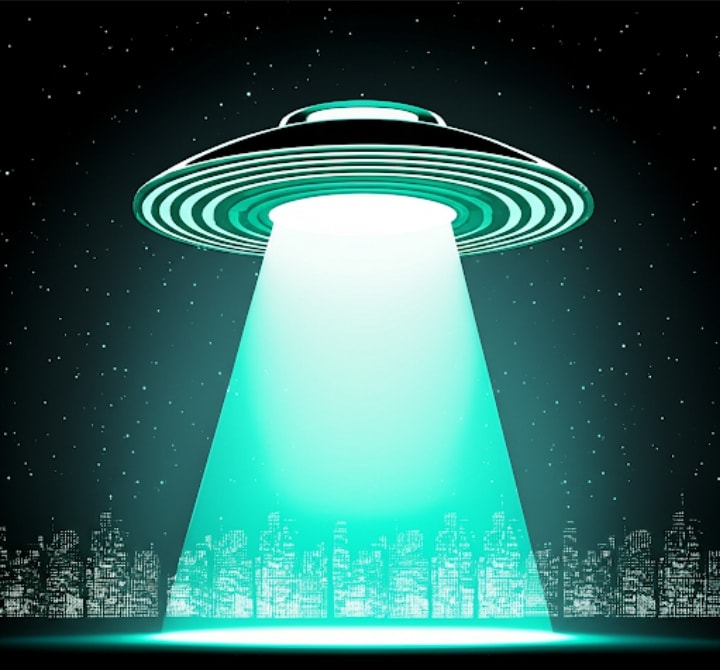
Pentagon’s UAP Reports (2017–2020): The U.S. government released real videos showing “unidentified aerial phenomena” moving in ways current human technology cannot explain. Even top Navy pilots admitted they had no idea what they were chasing. The Pentagon later confirmed that they still cannot explain these objects.
The Rendlesham Forest Incident (1980): Often called "Britain’s Roswell," several U.S. Air Force officers reported strange lights and even touched a glowing craft. They described seeing symbols on the object that resembled hieroglyphs.
---
The Academic and Scientific Angle
Not all scientists dismiss these possibilities. Harvard professor Avi Loeb suggested that an object named ʻOumuamua, which passed through our solar system in 2017, might not have been a natural asteroid, but potentially an alien probe. His theory sparked worldwide debate and gave scientific weight to the conversation.
Meanwhile, NASA continues searching for biosignatures—chemical signs of life—on distant planets and moons. Europa (a moon of Jupiter) and Enceladus (a moon of Saturn) both have subsurface oceans, making them top candidates for extraterrestrial life. The upcoming Europa Clipper mission will search for chemical fingerprints of life in its icy crust.
SETI (Search for Extraterrestrial Intelligence) scientists constantly monitor radio waves from space, hoping to catch signals from intelligent civilizations. While nothing conclusive has been found, the sheer scale of the universe gives many hope.
---
Belief Systems and Philosophy
Throughout history, religions and philosophies have also touched upon life beyond Earth. For example:
Some Islamic scholars point to Quranic verses describing countless worlds as possible hints that life may not be limited to Earth.
Ancient cultures, from the Mayans to the Sumerians, often described “sky beings” or visitors from the heavens.
In modern philosophy, many thinkers argue that finding extraterrestrial life would challenge humanity’s self-image and force us to rethink our role in the cosmos.
These ideas, while not scientific proofs, show that humanity’s curiosity about other beings is not new—it is ancient.
---
Why This Matters
The discovery of extraterrestrial life, even if it is just bacteria on Mars, would completely change how we see ourselves. It would prove that life is not a miracle limited to Earth, but a natural outcome of the universe.
And if intelligent life exists somewhere out there? That would raise deeper questions: Would they be peaceful explorers—or advanced civilizations far beyond our imagination? How would humanity respond? Would governments reveal the truth, or keep it secret for fear of chaos?
The search also brings practical benefits: studying other planets helps us understand climate change, planetary systems, and even the possibility of humans one day living on other worlds.
---
The Ongoing Mystery
Despite decades of research, sightings, and speculation, we still don’t have a definitive answer. Some believe governments already know more than they admit, while others think we are simply on the edge of a groundbreaking discovery.
Astronomer Carl Sagan once said: “The universe is a pretty big place. If it’s just us, seems like an awful waste of space.” This idea continues to inspire new generations of scientists, writers, and dreamers.
---
Conclusion
Right now, we don’t have proof that aliens are visiting Earth, but we do have compelling signs that we might not be alone. From unexplained lights in the sky to signals from deep space, and from ancient mysteries to modern science, the question remains alive.
Maybe one day, we’ll finally know the truth. Until then, the mystery of aliens will continue to inspire science, stories, and the endless human imagination. The search for extraterrestrial life is more than a scientific project—it is a reflection of our deepest curiosity and our desire to understand our place in the cosmos.
About the Creator
AngelFace
✨ “I share mysteries 🔍, stories 📖, and the wonders of the modern world 🌍 — all in a way that keeps you hooked!”
How Does a Wildfire Sprinkler System Work to Protect Homes from Advancing Fires?
Wildfires have become an increasing concern in many regions where dry vegetation, strong winds, and high temperatures create conditions that allow fires to spread quickly. Homeowners in wildfire-prone areas are now turning to proactive protection systems designed to reduce risk and improve property resilience. Among these solutions, wildfire sprinkler systems are gaining attention for their ability to defend structures before flames reach them.
By Brandon Honey4 days ago in Earth




Comments (1)
🌌 "If life truly exists beyond Earth, just imagine… how would they see us? 👽 Are we just an experiment for them, or friends of the future? Share your thoughts below ⬇️✨"