
Aquarium Nitrogen Cycle Explained (For Total Beginners)
The nitrogen cycle explained in plain English for first-time aquarium keepers.


Master the one process that determines if your fish live or die.
If you've ever wondered why fish die in brand-new tanks, or why experienced aquarists obsess over "cycling," you're about to learn the single most important concept in fishkeeping. The nitrogen cycle is the invisible biological process that determines whether your fish thrive or struggle.
It's not complicated. It's not scary. Once you understand it, you'll have the foundation for keeping any aquarium successfully.
Most beginner kits skip this entirely. They show you a tank, a filter, and some decorations, but they never explain the science that actually keeps fish alive.
This nitrogen cycle for beginners guide changes that. By the end, you'll understand exactly what is the nitrogen cycle in fish tank setups, why it matters, and how to establish it in your own tank.
What the Nitrogen Cycle Actually Is (Beginner Definition)
The nitrogen cycle aquarium process is nature's filtration system. Beneficial bacteria aquarium colonies convert toxic fish waste into less harmful substances.

Here's what happens: fish produce waste through breathing, pooping, and leftover food rotting in the tank. This waste breaks down into ammonia a chemical that's extremely toxic to fish. Even tiny amounts burn their gills, damage their organs, and cause serious health problems within days.
Your filter can't remove ammonia by itself. Mechanical filtration only catches solid particles. The real cleanup happens through biology.
Specific bacteria colonize your filter media, substrate, and decorations. These bacteria consume ammonia and convert it into other substances through a predictable chain reaction.
Cycling = the time it takes to grow enough beneficial bacteria to handle your tank's waste load. A cycled tank has established bacterial colonies processing waste continuously. An uncycled tank has no bacteria, meaning ammonia accumulates and harms your fish.
This is why new tanks are dangerous. They look clean and ready, but they're biologically empty. The bacteria haven't grown yet.
That's the real reason fish struggle in new setups, often called new tank syndrome explained simply as cycling a new aquarium without established bacteria. Understanding the aquarium nitrogen cycle is the first step toward preventing these issues entirely.
The 3 Stages of the Nitrogen Cycle (Simple Breakdown)
The fish tank cycle explained breaks down into three distinct stages. Each stage involves different bacteria converting one substance into another. Understanding these stages helps you recognize what's happening in your tank at any given time, with ammonia nitrite nitrate explained in order below.

Stage 1: Ammonia (Toxic)
Ammonia is the starting point and most dangerous substance in your aquarium. It appears from multiple sources.
Fish excrete it directly through their gills when they breathe. Solid fish waste breaks down into ammonia. Uneaten food decomposing at the bottom releases ammonia. Dead plant matter contributes ammonia as it decays.
If you use tap water treated with chloramine (a combination of chlorine and ammonia), water conditioner breaks the chloramine bond and releases ammonia into your tank. This is normal, but beginners often panic when they see ammonia readings right after filling their tank.

Ammonia is measured in parts per million (ppm):
- Above 0.25 ppm = fish start stressing
- Above 1 ppm = burns, organ damage, and serious health concerns
Fish in ammonia-contaminated water gasp at the surface, show red or inflamed gills, become lethargic, and lose their appetite.
The first beneficial bacteria, called Nitrosomonas, consume ammonia and convert it into the next substance in the chain.
Stage 2: Nitrite (Also Toxic)
Nitrite is what ammonia becomes after Nitrosomonas bacteria process it. While this conversion is progress, nitrite is still highly toxic to fish. It interferes with their blood's ability to carry oxygen essentially creating breathing difficulties even in well-oxygenated water.

Nitrite exposure causes fish to turn brown or purple at the gills, swim erratically, hang near the surface, and experience serious stress.
- Above 0.25 ppm = problematic
- Above 1 ppm = requires immediate attention
During cycling, you'll see ammonia drop and nitrite spike. This is the midpoint the most frustrating phase for beginners. It means the first bacteria have colonized, but the second type hasn't caught up yet.
The second beneficial bacteria, called Nitrobacter, consume nitrite and convert it into the final substance. The nitrogen cycle aquarium process depends entirely on both bacterial colonies working together.
Stage 3: Nitrate (Less Toxic)
Nitrate is the end product of the nitrogen cycle. It's far less toxic than ammonia or nitrite, which is why a cycled tank is safe for fish.
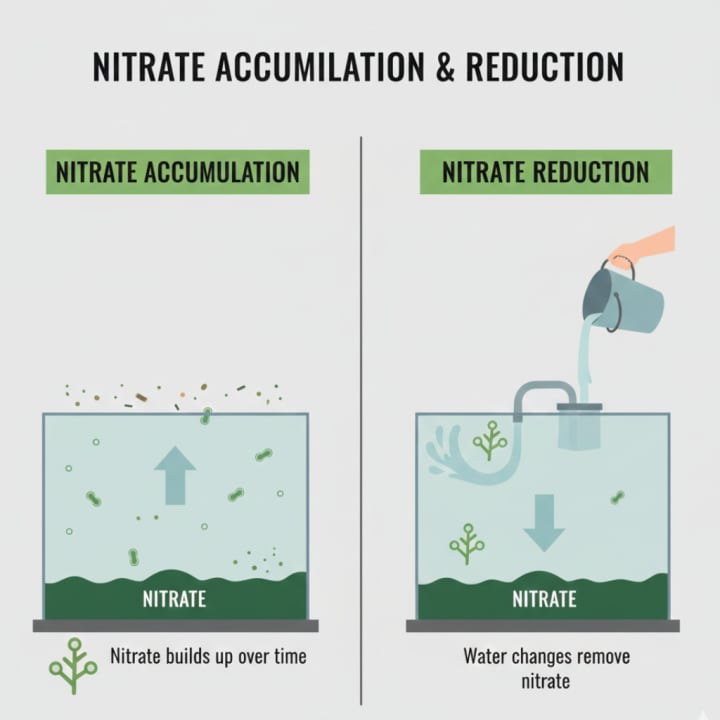
Most fish tolerate nitrate up to 40 ppm without issues, though sensitive species prefer below 20 ppm.
Nitrate doesn't disappear on its own it accumulates over time. This is why regular water changes are essential even in fully cycled tanks.
Every time you remove 25-30% of the water and replace it with fresh, dechlorinated water, you dilute the nitrate concentration and keep it in a safe range.
Some aquarium plants absorb nitrate as fertilizer, which helps keep levels lower naturally. This is why heavily planted tanks often have better water quality and require fewer water changes.
When your tank shows zero ammonia, zero nitrite, and rising nitrate—the aquarium nitrogen cycle is complete.
Where Beneficial Bacteria Actually Live
Understanding where bacteria colonize helps you maintain your cycle and avoid accidentally disrupting it.
Beneficial bacteria don't float freely in the water. They attach to surfaces and form colonies in specific locations throughout your aquarium.
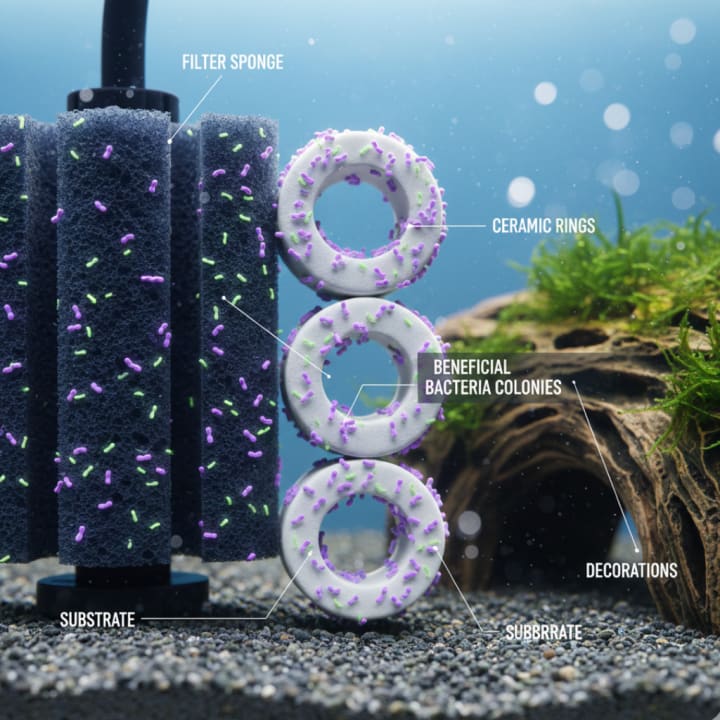
The majority live in your filter. Sponge filters, hang-on-back filters, and canister filters all provide massive surface area for bacterial growth. The sponges, foam pads, ceramic rings, and bio balls inside your filter are covered in billions of bacteria working continuously to process waste.
Your substrate (gravel or sand) is the second-largest bacterial colony. The spaces between substrate particles provide surface area and oxygen flow. This is why deep-cleaning your gravel with aggressive vacuuming can disrupt your cycle temporarily.
Decorations, rocks, driftwood, and artificial plants all harbor bacteria on their surfaces. Porous materials like lava rock or ceramic decorations are especially good they have microscopic holes that bacteria colonize.
Live plants host bacteria on their leaves, stems, and root systems. This contributes to overall biological filtration and is one reason planted tanks tend to be more stable.
The tank glass and walls have some bacteria, but it's minimal compared to the filter and substrate. Cleaning algae off the glass doesn't affect your cycle.
The water itself contains very few bacteria. This is why large water changes don't crash your cycle, as long as you don't disturb the filter media or substrate excessively.
How Long the Nitrogen Cycle Takes
Establishing the nitrogen cycle takes time because bacteria reproduce slowly. When people ask how long does aquarium cycle take, most tanks complete the cycle in 4-6 weeks under ideal conditions, though some finish faster and others take longer.

Several factors influence cycling speed:
Temperature matters significantly. Bacteria reproduce faster in warm water. Keep your tank between 75-80°F to accelerate the process. Cold tanks below 65°F can take months to cycle.
The ammonia source affects timing. Consistent ammonia levels feed bacteria growth. Inconsistent feeding or irregular ammonia addition slows the process.
Seeding your tank with established aquarium filter media from another cycled aquarium dramatically reduces cycling time. Adding a used sponge filter or handful of gravel from a healthy tank introduces mature bacteria immediately often cutting cycling time in half.
Bottled beneficial bacteria products can help, though quality varies. Some products contain the correct bacterial strains and genuinely speed up cycling. Others contain different bacteria species that don't perform the same function. Research products with verified Nitrosomonas and Nitrobacter strains.
pH stability matters more than most beginners realize. Beneficial bacteria thrive in pH between 6.5-8.0. Fluctuating pH stresses bacteria and slows reproduction. Consistent pH speeds cycling and helps establish a stable nitrogen cycle aquarium environment.
How to Know If Your Tank Is Cycling (Beginner Signs)
Recognizing cycling stages helps you track progress and understand what's happening in your tank. Watch for these signs:
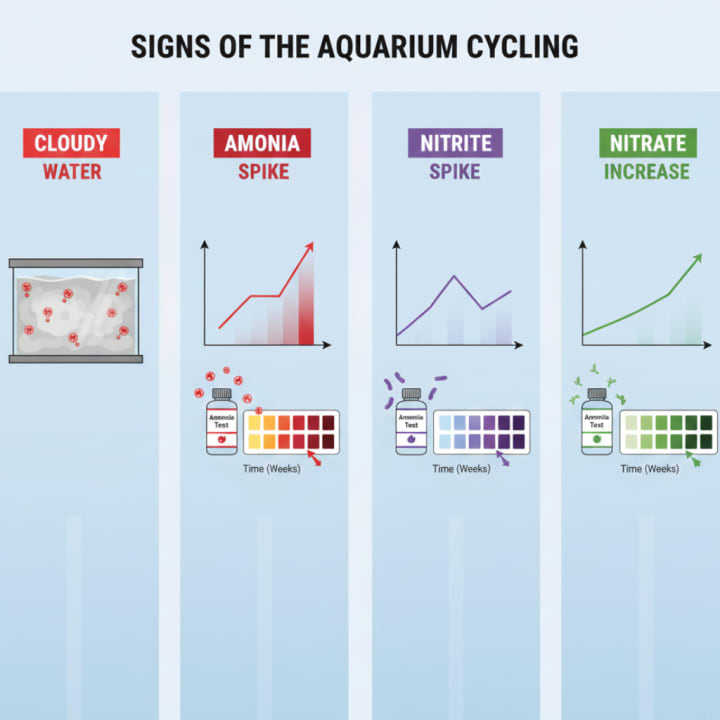
Cloudy water often appears during the first week. This bacterial bloom happens when heterotrophic bacteria (not the beneficial kind) multiply rapidly, feeding on organic material in the water. The cloudiness is harmless and clears on its own as these bacteria die off and beneficial bacteria take over. Don't do water changes to fix cloudy water it's normal.
Ammonia appears first. If you're testing daily, you'll see ammonia rise in the first few days, then plateau. This indicates waste is accumulating but bacteria haven't colonized yet.
After 1-2 weeks, ammonia drops and nitrite spikes. This is the cycle's midpoint. It means the first bacterial colony has established and is converting ammonia efficiently, but the second colony is still growing.
Nitrite eventually drops and nitrate rises. When nitrite falls to zero and nitrate climbs steadily, you're in the final stage. This usually happens around week 3-5.
Brown algae often appears late in the cycle. This brownish film on glass and decorations is diatom algae, which thrives in new tanks with fluctuating parameters. It's harmless and temporary. Once your cycle stabilizes, green algae typically replaces brown algae, and you can clean it normally.
The water clears completely once bacterial populations balance and cycling completes becoming crystal clear and staying that way with regular maintenance.
How to Test the Nitrogen Cycle
Testing is the only way to know where your tank stands in the cycling process. Without testing, you're guessing. If you're wondering do I need test kit for aquarium cycle, the answer is absolutely yes for accurate monitoring.

Liquid aquarium water test kit options are essential for accurate readings. Test strips are convenient but notoriously inaccurate, especially for ammonia and nitrite. The slight color differences between safe and concerning levels are difficult to distinguish on strips.
You need to test for three parameters: ammonia, nitrite, and nitrate. Most comprehensive test kits include all three, plus pH. Testing these parameters daily during cycling helps you track progress and identify problems early.
Understanding What Each Reading Means
Ammonia should read 0 ppm in a fully cycled tank. Any reading above zero indicates your bacteria can't keep up with waste production, or your cycle hasn't established yet. During cycling, ammonia might read between 2-4 ppm before bacteria colonize.
Nitrite should also read 0 ppm in a cycled tank. Readings above zero mean the second bacterial colony hasn't fully developed. During cycling, nitrite can spike to 5 ppm or higher before eventually dropping.
Nitrate readings should be detectable in a cycled tank, typically between 5-40 ppm depending on your stocking level and water change schedule. Rising nitrate while ammonia and nitrite stay at zero confirms your cycle is complete.
If nitrate never rises, something is wrong. Either your test kit is faulty, your bacteria haven't established, or you're not producing enough waste to complete the cycle.
Test your source water too. Some tap water contains ammonia, nitrite, or high nitrate right out of the faucet. Knowing your baseline helps you interpret tank readings accurately.
Fishless Cycle (Beginner Friendly Method)
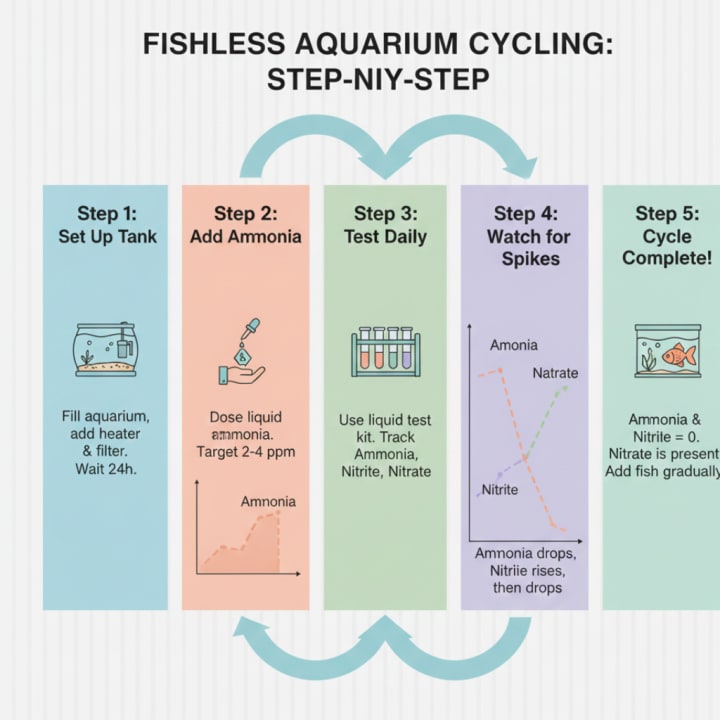
The fishless cycle step by step approach is the safest, most humane way to establish your nitrogen cycle. You grow bacteria without risking fish lives, then add fish once the tank is fully prepared.
Step-by-Step Process
1. Set up your complete aquarium. Add substrate, decorations, filter, aquarium heater, and fill the tank with dechlorinated water.
Chlorine and chloramine in tap water can harm beneficial bacteria, so always treat your water with a quality water conditioner for fish tanks before adding it to the tank.
2. Run your filter and heater continuously. Set the temperature between 75-80°F to encourage fast bacterial growth. Never turn off your filter during cycling bacteria need constant oxygen flow to survive.
3. Add an ammonia source to feed the bacteria. You have two main options:
Fish food method: Drop a small pinch of flake food into the tank daily. As it decomposes, it releases ammonia. Simple but less precise.
- Pure ammonia method: Use liquid ammonia from a bottle (make sure it's pure ammonia with no additives, soaps, or fragrances). Add enough to bring your ammonia reading to 2-4 ppm.
4. Test your water daily. Track the progression:
- Week 1: Ammonia rises and plateaus
- Week 2: Ammonia starts dropping as Nitrosomonas bacteria colonize
- Shortly after: Nitrite spikes as bacteria convert ammonia
- Week 3-4: Nitrite drops and nitrate rises as Nitrobacter bacteria establish
5. Continue adding ammonia throughout the process to keep feeding bacteria. If ammonia or nitrite drop to zero, add more ammonia to prevent your bacterial colonies from starving.
6. The cycle is complete when your tank can process 2 ppm of ammonia down to zero ammonia and zero nitrite within 24 hours. Test this by adding ammonia and checking levels the next day.
7. Do a large water change before adding fish to reduce accumulated nitrate to safe levels, typically below 20 ppm.
Fish-In Cycle (Emergency-Only Method)
The fish-in cycle happens when beginners unknowingly add fish to an uncycled tank. It's risky, stressful for fish, and requires intensive maintenance but sometimes it's unavoidable if you've already bought fish without knowing about cycling.
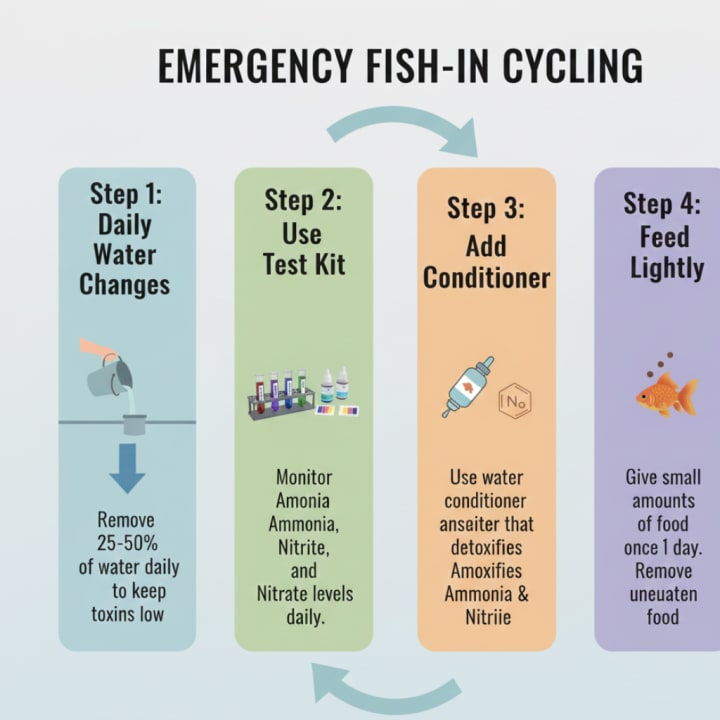
If you're in this situation, don't panic. Fish can survive fish-in cycling with careful management. The key is diluting toxins faster than they accumulate while bacteria grow.
Emergency Care Protocol
Perform daily water changes of 25-50% using temperature-matched, dechlorinated water. This is essential for maintaining water quality. Daily water changes physically remove ammonia and nitrite before they reach problematic levels.
Use a water conditioner that detoxifies ammonia and nitrite. Products containing chemicals that bind and neutralize these toxins provide temporary protection while bacteria establish. Read labels carefully—not all conditioners have this feature.
Feed very sparingly. More food = more waste = more ammonia. Feed your fish every other day with tiny amounts they can consume in one minute. Yes, this seems restrictive, but it's safer than overfeeding during this vulnerable period.
Test daily without exception. You need to know ammonia and nitrite levels at all times. If readings spike above 0.5 ppm, do an immediate water change.
Don't clean your filter media during cycling. The bacteria are trying to colonize, and cleaning disrupts this process. Leave the filter alone unless it's completely clogged and water flow has stopped.
Stock lightly. If you already have too many fish, consider temporarily housing some in a separate container or returning them to the store until your tank cycles. Fewer fish = less waste = better survival odds.
Fish-in cycling typically takes the same 4-6 weeks as fishless cycling, but it's far more labor-intensive and stressful. Many beginners lose fish during this process despite their best efforts, which is why fishless cycling is always the better choice when possible.
How to Speed Up the Cycle (Real Science Only)
While cycling takes time, several proven methods accelerate bacterial growth without compromising the process. Here's how to speed up aquarium cycle progress safely.

Seeded media is the fastest method. Borrow a piece of used filter media, a handful of gravel, or a small decoration from an established, healthy aquarium. These items carry mature bacterial colonies that immediately start processing waste in your tank. Some aquarium stores sell or give away used filter media for this purpose. Avoid taking media from tanks with sick fish or visible algae problems.
Bottled beneficial bacteria products can reduce cycling time if you choose products carefully. Look for refrigerated products containing live Nitrosomonas and Nitrobacter strains the actual species that perform nitrogen cycling. Some popular products use different bacteria that don't establish permanent colonies, so research before buying.
Temperature control matters significantly. Keep your tank between 78-80°F during cycling. Warmer water speeds bacterial reproduction. After cycling completes, you can adjust temperature to match your fish species' preferences.
Stable pH helps bacteria reproduce faster. Aim for pH between 7.0-8.0 during cycling. Avoid pH fluctuations by not adding chemicals or adjusting parameters unnecessarily. Consistency matters more than perfect numbers.
Oxygenation supports bacterial growth since beneficial bacteria require oxygen to survive. Adding an airstone or adjusting your filter output to create surface agitation increases dissolved oxygen and speeds cycling.
Avoid cleaning anything during the cycling process. Don't rinse filter media, vacuum substrate, or scrub decorations. Every surface is growing bacteria, and cleaning removes colonies before they fully establish.
Don't use medications, chemicals, or pH adjusters during cycling. Many products can interfere with bacteria or slow their reproduction. Keep your tank chemically stable and let biology do the work.
Common Beginner Mistakes (Fix Each One)
Understanding frequent mistakes helps you avoid setbacks and maintain a stable cycle once established. Let's look at the most common aquarium cycling mistakes beginners make.

Mistake 1: Overcleaning
This is the most common cycle-disrupting mistake. Beginners think everything should be spotless, so they rinse filter media in tap water, scrub decorations with soap, or replace substrate completely.
Tap water contains chlorine that harms bacteria. Soap is toxic and leaves residue. These actions can seriously impact your biological filtration and crash the cycle.
Always rinse filter media in old tank water during water changes never tap water. Never use soap in or near your aquarium.
Mistake 2: Rinsing Filter Media in Tap Water
This deserves its own emphasis. When your filter gets dirty, remove the media and gently squeeze it in a bucket of old tank water removed during a water change. This removes debris while preserving bacteria.
Tap water can harm your cycle instantly and disrupt the aquarium nitrogen cycle you've worked so hard to establish.
Mistake 3: Doing Full Resets
Some beginners panic during cloudy water or algae blooms and empty the entire tank, clean everything, and start over. This wastes weeks of progress.
Most problems don't require complete resets. Unless you have a severe disease outbreak or contamination, maintain your existing setup and address issues through water changes and parameter adjustments.
Mistake 4: Turning Off the Filter
Never turn off the filter at night or during vacations. Beneficial bacteria require constant oxygen flow. Turning off your filter for even a few hours starts affecting bacteria. Large die-offs release toxins into the water and can crash your cycle.
Your filter must run 24/7 without exception.
Mistake 5: Adding Too Many Fish Too Quickly
Even after cycling completes, add fish gradually over several weeks. Each new fish increases waste production, and bacteria need time to multiply and match the new load. Adding ten fish at once can spike ammonia and crash a newly cycled tank.
Mistake 6: Relying on Test Strips
Test strips are convenient but inaccurate, especially for ammonia and nitrite where precision matters most. The color differences between safe and concerning levels are too subtle for strips to measure reliably.
Invest in a quality liquid test kit for accurate readings.
Mistake 7: Skipping Water Conditioner
Every time you add tap water, treat it first. This includes water changes, top-offs for evaporation, and initial tank setup. Chlorine or chloramine in untreated water harms beneficial bacteria and fish.
No exceptions.
When the Cycle Is Fully Complete
Knowing precisely when your cycle is complete prevents premature fish additions and ensures long-term success. Understanding how to know if an aquarium is cycled requires checking specific parameters consistently.
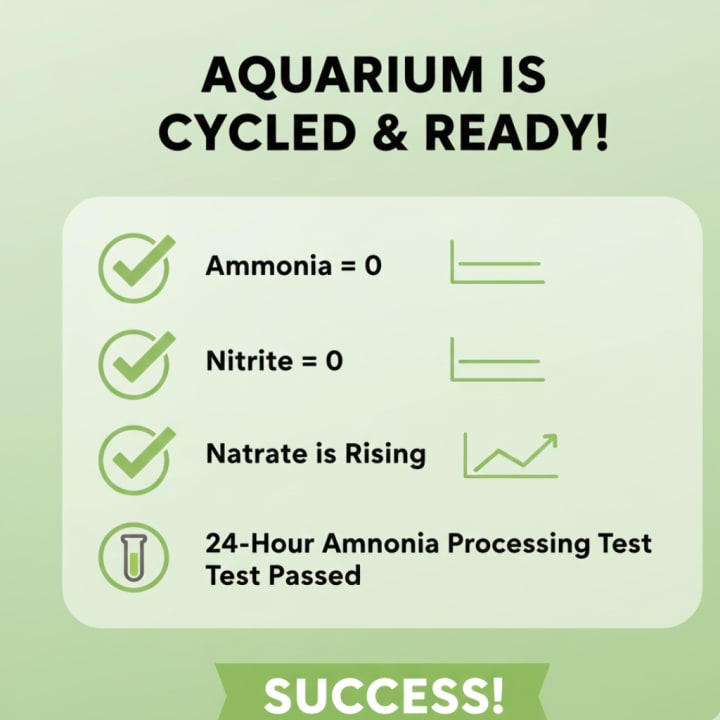
Your cycle is complete when all three conditions exist simultaneously:
- Ammonia reads 0 ppm consistently
- Nitrite reads 0 ppm consistently
Nitrate is detectable and rising, typically 5-40 ppm depending on your maintenance schedule
These readings must stay stable over several days. A single day of zero ammonia and nitrite isn't enough. Test daily for at least three days to confirm stability.
The 24-Hour Ammonia Test
This confirms readiness. Add ammonia to bring levels to 2 ppm, then test 24 hours later. If both ammonia and nitrite read zero, your bacterial colonies are mature enough to process a full waste load quickly.
This test mimics the waste production of a fully stocked tank and proves your bacteria can keep up.
Once these criteria are met, perform a large water change to reduce nitrate before adding fish. Change 50-75% of the water using dechlorinated, temperature-matched water.
Add fish gradually. Start with a few hardy fish and wait 1-2 weeks before adding more. This allows bacteria to adjust to increasing waste loads without overwhelming the system.
What to Do After Cycling (Beginner Maintenance Plan)
Maintaining your cycle is easier than establishing it, but consistent habits keep your tank stable long-term.
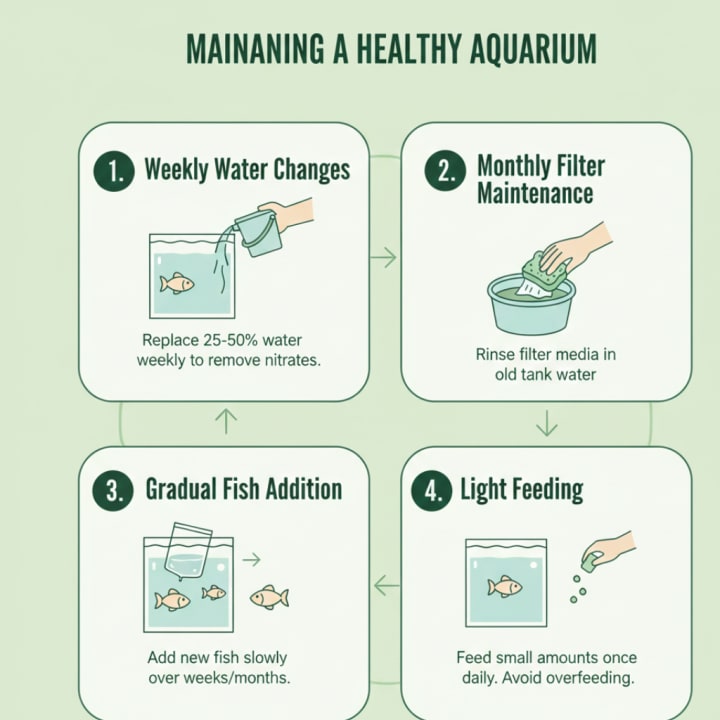
Weekly Water Changes
Change 25-30% of the water weekly using dechlorinated, temperature-matched water. This removes accumulated nitrate, replenishes minerals, and maintains water quality. Never change more than 50% at once unless dealing with an emergency large changes can shock fish.
Monthly Filter Maintenance
Once monthly, remove your filter media and squeeze it gently in a bucket of old tank water to remove debris. Don't rinse it under tap water and don't replace it unless it's falling apart. Filter media should last months or years before needing replacement.
Proper filter maintenance preserves the nitrogen cycle aquarium bacteria you've carefully cultivated.
Gradual Stocking
Stock your tank slowly over weeks or months. Each new fish increases waste production, and bacteria need time to multiply and catch up. A good rule: add 1-2 small fish every two weeks until you reach your desired stocking level.
Appropriate Feeding
Feed small amounts your fish can consume in 2-3 minutes, once or twice daily. Uneaten food rots and produces ammonia, destabilizing your cycle. Less food is always safer than too much.
Regular Testing
Test your water regularly even after cycling. Test weekly for the first month after adding fish, then monthly once your tank is stable. This catches problems early before they become emergencies. Always test immediately if fish show signs of stress or illness.
Avoid Unnecessary Changes
Stable parameters matter more than perfect parameters. Once your tank is cycled and fish are healthy, resist the urge to adjust pH, change decorations, or add chemicals. Consistency prevents stress and maintains biological balance.
Frequently Asked Questions
Can you cycle a tank without a filter?
Technically yes, but it's impractical for beginners. Bacteria colonize any surface, so filterless tanks rely on substrate and decorations for biological filtration.
This requires very light stocking, large tanks, and extensive experience maintaining parameters. Beginners should always use filters they provide concentrated surface area for bacteria and mechanical filtration for debris.
Should I do water changes during cycling?
During fishless cycling, avoid water changes unless ammonia or nitrite exceed 8 ppm, which can stall bacterial growth. During fish-in cycling, daily water changes are essential to protect fish from toxins while bacteria establish.
Does cloudy water mean my tank is cycled?
No. Cloudy water appears early in cycling as harmless bacteria bloom, then clears before the cycle completes. Crystal clear water doesn't guarantee cycling either. Only test results showing zero ammonia, zero nitrite, and rising nitrate confirm a complete cycle.
Why are my nitrates not rising?
If ammonia and nitrite are zero but nitrate stays at zero for weeks, several issues could be responsible. Your test kit might be expired or faulty test your tap water to verify the kit works.
You might not be producing enough ammonia to complete the cycle add more fish food or ammonia. Heavily planted tanks absorb nitrate as fertilizer, which can keep readings low even in cycled tanks.
Can plants help with cycling?
Live plants absorb some ammonia directly and provide surface area for bacteria, which can speed cycling slightly. However, plants alone cannot cycle a tank.
You still need beneficial bacteria to process the majority of waste. Plants are helpful supplements, not replacements for the nitrogen cycle.
How do I know if bottled bacteria is working?
Bottled bacteria should reduce cycling time noticeably. If cycling still takes 6+ weeks after using bottled products, either the product contains wrong bacterial strains or the bacteria were no longer viable.
Quality products should cut cycling time to 2-4 weeks when combined with proper conditions.
Why is my tank cycling again after being stable?
Established tanks can crash if you disrupt the bacterial colonies. Common causes include cleaning filter media in tap water, using medications that harm bacteria, turning off the filter for extended periods, adding too many fish at once, or overfeeding dramatically.
If your cycled tank suddenly shows ammonia or nitrite, perform daily water changes while bacteria re-establish.
Can I add fish during the nitrite spike?
No. Adding fish during the nitrite spike is risky. Nitrite is highly toxic, and fish often experience serious stress during this phase. Wait until both ammonia and nitrite read zero consistently before adding fish. Patience during cycling saves money and prevents heartbreak.
Do I need to cycle a tank if I'm using old water from another tank?
Yes, because bacteria don't live in the water they colonize surfaces. Using old water doesn't transfer significant bacteria. You need to move filter media, substrate, or decorations from an established tank to seed your new setup. Water alone won't cycle a tank.
What's the difference between cycling and seasoning a tank?
These terms mean the same thing. Cycling, seasoning, and maturing all refer to establishing beneficial bacteria. Some fishkeepers prefer different terminology, but the process is identical.
Conclusion
The nitrogen cycle isn't mysterious or complicated once you understand the basic biology. Beneficial bacteria convert toxic ammonia into less harmful substances through a predictable process that takes 4-6 weeks to establish.
Every successful aquarium relies on this cycle, regardless of tank size, fish species, or equipment used.
You now understand what happens in your tank at the microscopic level, why testing is essential, how to cycle safely, and what maintenance keeps your system stable. This knowledge separates beginners who struggle with constant fish losses from confident fishkeepers who maintain thriving aquariums for years.
The aquarium nitrogen cycle is predictable, manageable, and completely achievable for total beginners. Once your bacteria establish, your tank becomes resilient and stable. Fishkeeping transforms from stressful and confusing to enjoyable and rewarding.
You have the foundation. Now set up your tank, test consistently, be patient during the cycling period, and enjoy the incredible hobby of keeping healthy, happy fish.
About the Creator
Arjun
Aquarium hobbyist sharing simple, real-world fixes for snail, shrimp, and plant problems. Clear guides, no fluff just practical tips to keep your tank healthy and thriving.
A Planetary Alignment Will Coincide With Mercury Retrograde
Skywatchers are preparing for a striking celestial event as a planetary alignment is set to coincide with Mercury retrograde — a pairing that has generated buzz across both scientific and astrological communities. While planetary alignments are not uncommon on cosmic timescales, the overlap with Mercury’s apparent backward motion adds a layer of intrigue that has captured global attention.
By Aarif Lashari7 days ago in Earth



Comments
There are no comments for this story
Be the first to respond and start the conversation.