
Antarctica's Mysterious Secrets
Are there other realms apart from what we know?
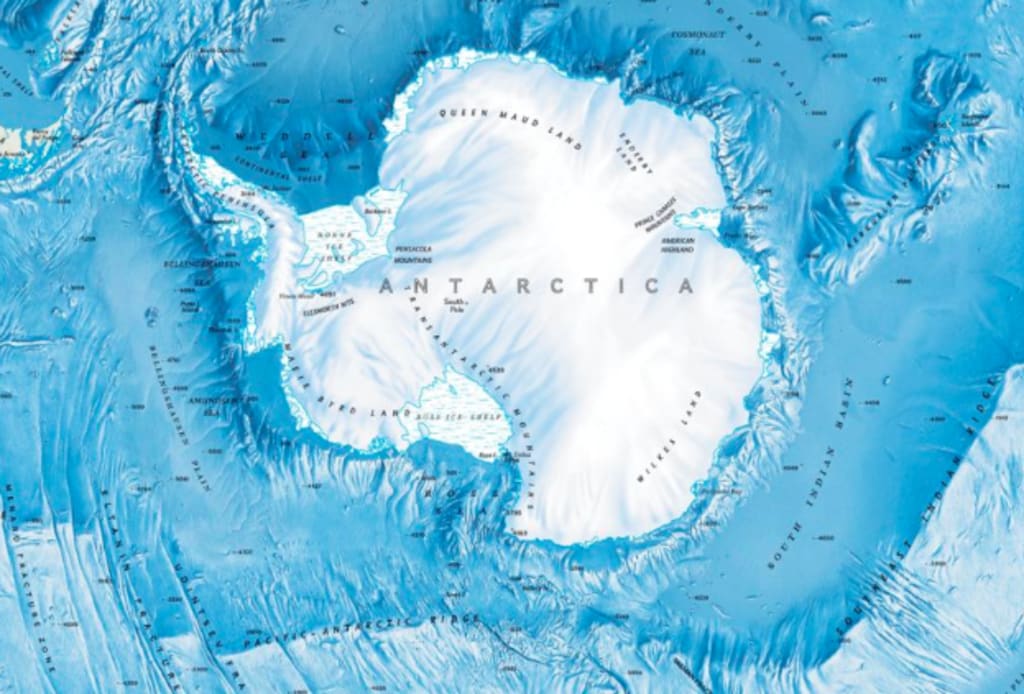
What if I were to tell you that one of the most enigmatic and concealed locations on Earth also happens to be one of the coldest? This place harbors concealed mountain ranges, landscapes resembling those from another world, and secretive gatherings involving some of the planet's most influential figures. This spot has gained global consensus to remain unexplored, yet it has sparked numerous missions and rumors of covert operations. I'm referring to Antarctica – a realm of ice and snow that is both a source of intrigue and a frigid destination. So, let's embark on a chilly expedition to the southernmost continent of our planet.
Antarctica, the Earth's southernmost landmass, is marked by extreme cold, massive glaciers, and a notable absence of permanent human settlements. However, it is far from being a barren icy wilderness. In fact, it captures our collective curiosity, making us wonder if this frozen wasteland conceals untold secrets waiting to be unveiled. Antarctica presents a variety of captivating and unparalleled geographical features that are absent elsewhere on Earth. Its vast ice sheets, the largest single ice mass on the planet, possess the power to influence global weather patterns and sea levels.
Beneath the icy exterior lies a diverse landscape, including mountains, valleys, and even lakes hidden beneath glaciers. These features are preserved in their original state by the unrelenting cold. Surprisingly, life manages to thrive in these extreme conditions. Antarctica is home to a diverse array of wildlife, from majestic emperor penguins to resilient tardigrades. Yet, human presence is temporary and confined, with no indigenous or permanent inhabitants. Those who do venture to this remote land are primarily scientists residing in research stations. They explore a wide range of subjects, from climate change to astrobiology, under conditions closely resembling those of other planets.
Adding to the intrigue is the extended polar night, during which the sun remains below the horizon for approximately half the year, plunging the continent into prolonged darkness. Imagine standing amidst the captivating glow of the Southern Lights, gazing out at the expansive frozen plains stretching as far as the eye can see – untouched and still. It's in this silence and isolation that the mind begins to ponder the secrets harbored by Antarctica. Why do people, some of them highly influential, journey to this icy and inhospitable wilderness? Could clandestine meetings occur in the hushed stillness of this frozen expanse?
Antarctica's enduring allure stems from its isolation, harsh conditions, and inaccessibility. It challenges our comprehension of life, survival, and the might of nature. This land is a testament to nature's resilience and raw power, shrouded in both mystery and beauty. However, the ultimate question that hangs over this icy wilderness is: what secrets lie within? Let's delve into the enigma that is Antarctica.
We've discussed the notable figures who have explored Antarctica and the uncertainties surrounding their visits. Now, let's turn our attention to the enigmatic missions that have unfolded in this frozen realm. Antarctica has witnessed several endeavors that continue to perplex us to this day. Let's start with "Operation High jump," led by the United States Navy in 1946. While officially portrayed as a scientific and exploratory undertaking, the scale was staggering – involving around 4,000 personnel, 13 ships, and numerous aircraft. Despite being labeled as a research mission with military hardware testing, the operation came to an abrupt halt well before its planned eight-month duration. Officially, unfavorable weather conditions were cited as the reason, but conspiracy theories propose alternative explanations.
Another intriguing episode is the Soviet Union's series of Antarctic expeditions in the late 1950s and 60s, particularly the establishment of the Vostok Station. Beneath this station lies Lake Vostok, a colossal body of water untouched for possibly millions of years, isolated from the rest of the world.
The British expeditions to Antarctica left behind a legacy of unanswered queries. What were the true intentions of these nations as they explored the immense icy expanses of this continent? Similar to Antarctica itself, the answers to these questions remain shrouded in mystery and ice. You might be curious about the notable individuals we are referring to. Over time, there have been numerous intriguing instances of prominent figures embarking on journeys to Antarctica. Let's explore a few of these intriguing encounters.
Among the most renowned personalities to visit Antarctica was none other than the United States Secretary of State, John Kerry. This took place in 2016, during the final days of his term in office. What adds to the intrigue of this journey is not only the timing but also the rationale behind it. While the stated purpose was to study the impacts of climate change, speculations suggest there might be more to this story.
Another intriguing case is that of Apollo astronaut Buzz Aldrin, who, at the age of 86, ventured to the South Pole. While the official explanation was a tourist visit, Aldrin's history with NASA sparked theories about potential extraterrestrial interests in the region.
Completing our lineup is Prince Harry of the United Kingdom, who embarked on a trek to the South Pole alongside wounded veterans as part of a charitable event. But was this event solely a charitable endeavor, or did it carry additional significance for this royal visit? Additionally, the visit of Patriarch Kiril of the Russian Orthodox Church to a Russian scientific base in Antarctica raised questions about his motives – whether they were solely to bless the land or if there were concealed reasons.
All these visits, by individuals from diverse nations and professions, each with their declared rationales, suggest that there could be more unfolding on this frozen, uninhabited land than meets the eye. Considering the challenges and complications involved in reaching Antarctica, one must question why these figures from around the world dedicate time and effort to explore this inhospitable region. Why do these visits often appear wrapped in secrecy or ambiguity? Is it mere coincidence that influential figures have chosen to journey to the Earth's southernmost point, or could there be hidden motivations lurking beneath the surface?
As Antarctica continues to safeguard its secrets, its allure extends beyond its geopolitical mysteries and its roster of distinguished guests. The land itself conceals enigmas that intrigue both scientists and thrill-seekers. Beneath its icy exterior, Antarctica conceals a concealed range of mountains – a mountainous expanse as vast as the Alps, entirely submerged beneath miles of ice. Unearthed by Soviet scientists in 1958, these phantom mountains remain an enigma, with their origins and erosion mechanisms still puzzling researchers.
However, it's not just mountains that Antarctica hides. Lake Vostok, mentioned earlier, represents another of the continent's hidden marvels. This lake is one of the largest in the world by volume and has been sealed off from the rest of the world beneath kilometers of ice for a staggering 15 million years. The mysteries that lie within its dark, cold waters over such an immense stretch of time are bound to captivate the imagination.
Additionally, the eerie phenomena that transpire on this icy continent captivate attention. The Blood Falls, for instance, feature a stream of iron-rich water that imparts a haunting red hue to the Taylor Glacier. Then there's the immense, nearly flawless circular hole in the sea ice, known as a polynya, in the Weddell Sea – an enigmatic feature that emerges and vanishes, confounding scientists. Furthermore, there's the "bloop," an ultra-low frequency, high-amplitude underwater sound picked up by NOAA in 1997.
About the Creator
Oil Market is Volatile Again: What It Means for Global Energy and Traders
Global energy markets are once again at the center of attention after the United States introduced a temporary waiver allowing the purchase of certain Russian oil shipments that were already stranded at sea. The move has sparked intense discussions across financial markets, energy sectors, and geopolitical circles.
By Daniel Reidabout 19 hours ago in Earth



Comments
There are no comments for this story
Be the first to respond and start the conversation.