
Antarctica is the fifth-largest continent by size, so what's hiding under its massive sheaths of ice?
What's hiding under Antarctica's ice?


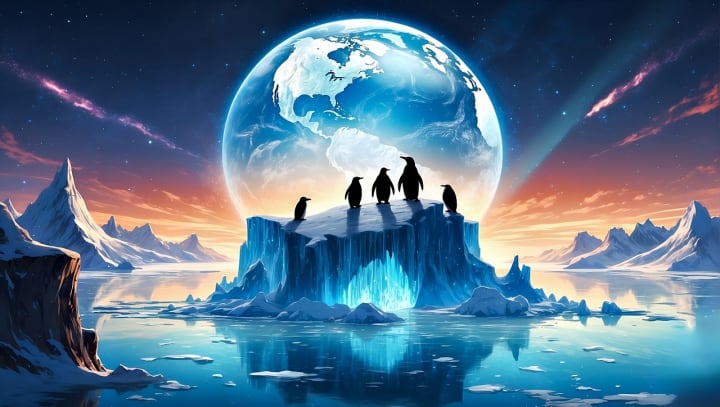
Unveiling the Hidden World Beneath Antarctica’s Ice
From above, Antarctica appears to be nothing more than a vast, cold, flat, and lifeless white expanse. The continent is known for its extreme temperatures, powerful winds, and desolate beauty. However, beneath the thick ice sheet that blankets this frozen land lies a fascinating and largely unexplored hidden world. In recent decades, scientific discoveries have revealed that under Antarctica’s frozen surface exists a diverse and complex landscape—one teeming with secrets that challenge our understanding of life, geology, and climate history.
A landmass that is not flat is covered by the Antarctic ice sheet, which can be up to 4.8 kilometers (3 miles) thick. Satellite imagery, radar surveys, and seismic studies have shown that beneath the ice is a rugged and varied terrain made up of towering mountain ranges, deep valleys, vast plains, and subglacial lakes. The Gamburtsev Mountain Range, which is comparable in size to the European Alps and is completely submerged under more than a kilometer of ice, is one of the most remarkable discoveries. These mountains, unknown until the mid-20th century, suggest a dynamic geological history and continue to puzzle scientists with questions about their origin and age.

Hidden beneath the ice are also vast networks of rivers and lakes. Over 400 subglacial lakes have been discovered thus far, one of which is Lake Vostok, one of the world's largest freshwater lakes buried beneath more than 4 kilometers of ice. These lakes are kept from freezing by the intense pressure of the ice above and geothermal heat from the Earth’s interior. The water in these lakes has been sealed off from the surface for millions of years, providing a unique and isolated environment. Scientists believe these extreme conditions could mimic those on icy moons such as Europa or Enceladus, making them excellent subjects for astrobiological studies.
Perhaps even more astounding is the discovery of microbial life in these dark, oxygen-deprived, and freezing environments. When researchers drilled into Lake Whillans in 2013, they found thriving communities of bacteria living without sunlight. These microorganisms survive by chemically breaking down minerals and organic material, proving that life can endure in some of the most extreme conditions imaginable. Such findings open new possibilities for understanding how life might exist beyond Earth.
In some areas, sediments recovered from beneath the ice suggest that parts of Antarctica were once home to lush ecosystems. Fossilized pollen, leaf impressions, and other organic materials indicate that tens of millions of years ago, during warmer periods, Antarctica supported forests, lakes, and a temperate climate. These ancient ecosystems provide a valuable window into Earth’s climatic past and are crucial in helping scientists predict future changes in global climate.
The study of Antarctica’s subglacial world also has serious implications for sea-level rise and climate change. The melting of the ice sheet due to global warming could release trapped freshwater into the ocean, significantly raising sea levels. Additionally, scientists are able to model how quickly the ice sheet might retreat in response to rising temperatures by comprehending how water moves beneath it. Despite the harsh conditions, researchers continue to explore this hidden frontier using advanced technologies such as ice-penetrating radar, remote-controlled underwater vehicles, and satellite imaging. International collaborations, like those led by NASA, the British Antarctic Survey, and other global research institutions, are pushing the boundaries of what we know about this icy continent.
In conclusion, Antarctica is much more than just a desolate region covered in ice and snow. Beneath its frozen surface lies a dynamic and mysterious world, rich with geological wonders, hidden water systems, ancient life, and untapped scientific insights. As technology advances and exploration continues, we may uncover even more astonishing secrets that lie buried under the coldest place on Earth—secrets that could reshape our understanding of Earth’s history, the adaptability of life, and the future of our changing planet.
At first glance, Antarctica looks like a cold, flat, and empty land covered in endless ice. But beneath this frozen surface lies a mysterious and fascinating world that scientists are only beginning to explore. Using modern technologies like ice-penetrating radar and satellite imaging, researchers have discovered a complex landscape under the ice—one that includes vast mountain ranges, deep valleys, hidden rivers, and more than 400 subglacial lakes.
One of the most incredible findings is Lake Vostok, a massive freshwater lake buried under more than 4 kilometers of ice. This lake and others like it contain microbial life that uses minerals and chemicals for energy to survive without sunlight, despite the freezing temperatures. These organisms show that life can exist in extreme environments, giving us clues about the possibility of life on other planets.
Scientists have also found signs that Antarctica wasn’t always frozen. Fossilized plants and ancient sediments suggest that the continent once had forests and a much warmer climate. These discoveries help scientists understand how Earth’s climate has changed over millions of years—and how it might change again.
In short, beneath Antarctica’s ice lies an unknown world filled with life, history, and natural wonders waiting to be uncovered.
Although Antarctica appears to be a cold, flat, and lifeless continent, scientists have discovered an incredible hidden world beneath its thick ice sheet. Advanced research tools like ice-penetrating radar and satellite imaging have revealed that under the ice lies a diverse landscape made up of mountains, valleys, rivers, and lakes. One of the most fascinating discoveries is the Gamburtsev Mountain Range, completely buried under ice but as large as the European Alps.
Over 400 subglacial lakes, such as Lake Vostok, have been found, some of which have been sealed off from the surface for millions of years. Despite the extreme conditions—total darkness, freezing temperatures, and high pressure—microbial life has been found in these lakes, proving that life can survive without sunlight by using chemical energy.
In addition to living organisms, scientists have also found evidence of ancient ecosystems beneath the ice, such as fossilized plants and pollen. These findings suggest that Antarctica was once much warmer and may have supported forests and diverse wildlife millions of years ago.
Exploring this hidden world is not only unlocking secrets of Earth’s past but also helping scientists understand the effects of climate change and the potential for life in extreme environments beyond Earth.
About the Creator
Towhidul Islam
DO OR DIE
Keep reading
More stories from Towhidul Islam and writers in Earth and other communities.
Physicists Have Succeeded in Transforming Lead Into Gold… in a Fraction of a Second
The ancient practice of alchemy, shrouded in mystery and symbolism, sought to discover the elixir of life, transform base metals into gold, and unlock the mysteries of the universe. While traditional alchemy may seem like a relic of the past, its spirit lives on in modern science, technology, and even philosophy. Today, we see a new kind of alchemy—one that blends chemistry, physics, and cutting-edge innovation to achieve what medieval alchemists could only dream of.
By Towhidul Islam9 months ago in History
Weather and Climate Understanding the Forces That Shape Our Daily Lives
Weather and Climate Understanding the Forces That Shape Our Daily Lives Weather and climate play a central role in how people live work travel and plan for the future. From daily temperature changes to long term climate patterns these natural systems influence agriculture health economies and even global stability. Understanding the difference between weather and climate and knowing how they affect human life has become more important than ever especially as the world experiences more extreme conditions.
By America today 6 days ago in Earth



Comments (1)
please subscribe me and support me and please read my articles