
Animals That Liquefy Their Food Before Eating It
No chewing, no biting — just slurping life away.

A Different Kind of Appetite
When we think of eating, we often imagine biting, chewing, swallowing — a process we’ve known since childhood. But in the animal kingdom, some creatures have taken eating to a whole different level. They don’t chew their food. They don’t even break it apart with their teeth. Instead, they liquefy it — turning solid prey into a digestible soup they can slurp up like a smoothie.
It may sound grotesque, but for these animals, it’s the perfect survival strategy. In a world where efficiency is key, dissolving your dinner before consuming it can mean the difference between feast and famine.
Spiders: Digest First, Eat Later
Spiders are perhaps the most well-known champions of external digestion. Once they capture their prey in a web — or pounce on it in the case of hunting spiders — the process begins with venom. This venom doesn’t just immobilize the prey; it starts breaking down the internal tissues almost immediately.
But the real trick lies in the spider’s digestive enzymes. After the prey is subdued, the spider injects digestive fluids directly into the body of its victim. These enzymes begin to liquefy the soft tissues, turning organs and muscles into a protein-rich soup. The spider then uses its straw-like mouthparts to suck the slurry out, leaving behind an empty exoskeleton.
It’s a process that’s efficient, silent, and brutally effective. For the spider, it’s like drinking a high-protein shake that used to be a fly.
Starfish: Eating With Their Stomachs Inside Out
Starfish, or sea stars, take things a step further. They don’t just liquefy their food — they do it by turning themselves inside out. When a starfish finds a bivalve like a mussel or clam, it pries the shell open using its strong arms and suctioned tube feet. The opening doesn’t need to be wide — just enough for the starfish to slip part of its stomach inside.
Yes, you read that right: it pushes its stomach out of its body and into the shell of its prey. Once inside, the stomach releases enzymes that begin digesting the soft tissues of the mussel. After the food is liquefied and absorbed, the starfish retracts its stomach back into its body.
It’s bizarre, but it works. And it allows the starfish to eat prey that never actually enters its body — just its stomach.
Assassin Bugs: The Insect World's Syringe Killers
Among the more sinister slurpers of the insect world are assassin bugs. These predatory insects use their needle-like mouthparts to inject a toxic saliva into their victims. This saliva is loaded with enzymes that instantly start to break down internal tissues.
Within moments, the insides of the prey — often a soft-bodied insect — are reduced to liquid. The assassin bug then uses its hollow mouthparts to suck up the liquefied nutrients, leaving behind a dry, crumpled husk. This method is so efficient that assassin bugs can kill prey much larger than themselves with minimal effort.
In the insect world, the ability to liquefy and drink your meal is like having a portable blender — deadly, precise, and no chewing required.
Sea Slugs: Melting Coral From the Inside
Some species of sea slugs feed on coral or sea anemones by liquefying their tissues. Using a specialized feeding appendage called a radula — a kind of microscopic tongue covered in tiny teeth — the slug scrapes and injects digestive enzymes into the soft tissues of its prey.
As the coral begins to break down, the sea slug slurps up the liquefied contents, absorbing not just nutrients but sometimes even functioning cells like stinging cells or photosynthetic components. Some slugs even go a step further and incorporate these stolen components into their own bodies, giving them special abilities like stinging predators or photosynthesizing sunlight.
For these soft-bodied mollusks, digestion isn’t just about eating — it’s about transformation.
Frog-Legged Beetles and Other Larvae: Soup for the Soul
Many predatory insect larvae, especially those that live in moist environments, use a liquefy-first strategy. Some beetle larvae inject their prey with a cocktail of enzymes that quickly turn flesh into fluid. The larva then feeds by sucking up this slurry, using specialized grooves in its mandibles.
This strategy is also common among antlion larvae and lacewing larvae, which pierce their prey with needle-like jaws and drink them from the inside out. It may sound nightmarish, but for these baby predators, it’s a perfectly natural — and highly effective — way to consume food.
They don’t have time for chewing. They’re on a tight schedule of growing, molting, and eventually transforming into adults. And slurping meals makes everything faster.
Butterflies and Nectar Feeders: The Softer Side of Liquid Diets
Not all animals that liquefy their food are predators. Butterflies and moths, for example, feed on nectar — a naturally liquid food. But some species take it further. Certain butterflies have been observed drinking from rotting fruit, animal dung, or even carcasses, extracting liquid nutrients through their long, coiled proboscis.
To aid in this, they sometimes release saliva onto the surface to help break down tougher materials, making it easier to slurp up minerals and amino acids. It's a gentler, less gruesome version of external digestion — but it follows the same principle: turn the food into liquid, and sip away.
Conclusion – A Different Kind of Hunger
These creatures show us that nature doesn’t always play by the rules we’re used to. Where we chew, they dissolve. Where we swallow, they slurp. Liquefying food before eating it might sound strange, but for many animals, it's the most efficient way to get the job done.
In the wild, survival is about adaptation — and these animals have adapted to feed in ways that seem alien to us. Whether it’s a spider turning a fly into soup or a starfish pushing its stomach into a shell, every method is part of a unique evolutionary path.
So next time you think of a meal, remember: for some animals, dinner starts with melting it first.
About the Creator
A Changing Environmental Landscape Impacts the Insurance Industry
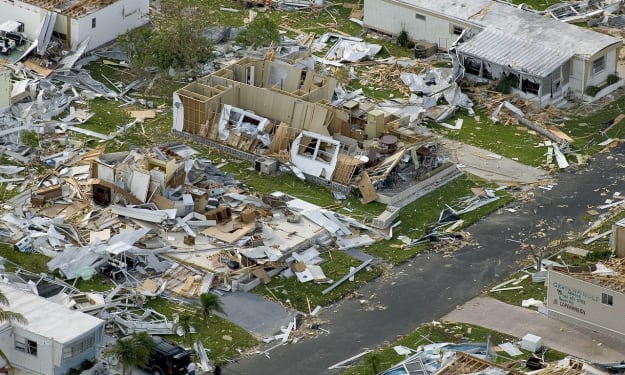
The phrase climate change simply refers to the changes in climate factors such as temperature and precipitation but over the last decade, the phrase has become much more polarizing, politicized and divisive. Non-scientific arguments aside, extreme weather events and natural disasters are increasing in number and severity and the effects of these events are causing more property damage in both commercial and residential spheres. Rising global temperatures can be attributed to the increase in damage causing storms and destructive wildfires. Insurance companies are seeing rising payout costs as an effect of climate change as more claims are submitted to cover losses from these events. As controversial as the phrase climate change is, insurance businesses and carriers are experiencing climate change first hand with increasing claims and losses as a direct result of weather and environmental events.
By doron levy5 days ago in Earth



Comments
There are no comments for this story
Be the first to respond and start the conversation.