
"An Overview of Pakistan"
A country of diverse heritage, and significant challenges
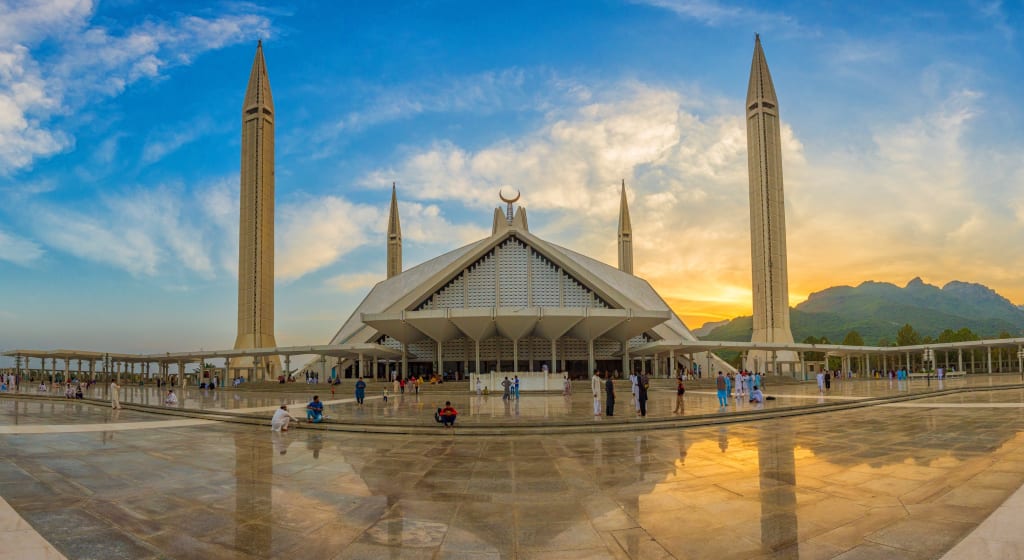
Pakistan is a country located in South Asia, bordered by India to the east, Afghanistan and Iran to the west, China to the northeast, and the Arabian Sea to the south. It is the world's fifth-most populous country, with a population of over 220 million people.
Pakistan gained independence from British colonial rule in 1947, along with India. The country is a federal parliamentary republic with Islamabad as its capital city. Urdu and English are the official languages, although there are many regional languages spoken throughout the country.Pakistan is known for its diverse culture and rich history. The region has been inhabited for thousands of years, and there have been many empires and kingdoms throughout its history, including the Indus Valley Civilization, the Mughal Empire, and the British Raj.
Pakistan has a mixed economy, with agriculture being a major sector, along with textiles, manufacturing, and services. The country has a growing middle class, and there has been significant investment in infrastructure and technology in recent years.However, Pakistan faces many challenges, including political instability, terrorism, poverty, and a lack of access to basic services such as healthcare and education. The country also faces environmental challenges such as deforestation, water scarcity, and air pollution.
Religion:
The majority of the population in Pakistan is Muslim, with over 96% of the population identifying as Muslim. The remaining population includes Christians, Hindus, and Sikhs.
Geography:
Pakistan is a diverse country with a varied geography. It has mountains, plateaus, deserts, and fertile plains. The Himalayan and Karakoram mountain ranges are located in the north of the country and contain some of the highest peaks in the world, including K2, the second-highest mountain in the world.
Culture:
Pakistan has a rich cultural heritage with influences from various regions, including Central Asia, South Asia, and the Middle East. The country is known for its music, dance, literature, and cuisine.
Sports:
Cricket is the most popular sport in Pakistan, and the country has a strong cricket team that has won several international tournaments. Other popular sports in Pakistan include field hockey, football, and squash.
Education:
Pakistan has made progress in improving access to education in recent years, but still faces many challenges in this area. There is a gender gap in education, with fewer girls than boys attending school, and the quality of education varies greatly between regions.
Politics:
Pakistan has a complex political history, with a mix of military and civilian governments. The country has been ruled by military dictators for roughly half of its history since gaining independence in 1947. However, recent years have seen a shift towards democracy, with regular elections and a greater role for civil society.
Languages:
While Urdu is the official language of Pakistan, there are many regional languages spoken throughout the country, including Punjabi, Sindhi, Pashto, and Balochi. English is also widely spoken and used in business, education, and government.
Economy:
Pakistan has a mixed economy, with agriculture being a major sector, along with textiles, manufacturing, and services. The country is also rich in natural resources, including coal, oil, gas, and minerals. Pakistan has a developing economy, and the government has implemented various reforms in recent years to promote economic growth and attract foreign investment.
Cuisine:
Pakistani cuisine is a blend of various regional cuisines, including Punjabi, Sindhi, and Balochi. Some popular dishes include biryani, kebabs, and nihari. Pakistani cuisine is known for its rich and spicy flavors and the use of herbs and spices.
Wildlife:
Pakistan is home to a wide range of wildlife, including snow leopards, Asiatic black bears, and markhors. The country has several national parks and wildlife reserves, including the Deosai National Park and the Khunjerab National Park.
Tourism:
Pakistan has a lot of potential for tourism, with its rich cultural heritage, diverse geography, and natural beauty. However, the tourism industry in Pakistan has been impacted by security concerns in recent years. The government is working to improve security and promote tourism in the country.
Technology:
Pakistan has a growing technology sector, with a number of startups and tech companies emerging in recent years. The government has implemented various initiatives to promote the growth of the technology sector, including tax breaks and funding for startups.
Military:
Pakistan has a large and powerful military, which has played a significant role in the country's history. The military has been involved in several conflicts with neighboring India, and has also been involved in the war on terror in Afghanistan.
Festivals:
Pakistan celebrates several festivals throughout the year, including Eid al-Fitr, Eid al-Adha, and the annual Urs festival. The Urs festival is a major event for Sufi Muslims and attracts visitors from all over the world.
Transportation:
Pakistan has a growing transportation sector, with several airports, seaports, and highways connecting major cities. The government has also implemented several infrastructure projects in recent years, including the China-Pakistan Economic Corridor, which aims to improve connectivity and promote economic growth in the region.
About the Creator
Keep reading
More stories from DINESH KUMAR.C and writers in Earth and other communities.
"Indonesia: A Tropical Paradise with Endless Wonders to Explore"
Indonesia is a country located in Southeast Asia, between the Indian and Pacific Oceans. It is the fourth most populous country in the world with over 270 million people, and it is also the world's largest island country with more than 17,000 islands. Jakarta is the capital city of Indonesia.
By DINESH KUMAR.C3 years ago in Earth
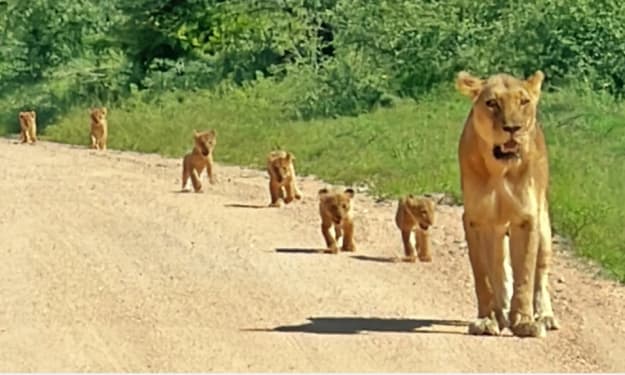
Tiny Lion Cubs Struggle To Keep Up With Mom
In the heart of the African savannah, life is a constant lesson for young animals. Few scenes are as endearing — or as heartwarming — as tiny lion cubs trying to keep pace with their mother. These little bundles of fur face a world full of challenges, from learning to hunt to avoiding dangers, all while depending on the guidance and protection of their experienced mom. Watching cubs wobble and tumble as they attempt to keep up with their mother reminds us that growing up, even in the wild, is a journey full of struggle, determination, and adorable missteps. The Early Days of Lion Cubs Lion cubs are born blind and helpless, usually in litters of two to six. For the first few weeks, they rely entirely on their mother for warmth, food, and safety. Even after opening their eyes and beginning to explore, the cubs are far from independent. The first months are crucial. Cubs learn social cues, hunting basics, and survival skills simply by watching their mother and the pride. But as anyone who has observed them knows, there’s often a huge gap between observation and action. Tiny cubs often struggle to match their mother’s pace, especially when she moves through long stretches of savannah or leads the family on patrols. A Mother’s Role in the Wild For a lioness, raising cubs is a full-time commitment. She hunts, defends her territory, and teaches her young, all while staying alert to predators such as hyenas, leopards, and even rival lions. The cubs, meanwhile, attempt to mimic her every move — often with clumsy yet charming results. A mother lion’s patience is remarkable; she frequently slows down, nudges them along, or stops to ensure no cub is left behind. These moments, while stressful for the tiny cubs, are vital learning opportunities. Struggling to Keep Up: Why It’s So Hard There are several reasons why tiny lion cubs have trouble keeping pace with their mother: Short Legs, Big Steps: Lion cubs’ legs are tiny and their coordination is limited, making it difficult to cover the same distance as an adult lioness. Curiosity: Cubs are naturally curious. A single butterfly or rustling bush can distract them, leaving mom to pause repeatedly. Energy Levels: Young lions tire quickly. Even with frequent naps, the cubs’ stamina is far lower than their mother’s. Learning Through Play: Play is not just fun; it teaches hunting, balance, and social skills. Running off to pounce on a sibling or chase an insect is all part of their education. Despite these challenges, the cubs’ determination to keep up demonstrates their resilience and growing understanding of the wild world. Lessons in Teamwork and Survival Every cub struggling to keep up is also learning crucial survival skills. The journey across the savannah is more than a test of speed — it’s a lesson in: Coordination: Cubs learn how to move efficiently across different terrains. Patience: They begin to understand the rhythms of adult life and the pace required for survival. Social Skills: Staying with the group teaches cubs how to interact with siblings and the pride, which is essential for their future roles. Observation: By following their mother, cubs study hunting techniques, territorial behavior, and predator awareness. Even the moments when cubs stumble or lag behind are essential for their development. These experiences prepare them for independence, which comes sooner than many might expect. The Cutest Moments in the Wild Anyone who has watched tiny lion cubs knows that their struggles are often irresistibly cute. Video clips from wildlife reserves frequently show cubs toddling along, tumbling over each other, or getting distracted mid-step. Observers often comment that these little stumbles reveal personality, determination, and playfulness, making them one of nature’s most heartwarming spectacles. While their mother is serious and focused, the cubs inject a sense of humor and lightness into life on the savannah. Why This Matters The struggles of lion cubs aren’t just adorable — they’re vital for understanding wildlife behavior. Conservationists and animal behaviorists use these moments to study growth patterns, social structures, and survival strategies in lion populations. These observations also highlight the importance of preserving natural habitats. Cubs must learn in a safe environment to survive; habitat loss, poaching, and climate change make these early struggles even more dangerous. Protecting the African savannah ensures that future generations of lions can experience the same lessons and playful tumbles. The Road to Independence Within a year, these tiny cubs will be more agile, faster, and more confident. By the time they reach two to three years old, males may begin to leave the pride, while females often stay and become caretakers themselves. Every misstep, tumble, and lagging moment is part of the journey toward strength, coordination, and independence. Watching them now gives us a glimpse of the challenges they will overcome, and the survival skills they will carry for life. A Celebration of Motherhood Ultimately, these scenes remind us of the incredible bond between mother and cubs. Her patience, vigilance, and teaching are the foundations of their future. The cubs’ struggles highlight the trials of growing up, while their determination showcases the resilience and beauty of wildlife. For those observing, it’s a powerful lesson in care, guidance, and perseverance, not just in lions but in the natural world as a whole. Final Thoughts Watching tiny lion cubs try to keep up with their mother is both entertaining and enlightening. It’s a story of growth, struggle, and resilience — a reminder that even the fiercest creatures start small, learning step by step. These little lions capture hearts while teaching life lessons: patience, determination, teamwork, and the importance of guidance. As they tumble and waddle across the savannah, they show us that growth is a process, one adorable misstep at a time. For wildlife enthusiasts, animal lovers, and anyone enchanted by nature, these tiny cubs are proof that even in the wild, love, care, and persistence are universal truths.
By Aarif Lashari2 days ago in Earth
Microbiota, microbiome or microflora: how to speak correctly and why it is for health.
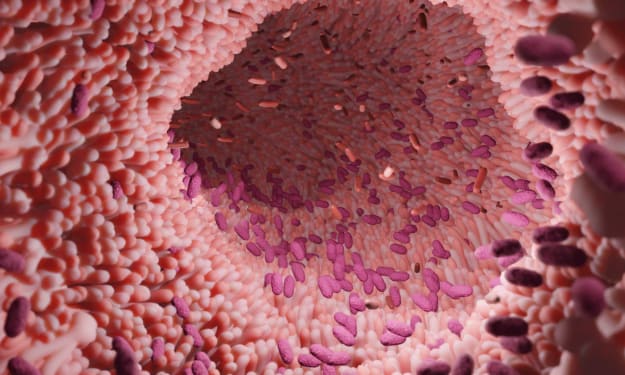
You've probably heard the phrase, "We are what we eat." But modern science says more precisely: we are also those who live in us. Until 2016, it was believed that there are many times more bacteria in our body than our own cells. The latest calculations by mathematicians show that we divide the body with our microorganisms by about 50/50: about 30 trillion of our cells versus 38 trillion bacterial ones.
By Yaroslav Gorohov6 days ago in Earth

Comments
There are no comments for this story
Be the first to respond and start the conversation.