
America Was Right About Wind Turbines: The “Dark Side” No One Wanted to Discuss, and Drones Begin to Move In
How Hidden Challenges of Wind Energy Are Emerging—and How Drone Technology Is Transforming the Industry
Introduction: Wind Energy’s Hidden Reality
Wind energy has long been celebrated as a clean, renewable solution to climate change. Across the United States and around the world, wind turbines have become symbols of a greener future—standing tall across plains, coastlines, and offshore waters. But behind the promise of renewable energy lies a “dark side” that many policymakers and environmental advocates were hesitant to discuss.
From environmental concerns and maintenance challenges to security risks and economic questions, wind turbines come with complexities that go far beyond generating electricity. Now, a new technological solution is emerging: drones, which are transforming how wind farms are monitored, maintained, and protected.
The Environmental Concerns of Wind Turbines
One of the biggest controversies surrounding wind turbines is their impact on wildlife. Birds and bats are particularly vulnerable, as turbine blades can pose fatal collision risks. Although wind energy is far cleaner than fossil fuels, critics argue that large-scale wind farms can disrupt ecosystems and migration patterns.
Additionally, wind farms require large land areas, which can affect natural habitats and rural landscapes. Some communities complain about noise pollution, visual impact, and shadow flicker caused by rotating blades.
These issues don’t cancel out the benefits of wind energy, but they highlight the need for responsible planning and better technology.
The Economic and Maintenance Challenges
Wind turbines are expensive to build and maintain. While the wind itself is free, the infrastructure is not. Turbines require regular inspections, repairs, and upgrades to remain efficient and safe.
Traditional inspections involve technicians climbing tall towers or using cranes and helicopters—methods that are costly, dangerous, and time-consuming. Downtime due to maintenance can reduce energy production and increase costs for operators and consumers.
Critics in the U.S. have long argued that the hidden costs of wind energy are often underestimated in public discussions.
Security Risks and Infrastructure Vulnerability
As wind farms become critical parts of national energy infrastructure, security concerns are growing. Large wind farms can be targets for vandalism, sabotage, or cyber threats. Protecting hundreds or thousands of turbines spread across remote areas is a major challenge.
This is where drones are beginning to play a key role—not just for maintenance, but also for surveillance and security.
Drones Enter the Wind Energy Industry
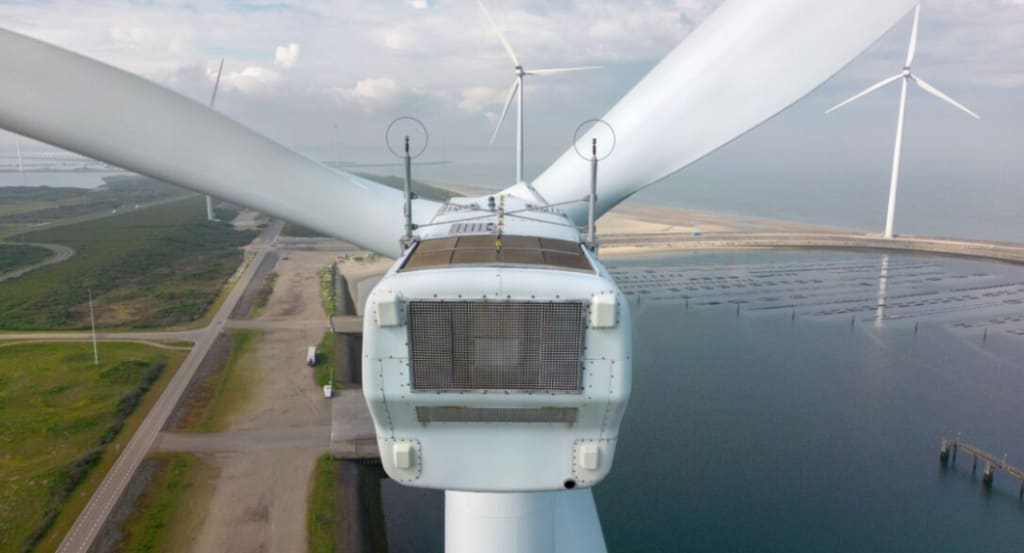
Drones, also known as unmanned aerial vehicles (UAVs), are rapidly becoming essential tools for wind farm operators. Equipped with high-resolution cameras, thermal sensors, and AI software, drones can inspect turbine blades, towers, and electrical components with incredible precision.
Instead of sending human technicians up dangerous heights, drones can fly close to blades and capture detailed images of cracks, erosion, and structural damage. This reduces risk, saves money, and speeds up maintenance.
Revolutionizing Maintenance and Efficiency
Drone inspections can be performed regularly, allowing operators to detect problems before they become serious. Predictive maintenance powered by drone data and artificial intelligence helps reduce downtime and extend turbine lifespan.
Thermal imaging drones can identify overheating components in electrical systems, preventing fires and mechanical failures. Some companies are even developing autonomous drones that can launch themselves from docking stations and perform routine inspections without human intervention.
This technology is turning wind farms into smart, data-driven energy systems.
Environmental Monitoring and Wildlife Protection
Drones are also being used to monitor wildlife around wind farms. They can track bird and bat populations, study migration patterns, and help design turbine layouts that minimize ecological impact.
By providing real-time environmental data, drones help scientists and policymakers make informed decisions, balancing renewable energy development with conservation efforts.
Public Perception and the “Dark Side” Debate
For years, critics argued that the downsides of wind energy were ignored or downplayed in political and environmental discussions. Noise complaints, landscape changes, and wildlife impacts fueled opposition in some communities.
However, supporters argue that every energy source has drawbacks, and wind energy’s benefits—reducing carbon emissions, improving air quality, and combating climate change—far outweigh its challenges.
The growing use of drones and smart technology shows that the industry is actively addressing these concerns rather than ignoring them.
The Role of Policy and Innovation
The U.S. government and private sector are investing heavily in drone technology for renewable energy. Regulations are evolving to allow more autonomous drone operations, especially for infrastructure inspection.
Innovation in materials, turbine design, and AI-powered monitoring is making wind energy safer, cheaper, and more efficient. The combination of renewable energy and advanced robotics represents the future of sustainable infrastructure.
Global Implications: A Smarter Renewable Future
The integration of drones into wind energy is not just an American trend—it is a global shift. Europe, China, and other regions are adopting similar technologies to modernize their renewable energy sectors.
As the world transitions to clean energy, the lessons learned from wind turbines—both positive and negative—will shape future energy strategies. Transparency about challenges and proactive technological solutions are essential for public trust and long-term success.
Conclusion: Facing the Dark Side with Smart Solutions
Wind turbines are not perfect, and the “dark side” of wind energy is real. Environmental impacts, maintenance costs, and security risks are serious challenges that deserve honest discussion. However, the rise of drone technology shows that the industry is evolving and adapting.
Drones are transforming wind farms into smarter, safer, and more efficient systems, addressing many of the concerns critics raised. Instead of ignoring the downsides, the renewable energy sector is confronting them with innovation and technology.
In the end, wind energy remains one of the most promising tools in the fight against climate change. By combining renewable power with cutting-edge drones and AI, the future of wind energy looks more transparent, efficient, and sustainable than ever before.
About the Creator
Philippines Pharmaceutical Market 2026: Healthcare Access, Local Manufacturing & Treatment Demand
Philippines Pharmaceutical Market Overview The Philippines pharmaceutical market is experiencing steady growth as rising healthcare needs, expanding access to medicines and increasing public and private healthcare investment reshape the country’s medical landscape. Pharmaceuticals play a central role in treating acute and chronic conditions, supporting preventive care and improving overall quality of life. The Philippines pharmaceutical market growth reached USD 3.36 Billion in 2025. Looking forward, the market is expected to reach USD 3.91 Billion by 2034, exhibiting a growth rate (CAGR) of 1.71% during 2026-2034. This growth reflects population expansion, greater health awareness and gradual strengthening of domestic manufacturing capabilities.
By Manisha Dixita day ago in Earth
Low Honey Harvest Expected as North Island Beekeepers Grapple With Storm Effects
Beekeepers across New Zealand’s North Island are bracing for one of the weakest honey harvests in years as the lingering impacts of severe storms continue to disrupt flowering cycles, damage hives, and strain an industry already under pressure from rising costs and environmental challenges. Unseasonal rainfall, strong winds, and repeated flooding events over recent months have left many apiarists facing reduced nectar flows and delayed hive recovery. Regions that normally provide abundant manuka and clover blooms have seen flowering patterns thrown off balance, cutting into the peak production period that beekeepers rely on for much of their annual income. “This season has been incredibly difficult,” said one commercial beekeeper operating in Hawke’s Bay. “We lost access to several sites because roads were washed out, and even where hives survived, the bees haven’t had consistent weather to forage properly.” Storm Damage and Disrupted Bloom Cycles The North Island experienced a series of intense storms that damaged farmland, forests, and coastal areas. For beekeepers, the consequences go beyond physical destruction of equipment. Flooding saturated soils and uprooted vegetation, while prolonged cloud cover reduced sunlight necessary for plants to produce nectar. Botanists and agricultural scientists say flowering plants are highly sensitive to weather patterns. When storms arrive during crucial blooming windows, nectar production can drop sharply. “Bees need stable conditions to collect nectar,” explained an environmental researcher at a New Zealand agricultural institute. “If rain washes pollen away or temperatures stay too low, flowers simply don’t provide enough resources.” In areas such as Northland and Waikato, beekeepers report hive productivity down by as much as 30 to 40 percent compared with average seasons. Some smaller operators fear they may not harvest enough honey to cover operational expenses. Economic Pressure on the Industry The beekeeping sector has already been grappling with challenges including fluctuating manuka honey prices, increased biosecurity requirements, and rising fuel and transport costs. A low harvest year adds further strain to businesses that rely heavily on exports. Manuka honey remains one of New Zealand’s most valuable agricultural exports, with international demand particularly strong in Asian and European markets. However, reduced supply could push prices higher, potentially benefiting some producers while limiting access for smaller exporters. “For large companies, there may be ways to absorb the losses,” said an industry representative. “But for family-run operations, this could be a make-or-break season.” Some beekeepers are considering scaling back hive numbers or shifting locations next year to avoid areas more vulnerable to extreme weather. Others are exploring diversification into pollination services for crops such as kiwifruit and apples to offset lost honey revenue. Impact on Bee Health Beyond production losses, bee health has also suffered. Wet conditions increase the risk of fungal diseases inside hives, while weakened colonies are more susceptible to pests such as varroa mites. Veterinary experts warn that stressed bees may struggle to survive winter if they enter the colder months with insufficient food reserves. Beekeepers are now spending more on supplemental feeding using sugar syrup and protein patties to keep colonies alive. “We’re not just losing honey,” one apiarist said. “We’re spending more to keep the bees healthy, and that cuts into any profit we might make.” Climate Change and Long-Term Risks Scientists link the increasing frequency and intensity of storms to broader climate change trends. Warmer oceans and shifting weather patterns are making extreme rainfall events more common in New Zealand, raising concerns about the long-term stability of industries dependent on predictable seasons. Agricultural economists argue that beekeeping is particularly vulnerable because it depends on both plant health and insect behavior, two systems sensitive to environmental stress. “This season may be a warning sign,” said a climate policy analyst. “If storms continue at this pace, the industry will need stronger adaptation strategies, such as moving hives more frequently or planting storm-resistant forage crops.” Government agencies are monitoring the situation closely. Some regional councils are assessing whether emergency assistance or recovery grants may be needed for affected farmers and beekeepers. Community and Environmental Role Beekeepers play a critical role in pollination, supporting food production far beyond honey. Crops such as berries, avocados, and squash rely heavily on bees, and reduced hive numbers could affect yields next year. Local farming communities have already reported lower pollination activity in some storm-hit districts, raising concerns about knock-on effects for the wider agricultural economy. Environmental groups stress that protecting bee populations is essential not only for economic reasons but for biodiversity. Native plants depend on healthy pollinator networks to regenerate after disasters. “Bees are part of the recovery process,” said a conservation spokesperson. “When storms damage ecosystems, pollinators help bring them back to life.” Looking Ahead Despite the grim outlook, many beekeepers remain cautiously hopeful. Weather forecasts suggest more stable conditions in the coming months, which could allow late-season flowering to provide some relief. However, expectations remain low compared with previous years. Industry leaders are urging collaboration between scientists, policymakers, and producers to build resilience against future storms. Ideas include expanding research into climate-resistant plants, improving hive design, and developing early-warning systems for extreme weather.
By Fiaz Ahmed about 8 hours ago in Earth
A Letter to the Firestarter
Dear Firestarter, We can all see you, we've been watching you since you began. In case you didn't know we were here before you and we will be here after. We witnessed your rise, your setbacks, your guilt and your lies. We witnessed you start the fire.
By Donny Foley6 days ago in Poets




Comments
There are no comments for this story
Be the first to respond and start the conversation.