
Air Purifier Market Size and Forecast 2025–2033
Global Demand Strengthens as Pollution Levels Surge and Smart Air Purification Becomes Mainstream


Worsening air quality, rapid urbanization, and rising health consciousness are creating unprecedented momentum for the global air purifier industry. According to Renub Research, the global air purifier market is expected to reach USD 29.91 billion by 2033, expanding from USD 16.09 billion in 2024, at a steady CAGR of 7.13% between 2025 and 2033. As pollution levels escalate in urban, industrial, and emerging economies, air purifiers have transitioned from luxury appliances to essential health-protection tools for homes, workplaces, hospitals, and commercial centers.
The Air Purifier Market & Forecast 2025–2033 report provides comprehensive coverage across Type (Standalone/Portable, In-duct/Fixed), Technology (HEPA, Activated Carbon, Ionic Filters, Electrostatic Precipitators, Others), Application (Residential, Commercial, Industrial), Distribution Channel (Online, Offline), Country and Company. With a growing emphasis on air filtration innovation, strategic acquisitions, and IoT-enabled smart systems, the market’s next decade is poised for substantial expansion.
Air Purifier Market Overview
Air purifiers are specialized devices that remove airborne contaminants, including dust, smoke, allergens, pollen, VOCs, bacteria, and viruses, ensuring cleaner and healthier indoor air. Using a variety of filtration technologies such as HEPA (High-Efficiency Particulate Air), activated carbon, UV sterilizers, and electrostatic filters, air purifiers are deployed in homes, corporate offices, healthcare settings, hotels, industrial plants, and educational institutions.
Over the past decade, consumers have become more alert to indoor air toxicity, driven by rising pollution, wildfire smoke incidents, frequent smog waves, respiratory diseases, and greater access to air quality data. The rising incidence of asthma, allergies, COPD, and pollution-related cardiovascular illnesses is pushing households and enterprises to prioritize indoor air quality (IAQ). As a result, demand for portable, fixed, and smart air purification systems is accelerating worldwide.
Major Mergers and Acquisitions in the Air Purifier Market
The industry has witnessed a series of strategic consolidations aimed at strengthening filtration technologies, expanding product portfolios, and enhancing global reach.
Jan 2025: Rensa Filtration acquired Air Filtration Co., Inc., strengthening its capabilities in paint, automotive, and wood finishing filtration solutions.
Oct 2024: Honeywell acquired Air Products’ LNG process technology business for USD 1.81 billion, expanding its air processing and filtration vertical.
Mar 2024: AAF International purchased Northeast Air Solutions, reinforcing its commercial and industrial clean air solutions in the U.S. Northeast region.
Jan 2023: AeroClean Technologies and Molekule, Inc. completed a major all-stock merger, creating a unified air purification brand.
Cleanova, backed by Px3 Partners, acquired Sidco Filter Company, expanding high-performance filtration solutions for industrial applications.
Jan 2022: Mann+Hummel acquired remaining shares of Pamlico Air, strengthening its presence in residential and commercial filtration.
Nov 2021: iRobot Corp. acquired Aeris Cleantec AG, venturing deeper into advanced indoor air solutions.
These consolidations highlight a strong industry push toward innovation, integrated filtration systems, and expansion into high-demand geographies.
Key Growth Drivers for the Air Purifier Market
1. Escalating Global Air Pollution
Urbanization and industrial expansion have led to dangerously high levels of PM2.5, PM10, NOx, SOx, VOCs, and other hazardous pollutants. WHO attributes millions of premature deaths annually to poor air quality, with 4.2 million deaths linked to ambient pollution in 2019.
68% of these deaths resulted from heart disease and stroke
14% from COPD
14% from lower respiratory infections
4% from lung cancers
Despite some improvements, 96% of European cities still exceed WHO’s PM2.5 limits, highlighting the persistent severity of the issue.
With pollution turning into a daily reality, especially in countries such as India, China, Pakistan, and many African nations, consumers are increasingly turning to indoor air purification solutions.
2. Rising Health and Wellness Awareness
A growing global emphasis on respiratory health, immunity, and wellness is fueling air purifier adoption. Several factors contribute:
Rising cases of asthma, sinusitis, and airborne allergies
Increased lifestyle diseases linked to long-term pollution exposure
Parental focus on clean air for children
Higher demand for air purifiers in bedrooms, offices, schools, and clinics
In 2024 alone, air pollution caused 709,000 deaths among children under five, reflecting the grave health impact.
Government and institutional initiatives, such as the 2024 EPA partnership with NASA, CDC, and the Forest Service, further elevate public awareness and amplify the need for air purification.
3. Technological Advancements and Smart Innovations
Modern air purifiers now incorporate multi-layered filter systems, IoT integration, and AI-enabled diagnostics. Popular innovations include:
Smart HEPA filters
UV-C sterilization
Activated carbon odor neutralization
IoT-enabled real-time air quality monitoring
Mobile app control
Voice assistant compatibility (Alexa, Google Assistant)
In November 2024, Hero Group’s Qubo launched next-gen smart purifiers covering large spaces (up to 1000 sq.ft), reflecting strong momentum toward connected home ecosystems.
Challenges Restraining Market Growth
1. High Cost and Maintenance Requirements
Premium air purifiers with multi-stage filtration systems can be expensive, and recurring HEPA and carbon filter replacements increase overall ownership costs. This remains a significant barrier in price-sensitive markets across Asia, Africa, and Latin America.
2. Limited Awareness in Emerging Economies
While demand is robust in developed countries, many emerging markets still struggle with:
Low awareness of IAQ’s impact on health
Limited product reach
Lack of education about filtration technologies
Price sensitivity
Counterfeit or low-quality products
This slows the market’s penetration in pollution-heavy yet economically constrained regions.
Impact of Air Quality Decline on Market Demand
Global air quality deterioration continues to drive a structural shift in consumer behavior. As exposure to PM2.5, VOCs, and allergens increases, consumers increasingly perceive air purifiers as essential household devices. Seasonal smog, wildfire smoke, and industrial emissions spike sales across North America, Asia-Pacific, and Europe.
Governments, corporations, and healthcare facilities are making indoor air quality monitoring a priority, ensuring long-term demand for advanced purification systems.
Smart and IoT-Enabled Air Purifier Market Trends
The smart air purifier category is the fastest-growing segment globally.
Key adoption trends:
Remote control via mobile apps
Real-time pollutant tracking
Energy optimization
Predictive filter alerts
Integration with smart home hubs
Demand is particularly strong in North America, South Korea, Japan, and China, where consumers readily adopt connected home technologies.
The pandemic also heightened awareness of airborne pathogens, accelerating adoption in hospitals, offices, and co-working spaces.
Segment-Specific Market Insights
HEPA Air Purifier Market
HEPA-based purifiers remain the gold standard in residential and commercial settings. Many advanced devices incorporate hybrid systems combining:
HEPA filters
Activated carbon filters
Ionizers
UV-C sterilization
Electrostatic precipitation
This multi-stage purification offers high efficiency in removing PM2.5, bacteria, viruses, odors, smoke, and allergens.
Fixed (In-duct) Air Purifier Market
Fixed systems are gaining traction in:
Hospitals
Large offices
Malls
Airports
Schools
Hospitality centers
These centralized systems ensure continuous purification and uniform air quality across large indoor spaces.
Online Air Purifier Market Growth
E-commerce platforms play a critical role in expanding market penetration due to:
Competitive pricing
Consumer access to detailed product reviews
Seasonal promotions
Wider range of brands
Convenient delivery and easy returns
Online marketplaces remain strong sales drivers in India, China, Europe, and the U.S.
Commercial Air Purifier Market
Commercial spaces are rapidly investing in indoor air purification to:
Improve customer experience
Reduce employee absenteeism
Comply with IAQ standards
Enhance brand reputation
High-footfall locations such as hotels, clinics, gyms, and restaurants increasingly deploy commercial-grade multi-stage filtration systems.
Regional Outlook
United States
Strong consumer awareness, rising allergies, and wildfire smoke incidents fuel demand.
In March 2024, Oransi launched the AirMend™ HEPA Air Purifier, notable for its patent-pending energy-efficient motor.
United Kingdom
Urban air pollution and government-backed IAQ awareness campaigns drive adoption.
Smart models like the Airversa Purelle Smart Air Purifier (AP2) launched in 2022 continue gaining traction.
India
With some of the world’s most polluted cities, India’s air purifier market is expanding rapidly.
In October 2024, Sharp launched the PureFit purifier series featuring advanced Plasmacluster technology.
Saudi Arabia
Dust storms and high temperatures create persistent air quality challenges.
Demand is growing in residential, commercial, and high-end infrastructure projects.
Market Segmentation Summary
By Type
Standalone/Portable
In-duct/Fixed
By Technology
HEPA
Activated Carbon
Ionic Filters
Electrostatic Precipitators
Others
By Application
Commercial
Industrial
Residential
By Distribution Channel
Offline
Online
Countries Covered (25 Total)
Including: United States, Canada, UK, Germany, China, Japan, India, Australia, Brazil, Mexico, South Africa, Saudi Arabia, UAE, and more.
Key Players
Daikin Industries Ltd
IQAir
Whirlpool Corporation
Resideo Technologies
Unilever
Panasonic
Xiaomi
Sharp
Philips
LG Electronics
Final Thoughts
The global air purifier market is entering a transformative decade driven by worsening pollution, rising health awareness, and rapid technological innovation. As smart homes, connected living, and IAQ monitoring become mainstream, air purifiers are transitioning into indispensable household and commercial essentials. With strong growth predicted through 2033 and increasing adoption across emerging economies, the industry is set for robust expansion supported by innovation, investments, and rising global health consciousness.
About the Creator
Renub Research
Renub Research is a Market Research and Consulting Company. We have more than 15 years of experience especially in international Business-to-Business Researches, Surveys and Consulting. Call Us : +1-478-202-3244
Keep reading
More stories from Renub Research and writers in Earth and other communities.
United States Melon Market Size and Forecast 2025–2033
Market Overview The United States Melon Market is projected to grow from US$ 1.25 billion in 2024 to US$ 2.02 billion by 2033, expanding at a CAGR of 5.46% during the forecast period (2025–2033), according to Renub Research. The surge in consumer preference for healthy, refreshing snacks — particularly in warmer months — has positioned melons as a vital component of the U.S. fresh fruit market.
By Renub Research2 months ago in Earth
Neutraceutical Packaging Market Size and Forecast 2025–2033
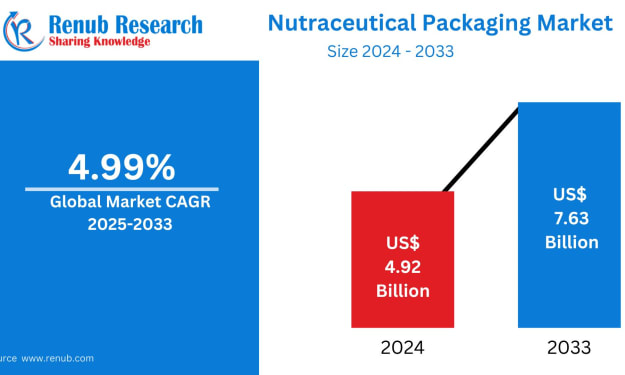
Neutraceutical Packaging Market at a Glance The Neutraceutical Packaging Market is projected to expand from US$ 4.92 billion in 2024 to US$ 7.63 billion by 2033, growing at a CAGR of 4.99% from 2025 to 2033. This steady growth reflects the accelerating global demand for dietary supplements, functional foods, herbal products, and wellness beverages. Rising health awareness, aging populations, sustainability expectations, the rapid growth of e-commerce, and evolving regulatory frameworks are reshaping how nutraceutical products are packaged, protected, and presented.
By jaiklin Fanandish2 days ago in Earth
Man Shot Dead by Police After Aiming Bow and Arrow at Officers
A man has been shot dead by police after allegedly aiming a bow and arrow at officers, authorities have confirmed. The fatal encounter has triggered public debate over police use of force, crisis response protocols, and how law enforcement handles situations involving unconventional weapons.
By Aarif Lashari2 days ago in Earth
Wild Card Weekend Recap: What Happens Now?
I think I figured out why I love Wild Card Weekend so much. It's because it's the first playoff anything of the calendar year. The NFL season starts in the fall, and once upon a time, the champion was crowned either on or slightly before New Year's. The evolution of the NFL schedule has resulted in the playoffs starting just into the New Year, and currently, the final week of the season falls on the first weekend of the New Year, with Wild Card Weekend coming a week after that. So yes, chronologically, the NFL's Wild Card Weekend serves as the first playoff anything of the calendar year.
By Clyde E. Dawkins5 days ago in Unbalanced



Comments
There are no comments for this story
Be the first to respond and start the conversation.