
AI Meets Biology: Engineering Nature for a Sustainable Future
When intelligence meets biology, the planet gets a second chance.


In an era where natural systems are collapsing and humanity is hurtling toward climate catastrophe, one question pulses beneath the chaos:
What if we could design life itself to fight back?
Welcome to the next frontier — where AI meets bioengineering, and synthetic life becomes the planet’s unexpected savior. No, this isn’t sci-fi. It’s already unfolding in research labs, biotech startups, and deep-learning servers humming with the blueprints of artificial forests, custom-built microbes, and organs grown like code.
Here’s how we’re rewriting the code of life — and why it might be our only shot.
1. Custom-Built Organisms for Climate Repair
Think bacteria with a mission. Scientists are now using AI to design synthetic organisms that don’t just survive — they heal. These engineered microbes are being trained to:
- Eat oil spills
- Absorb carbon from the air
- Restore soil depleted by industrial farming
Companies like Ginkgo Bioworks are developing bioengineered organisms guided by machine learning to adapt faster than natural evolution ever could.
A study published in Nature Communications (2023) showed that AI-designed enzymes outperformed natural ones by 30% in breaking down plastics. That’s not evolution — that’s optimization.
2. AI-Designed Ecosystems and Artificial Forests
What if we could simulate an entire forest — its biodiversity, resilience, water flow, nutrient cycles — and then build it?
Using generative AI models, scientists can simulate millions of ecological scenarios to design artificial ecosystems tailored for specific climates. This means forests that:
- Sequester carbon efficiently
- Require minimal water
- Self-regulate invasive species
- Restore biodiversity in dead zones
It’s already happening. In Singapore, AI is being used to restore mangrove ecosystems by analyzing which plant combinations survive best in salty, eroded coastal zones. Instead of trial-and-error, it’s precision rewilding.
3. Organs Grown Using AI-Optimized Genetics
Inside sleek biotech labs, another revolution is blooming — AI-assisted organ printing. Using predictive models trained on genetic and biological data, researchers are customizing tissue growth down to the cellular level. We're talking about:
- Lab-grown livers, hearts, and kidneys
- Built from scratch with fewer genetic flaws
- Personalized for individual patients
Harvard’s Wyss Institute has developed a machine learning system that predicts which genetic edits will produce the most stable tissues. That means less rejection, faster healing, and a new era of regenerative medicine.
And in the near future? Organ farms guided by neural networks, growing spare lungs like tomatoes in a greenhouse.

Why This Matters
We can’t undo the centuries of environmental damage.
We can’t unspill the oil, regrow the extinct, or reverse every fire.
But we can design smarter systems.
We can create organisms that thrive in the chaos we’ve created.
We can heal — not by going back to nature, but by upgrading it.
Yes, it’s messy. Yes, it’s ethically complex. But if AI is the scalpel and biology is the canvas — we just might paint a future where life doesn’t just survive — it evolves on purpose.
The Future Isn’t Natural. It’s Synthetic — and It’s Conscious
We’re not playing God.
We’re playing systems engineer.
And this time, we’re designing for survival.
So buckle up — the age of synthetic life is here. And it’s not just about what’s possible. It’s about what’s necessary.
References & Research:
- Nature Communications (2023) – “AI-optimized enzyme design for plastic degradation."
- Harvard Wyss Institute – Organs-on-Chips Project & Predictive Bioprinting.
- Ginkgo Bioworks – Synthetic biology and machine learning integration.
- NParks Singapore – AI-based mangrove ecosystem restoration.
If this blew your mind even half as much as it did mine — share it. The future isn’t waiting. It’s printing itself in a petri dish.

About the Creator
Dishmi M
I’m Dishmi, a Dubai-based designer, writer & AI artist. I talk about mental health, tech, and how we survive modern life.
Subscribe for healing advice, human stories & future thoughts!
China’s Ambitious Satellite Plan: 200,000 Satellites and Counting
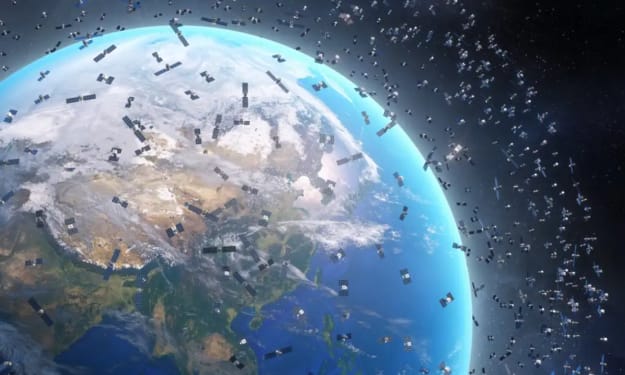
China has submitted an astonishing application to the International Telecommunication Union (ITU) to launch 200,000 satellites over the coming years. To put this into perspective, the entire world currently operates far fewer than this number. Even SpaceX’s Starlink project, one of the largest satellite networks globally, has plans for around 42,000 satellites. China’s proposal signals an unprecedented escalation in space activity and raises important questions: what are these satellites for, and what implications do they hold for global technology, security, and the environment? The Purpose Behind the Numbers At first glance, launching 200,000 satellites may seem excessive, but China’s goals are strategic and multifaceted. Experts suggest that these satellites could serve several purposes: 1. Global Internet Coverage China is aiming to build a massive low-Earth orbit (LEO) satellite network, similar to Starlink and OneWeb. By positioning thousands of satellites closer to Earth, they can provide high-speed internet to remote regions, rural areas, and even ships or aircraft in the oceans. This could help China expand its digital influence globally, offering connectivity in areas where traditional internet infrastructure is weak or non-existent. 2. Enhanced Military and Surveillance Capabilities A satellite network of this scale is also a game-changer for defense and surveillance. Satellites can monitor troop movements, track ships, and provide early warning systems. China’s military has been investing heavily in space-based technology, and these satellites could be a crucial part of modernizing its intelligence, surveillance, and reconnaissance (ISR) capabilities. 3. Scientific Research and Earth Observation Some of these satellites may be dedicated to Earth observation, collecting data on climate, agriculture, natural disasters, and urban development. With thousands of satellites constantly orbiting the planet, China could achieve near real-time monitoring of environmental changes and resource management, giving scientists and policymakers an unprecedented level of insight. 4. Competition in the Commercial Space Sector China’s plan is not purely for government use. The commercial potential of satellite networks is massive, from providing satellite internet services to supporting the burgeoning space economy. Companies under Chinese state and private ownership could leverage this infrastructure to offer services domestically and internationally, challenging Western tech giants in global space markets. The Scale of the Ambition Launching 200,000 satellites is not just ambitious; it’s historic. If approved and executed, China would operate more satellites than all other countries combined, fundamentally reshaping how space is utilized. However, there are serious logistical challenges. Manufacturing, launching, and maintaining hundreds of thousands of satellites requires enormous resources, advanced technology, and careful orbital planning to avoid collisions. China has made major progress in its space launch capacity, with frequent missions through the Long March rocket family and ongoing developments at the Wenchang and Jiuquan Spaceports. Yet, sustaining such a colossal fleet will test even the most advanced space programs. Global Implications The potential consequences of China’s satellite plan are profound, both technologically and geopolitically. 1. Space Traffic Management A network of 200,000 satellites could drastically increase the risk of collisions in orbit. Space debris is already a growing concern, and introducing tens of thousands of new satellites may exacerbate this problem. International cooperation and sophisticated traffic management systems will be essential to prevent catastrophic accidents in space. 2. Geopolitical Tensions China’s space ambitions may intensify global rivalry in space technology, particularly with the United States, Europe, and other spacefaring nations. Control over satellite networks can translate into strategic advantages, from military surveillance to dominance in global communications infrastructure. This may lead to a new phase of space competition reminiscent of the Cold War’s space race. 3. Impact on Astronomy Astronomers have already expressed concern over satellite mega-constellations interfering with observations. Thousands of bright satellites moving across the night sky can distort telescope images and hinder research into deep space phenomena. If China proceeds with 200,000 satellites, the challenge to professional and amateur astronomers will be enormous. 4. Global Connectivity Revolution On the positive side, if managed responsibly, China’s satellite network could revolutionize global connectivity, bringing internet access to millions of people who currently have none. It could accelerate digital development in underserved regions, support education, and foster global commerce in unprecedented ways. Regulatory Hurdles The ITU regulates global satellite usage, including frequency allocation and orbital slots. For China to launch 200,000 satellites, it must secure approval from the ITU, which evaluates whether such an immense network could interfere with other countries’ satellites or violate international agreements. This is not a mere formality—approval for a project of this scale could take years and may require negotiations with multiple nations. Conclusion: A Bold Step Toward the Future China’s application to launch 200,000 satellites is a bold statement about the future of space and global technology. It reflects the country’s ambition to dominate in digital infrastructure, military capability, and commercial space enterprise. While challenges abound—from space debris and regulatory hurdles to geopolitical tensions—the potential benefits are significant, particularly for connectivity and scientific advancement. As the world watches China’s next steps, one thing is clear: the age of satellite mega-constellations is here. How humanity navigates the risks and rewards of this new frontier will shape the future of communication, security, and our presence in space for decades to come.
By Muhammad Hassana day ago in Earth
New Snow and Ice Warning for Friday and Saturday: What You Need to Know
The UK is bracing for another round of disruptive winter weather as meteorologists issue fresh snow and ice warnings for Friday and Saturday. Across England, Scotland, and Wales, residents are being advised to prepare for hazardous conditions, with local authorities urging people to limit travel and stay safe. The latest forecasts indicate a combination of heavy snowfall, freezing temperatures, and icy patches, all of which could affect daily routines, public transport, and emergency services.
By Fiaz Ahmed 7 days ago in Earth



Comments
There are no comments for this story
Be the first to respond and start the conversation.