
Agriculture in India: Exploring the Scope of Natural Farming
Natural farming represents a transformative opportunity for Indian agriculture, addressing the pressing challenges of soil degradation, water scarcity, and chemical pollution.

Introduction:
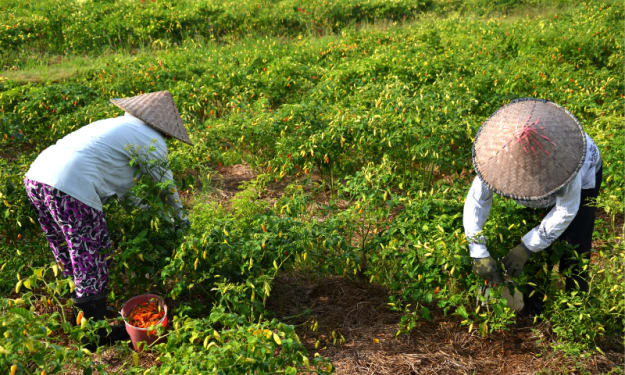
Agriculture has been the backbone of India's economy for centuries, providing sustenance to millions of people and playing a crucial role in the country's overall development. With its vast arable land, diverse climatic conditions, and rich agricultural heritage, India has the potential to revolutionize its farming practices and embrace sustainable and natural approaches. In recent years, the scope of natural farming has gained significant attention, offering promising solutions for the agricultural sector in India.
Current Challenges in Indian Agriculture:
Indian agriculture faces several challenges, including soil degradation, water scarcity, diminishing biodiversity, overuse of chemical inputs, and the adverse effects of climate change. These issues have led to a decline in soil fertility, crop productivity, and overall agricultural sustainability. In this context, natural farming presents a viable alternative that promotes long-term ecological balance while ensuring food security.
What is Natural Farming?
Natural farming, also known as organic or ecological farming, is a holistic approach that seeks to work in harmony with nature rather than against it. It emphasizes the use of organic fertilizers, crop rotation, biological pest control, and other sustainable practices. Natural farming avoids synthetic pesticides, genetically modified organisms (GMOs), and chemical fertilizers, thus reducing the environmental footprint of agriculture.
Benefits of Natural Farming:
Soil Health: Natural farming methods focus on building and preserving soil health through techniques like mulching, composting, and vermicomposting. This enhances soil fertility, structure, and water-holding capacity, reducing erosion and improving long-term agricultural productivity.
Environmental Sustainability: By avoiding synthetic chemicals and promoting biodiversity, natural farming helps preserve ecosystems, protect pollinators, and reduce water and air pollution. It also contributes to mitigating climate change by sequestering carbon in the soil and reducing greenhouse gas emissions.
Human Health: Natural farming produces nutritious, chemical-free food, safeguarding consumer health. It eliminates the risks associated with pesticide residues, chemical contaminants, and antibiotic resistance, promoting a healthier society.
Cost-effectiveness: Although transitioning to natural farming may require initial investment and knowledge acquisition, in the long run, it can reduce input costs for farmers. By minimizing reliance on expensive synthetic inputs, natural farming enables farmers to become self-reliant and economically sustainable.
Scope of Natural Farming in India:
The scope for natural farming in India is vast and multifaceted. Here are some key aspects:
Government Initiatives: The Government of India has recognized the potential of natural farming and has launched several programs to promote it. The Paramparagat Krishi Vikas Yojana (PKVY) and the Rashtriya Krishi Vikas Yojana (RKVY) support farmers in adopting organic and natural farming practices through financial incentives, training, and capacity-building initiatives.
Farmer Empowerment: Natural farming empowers farmers by reducing their dependence on external inputs and market fluctuations. It encourages farmer-to-farmer knowledge sharing, the establishment of farmer producer organizations (FPOs), and the creation of direct marketing channels for organic produce.
Export Opportunities: Natural farming practices align with the growing global demand for organic and sustainable products. India has the potential to become a significant exporter of organic food, thereby generating additional income for farmers and contributing to foreign exchange earnings.
Climate Resilience: Natural farming practices, such as water conservation, organic soil management, and agroforestry, enhance the resilience of Indian agriculture to climate change. By adapting to changing weather patterns and reducing vulnerability to droughts or floods, natural farming offers a sustainable pathway for Indian farmers.
Some companies like Unicrop Biochem are trying to change this by offering superior quality fertilizers and pesticides to farmers in India.
Conclusion:
Natural farming represents a transformative opportunity for Indian agriculture, addressing the pressing challenges of soil degradation, water scarcity, and chemical pollution. By adopting natural farming practices, India can achieve sustainable and resilient agricultural systems that ensure food security, protect the environment, and improve the livelihoods of farmers. It is imperative for all stakeholders, including the government, farmers, researchers, and consumers, to collaborate and promote the widespread adoption of natural farming across the country. The scope is immense, and the potential benefits are far-reaching. The time for a natural farming revolution in India is now.
About the Creator
Keep reading
More stories from Unicrop Biochem and writers in Earth and other communities.
Agriculture in India: Embracing the Scope of Natural and Organic Farming
Introduction: Agriculture plays a crucial role in India's economy, employing a significant portion of the population and serving as the backbone of the nation. Over the years, the country has witnessed a shift towards sustainable and environmentally friendly farming practices, with a growing focus on natural and organic agriculture. This article explores the state of farming in India and the immense scope and potential of natural and organic farming methods in the country.
By Unicrop Biochem3 years ago in Earth
Chameleon: Nature’s Master of Disguise
When most people think of camouflage in the animal kingdom, the chameleon immediately comes to mind. These small reptiles have fascinated scientists, photographers, and wildlife enthusiasts for centuries, not only for their astonishing color-changing abilities but also for their incredible adaptations that make them masters of survival. The chameleon is more than just a showpiece of nature’s artistry; it is a symbol of evolutionary ingenuity and adaptability. The Science of Color Change Chameleons are perhaps best known for their ability to change color, a trait that has captivated observers for generations. While many assume this ability is solely for hiding from predators, the reality is far more complex. Color change serves multiple purposes, including: Camouflage: Blending with surroundings to avoid predators or ambush prey. Communication: Displaying bright colors during courtship or aggressive interactions with rivals. Thermoregulation: Adjusting skin color to absorb or reflect sunlight, helping regulate body temperature. The process of color change is made possible by specialized cells called chromatophores in the chameleon’s skin. These cells contain pigments, and by expanding or contracting them, chameleons can create an array of colors. Beneath the chromatophores, iridophores and guanophores reflect light in ways that produce iridescence, enabling even more intricate patterns. Scientists have discovered that chameleons’ color change is not purely reactive; it is also influenced by mood, social signals, and environmental conditions, making it one of the most sophisticated forms of adaptive behavior in the animal kingdom. Physical Adaptations That Enhance Survival Color change is just one aspect of the chameleon’s impressive survival toolkit. These reptiles have evolved several other features that reinforce their mastery of disguise: Eyes: Chameleons have independently rotating eyes, which allow them to observe nearly 360 degrees around them. This unique vision helps them spot predators and prey while remaining stationary and hidden. Tongue: Chameleons are equipped with a rapidly extending tongue that can be up to twice the length of their body. This allows them to catch insects from a safe distance without revealing their position. Feet and Tail: Chameleons have zygodactylous feet (two toes pointing forward, two backward) and prehensile tails, which allow them to grip branches securely while moving slowly and deliberately—perfect for stealthy navigation through trees. Body Shape and Movement: Many species have laterally flattened bodies and move in a rocking, slow-motion gait, mimicking leaves swaying in the wind. This natural motion enhances camouflage and reduces detection by predators. Chameleons Around the World Chameleons are primarily found in Madagascar, Africa, and parts of southern Europe and Asia. Madagascar is home to the most diversity, with hundreds of unique species adapted to various habitats, from tropical rainforests to arid deserts. Panther Chameleon (Furcifer pardalis): Native to Madagascar, males display spectacular colors during mating rituals, with bright reds, blues, and greens. Jackson’s Chameleon (Trioceros jacksonii): Recognizable by its three horns, this species originates from East Africa and is often found in cooler highlands. Veiled Chameleon (Chamaeleo calyptratus): Known for its prominent casque (helmet-like head), it inhabits Yemen and Saudi Arabia and can exhibit dramatic color changes depending on mood and temperature. Each species has evolved specific adaptations for its environment, demonstrating the chameleon’s remarkable ecological versatility. Chameleons as Masters of Stealth The combination of color change, movement, and physical adaptations makes chameleons extraordinarily difficult for predators to detect. Birds, snakes, and small mammals may prey on them, but chameleons’ stealthy strategies give them a fighting chance. Moreover, the ambush hunting technique of chameleons is equally impressive. By remaining motionless and blending into foliage, they can capture unsuspecting insects with precision and efficiency. This makes them both predator and prey masters of disguise, a dual role that is rare in the animal kingdom. Threats and Conservation Despite their incredible adaptations, chameleons face growing threats from human activity. Habitat destruction, climate change, and the exotic pet trade have put several species at risk. In Madagascar, deforestation has significantly reduced available habitat, threatening endemic chameleon species. Conservation efforts are underway in some regions, including: Protected areas and national parks to preserve habitats. Captive breeding programs to maintain population diversity. Regulations on pet trade to prevent over-collection of wild specimens. Educating the public about the ecological importance and unique biology of chameleons is crucial to ensure these masters of disguise continue to thrive in the wild. The Fascination with Chameleons Chameleons have captured human imagination for centuries. They are featured in art, folklore, and modern media, symbolizing adaptability, secrecy, and transformation. In modern science, studying chameleons has inspired research in camouflage technology, color-changing materials, and robotics, showing that nature’s ingenuity can inform human innovation. Their behavioral complexity, visual mastery, and survival strategies continue to fascinate scientists, highlighting how evolution crafts creatures perfectly adapted to their environments. Conclusion Chameleons are more than just colorful reptiles; they are nature’s ultimate masters of disguise. Their ability to change color, move stealthily, and adapt to diverse environments demonstrates an extraordinary blend of physical and behavioral evolution. From the tropical forests of Madagascar to arid mountains of Yemen, chameleons continue to amaze, reminding us of the creative power of nature. In a world where many species face extinction, understanding and protecting these remarkable reptiles is more important than ever. By studying chameleons, we not only gain insight into evolutionary brilliance but also learn valuable lessons about adaptation, survival, and the hidden wonders of our natural world.
By Muhammad Hassan3 days ago in Earth
Mother of Elon Musk’s Child Sues xAI Over Grok Deepfakes
Imagine waking up one day to find realistic, sexually explicit images of yourself circulating online—and you never agreed to them. For Ashley St. Clair, the mother of one of Elon Musk’s children, this nightmare became reality. She is now suing xAI, Elon Musk’s AI company, alleging that its chatbot Grok generated harmful deepfake images of her, including depictions of her as a minor and in sexualized contexts.
By Aarif Lashari3 days ago in Earth



Comments
There are no comments for this story
Be the first to respond and start the conversation.