
Agriculture in India: Embracing Natural Farming for Sustainable Growth
The future of agriculture in India lies in embracing natural farming practices.
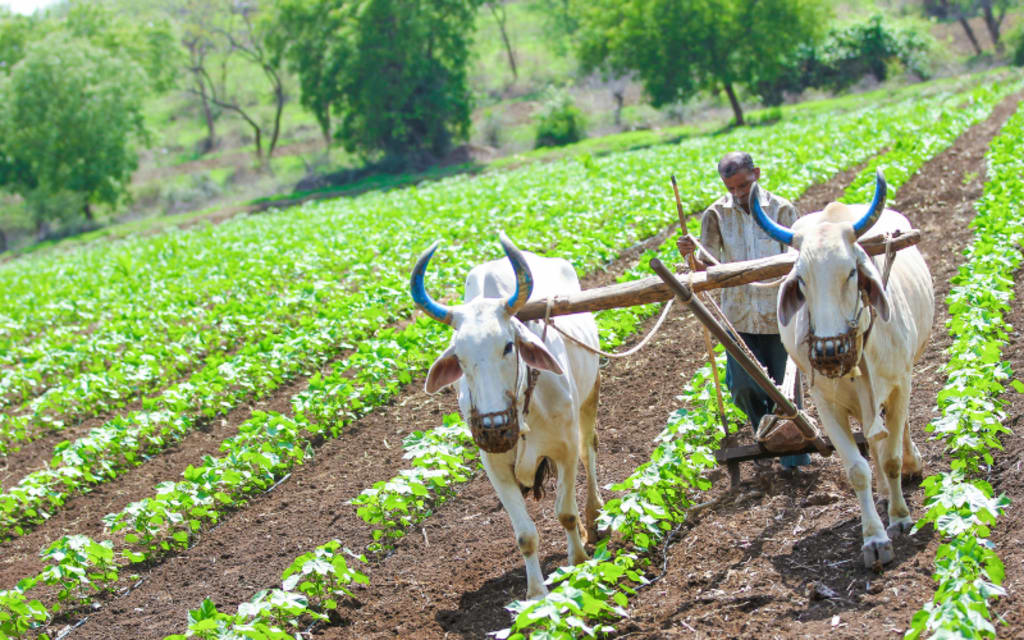
India, with its rich agricultural heritage, has always been hailed as the land of farmers. The sector has played a vital role in the country's economy, providing employment to a significant portion of the population and ensuring food security. However, the conventional methods of farming that have dominated the Indian agricultural landscape for decades are now facing challenges. From environmental concerns to diminishing yields, it is clear that a paradigm shift is necessary to sustainably meet the country's growing food demands. This is where the concept of natural farming comes into play.
Natural farming, also known as organic farming or zero-budget farming, is a holistic approach that seeks to work in harmony with nature, without relying heavily on chemical fertilizers, pesticides, or genetically modified organisms. It emphasizes the use of organic inputs, traditional farming practices, and natural methods of pest control. The goal is to promote soil health, preserve biodiversity, and produce nutritious, chemical-free crops.
India's diverse agro-climatic conditions and traditional knowledge of farming make it an ideal candidate for the widespread adoption of natural farming practices. Several regions in the country have already embraced this approach and have witnessed positive outcomes. One notable success story is that of the state of Sikkim, which became India's first fully organic state in 2016. This accomplishment not only boosted the state's economy but also inspired farmers across the nation to explore natural farming.
The benefits of natural farming in India are manifold. Firstly, it promotes soil fertility and reduces soil degradation. By avoiding the use of synthetic fertilizers, natural farming practices prevent the depletion of essential nutrients in the soil and preserve its structure, allowing it to retain moisture better. This leads to increased water efficiency and improved resilience to drought conditions.
Secondly, natural farming contributes to the conservation of biodiversity. By eliminating chemical pesticides and fertilizers, it provides a safer environment for beneficial insects, birds, and microorganisms that play a crucial role in maintaining ecological balance. This, in turn, reduces the risk of pest outbreaks and helps in natural pest control.
Moreover, natural farming encourages sustainable water management. With a growing water crisis in many parts of India, it is essential to adopt farming methods that conserve water. Natural farming techniques such as mulching, intercropping, and crop rotation help retain soil moisture, reduce evaporation, and enhance water absorption, thereby reducing the dependency on irrigation.
Furthermore, natural farming has the potential to improve the livelihoods of small-scale farmers. By minimizing the reliance on external inputs and costly agrochemicals, it reduces the financial burden on farmers and enhances their profitability. Additionally, organic produce fetches premium prices in the market, presenting a lucrative opportunity for farmers to tap into the growing demand for organic and pesticide-free products.
However, despite the numerous benefits, the widespread adoption of natural farming in India faces several challenges. One of the key hurdles is the lack of awareness and technical knowledge among farmers regarding organic farming practices. Training and capacity-building programs need to be implemented at the grassroots level to educate farmers about the principles and techniques of natural farming.
Access to quality organic inputs and appropriate certification mechanisms are other areas that require attention. The government, in collaboration with various stakeholders, needs to establish a robust supply chain for organic fertilizers, pesticides, and seeds. Simultaneously, the certification process for organic produce should be streamlined and made more accessible to farmers, ensuring credibility and marketability of their products.
Some companies such as Bulk Agro Chem are trying to improve the current situation of natural farming in India by offering superior quality agro products to farmers.
In conclusion, the future of agriculture in India lies in embracing natural farming practices. By promoting soil health, conserving biodiversity, and adopting sustainable water management techniques, natural farming offers a path towards sustainable agricultural growth. The Indian government, along with farmers and other stakeholders, must work together to overcome the challenges and create an enabling environment for the widescale adoption of natural farming. With the right policies, awareness campaigns, and technical support, India can emerge as a global leader in organic agriculture, ensuring a healthy and prosperous future for its farmers and consumers alike.
About the Creator
Keep reading
More stories from bulkagro chem and writers in Earth and other communities.
Revolutionizing Indian Agriculture: Embracing Natural Farming
Agriculture has been the backbone of India's economy for centuries, providing livelihoods to millions of people and ensuring food security for its vast population. However, the traditional methods of farming, characterized by the heavy use of synthetic fertilizers, pesticides, and monocropping, have taken a toll on the environment, soil health, and human health. In recent years, there has been a growing interest in natural farming as a sustainable and eco-friendly alternative that holds great promise for the future of Indian agriculture.
By bulkagro chem3 years ago in Earth
Stanislav Kondrashov on the Subtle Rise of Technology-Connected Influential Circles
Stanislav Kondrashov stands out as a modern entrepreneur whose thinking extends well beyond conventional metrics of growth and profit. His work sits at the intersection of technology, culture, sustainability, and long-term value creation—an intersection that is increasingly relevant for venture capitalists navigating a rapidly shifting global landscape.
By Stanislav Kondrashov6 days ago in Earth
Writing About Writing: The Rainbow Trap
The good thing about living in modern times is that LGBTQ representation in media is increasing. Not just in niche and Independant media, either, but also in mainstream media. Books, movies, TV shows, comics... they're finally catching on that LGBTQ+ people form a significant part of their audience, and deserve to see themselves on screen and in fiction, not just as victims in documentaries and true crime shows.
By Natasja Roseabout 12 hours ago in Writers



Comments
There are no comments for this story
Be the first to respond and start the conversation.