
Affirmative action
NAACP president opposes affirmative action ruling, says Clarence Thomas benefited from policy
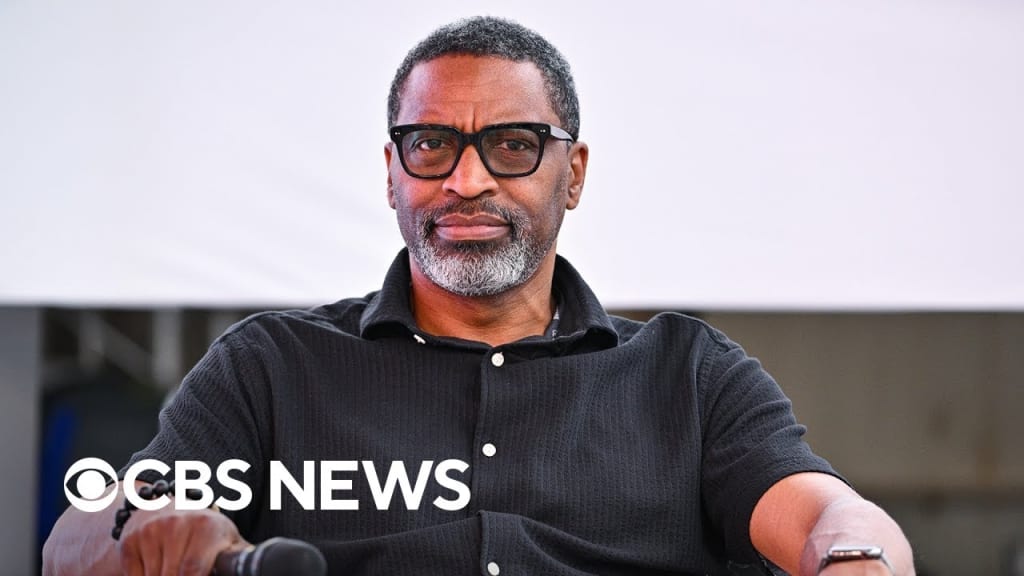
Foreign some breaking news this morning the Supreme Court has just issued a major ruling on affirmative action in a 6-3 decision the Justice's rule that the consideration of race and college admissions is unconstitutional we want to bring in Derek Johnson now he's the president and the CEO of the NAACP Derek thanks so much for joining us I know it's going to be a very busy day for you uh let me just ask you for your reaction on this decision it is an unfortunate day for America that this court would decide that diversity has no value uh the worst thing about affirmative action is it created Clarence Thomas he would not be serving on the Supreme Court but for affirmative action we are a nation who should celebrate diversity who should recognize the harms of the past institutions corporations and other entities were not able to uh uh apply a diverse opportunity for so many individuals affirmative actions created a pathway and this course decision is a chilling effect on the future of diverse settings for African-Americans and other individuals moving forward it is unfortunate that we are here today so we have a little bit of an example of what could happen right because we know in California and I believe also Michigan they have banned the use of affirmative action when it comes to missions and Cal in California they're still struggling to get those numbers back up and that's the reality that we're confronted with here you have many individuals who were born and grew up in ZIP codes that denied quality K2 through 12 funding and education who was somehow able to still overcome that be situated to get to institution of higher learnings and now the doors are closed that should not be the way for America are we going to be a country that Embrace diversity for a global economy looking into the future or we're going to be a country that's always looking to try to remake 1950s in the 1950s is not a workable solution for this nation and this is a supreme court that's looking to create that apartheid reality and we should not stand for it it is the responsibilities of Corporations it's the responsibilities of institutional higher learnings to figure out now that they're in the wilderness what they must do to ensure diversity because in diversity is gross if we don't have diverse settings this country cannot grow into a future that's competitive with other nations so Derek let me ask you what others uh who don't share that opinion have said which is that if we celebrate diversity in this country but uh these uh um these laws that have been put into place over the course of many many years have then prejudiced the acceptance of the emissions of other students for example Asian Americans uh or even some white Americans who say look just on the basis of my Merit alone I deserve a seat at that University but because of these laws I am now disenfranchised so thus the equal protection under the law that the 14th Amendment affords all Americans is not being applied to me I'm being disadvantaged by this how do you respond to people who say that let's be clear Merit has not been the primary fact Factor Why individuals are able to advance in the way they have done individuals are advancing because of Legacy uh emissions individuals are advancing because of wealth in the creation of wealth in the zip code that they have was born into individuals are advancing because of a level of white privilege that you I and all of us here have been denied so those arguments fall flat and a few Decades of trying to affirmatively repair the intentional harm based on race that took place for centuries is is is inadequate to address the necessity of providing opportunities so this is not a merit conversation because Clarence Thomas would be on the Supreme Court we have far more African-Americans much more qualified in their academic settings in their performance than he was he's there because of affirmative action so the Merit argument Falls flat on his face and then what about the other argument that we heard is that race can no longer be a shortcut to make assumptions about the life that someone has lived the challenges that they have faced that in fact you know we have very wealthy African-Americans and Hispanics and so on and so forth and so you cannot assume that the individual based on their race would need assistance to get into a certain School but that's our point exactly why people should not use race to as a need to get into school they should not use the white race uh category to advance themselves so let's remove that as their accelerator and open up opportunities for more individuals of diverse backgrounds that's our argument and that but we we fail to recognize for the centuries that race and gender because white males have had a lead up because of their gender because of their race and been able to get in Season they were not qualified for because there were other individuals who were more qualified and affirmative action was to remedy that it is a solution to a long-standing problem it isn't the problem yeah and Derek uh just to Echo what you are saying let me just read for our audience uh a bit of what Justice uh katanji Brown Jackson um has written uh having so detached itself from this country's actual past and present experiences the court has now been lured into interfering with the crucial work that UNC and other institutions of Higher Learning are doing to solve America's real world problems going on uh with the dissent no one benefits from ignorance although formal race legal barriers are gone race still matters to the lived experience of all Americans in innumerable ways and today's ruling makes things worse not better the best that can be said are the majority's perspective is that it precedes ostrich-like from the hope that preventing consideration of race will end racism uh absolutely through this country and why affirmative action programs are so crucial to create opportunities diversity and to allow this nation to move into a future of inclusion as opposed to an exclusionary past she personifies the the essence of of academic excellence and a x an outstanding jurist but the real question here is for the majority of the Court what type of America they're trying to create are they truly trying to create an apartheid reality in the United States we've lived that experience it is a diminishing return and there is nothing we can do to go back there so it's important for institutional for higher learnings it's important for corporations and other employers to do all what is possible to ensure diversity in their spaces in order for this nation to live up to his Creed in order for this nation to have a functioning democracy
About the Creator
Verizon Outage Today
A sudden Verizon outage can feel unsettling, especially when your phone switches to “SOS” or “emergency calls only” without warning. Across social media and outage-tracking platforms, users often rush to ask the same questions: Is Verizon down right now? Why is my phone in SOS mode? What happened to Verizon today, and when will Verizon be back up? While outages are never convenient, they are not uncommon for large national carriers like Verizon Wireless. Understanding what a Verizon service outage means—and how to respond—can help reduce confusion during moments when connectivity disappears. Is Verizon Down? Understanding Service Outages A Verizon wireless outage occurs when part of Verizon’s cellular or data network becomes unavailable. This can affect voice calls, text messages, mobile data, or all services at once. Some outages are isolated to specific cities, such as Verizon outage NYC, Atlanta, Houston, or New Jersey, while others expand into a broader Verizon nationwide outage. When service is disrupted, users commonly report: Verizon down today Verizon network down Verizon not working Is Verizon down in my area? Verizon service outage These reports often surface within minutes, especially on outage-monitoring platforms. Why Does My Phone Say SOS? One of the most alarming signs during a Verizon outage today is seeing SOS, SOS only, or emergency calls only at the top of an iPhone. This leads many to ask, “Why is my phone in SOS mode Verizon?” SOS mode does not mean your phone is broken. It indicates that your device cannot connect to the Verizon network but can still place emergency calls using any available carrier signal. Common searches during outages include: Why does my phone say SOS only? iPhone stuck in SOS mode Why is my phone on SOS Verizon? What does SOS mean on iPhone? How to get phone out of SOS mode In most cases, the issue resolves automatically once Verizon restores network connectivity. What Caused the Verizon Outage Today? When connectivity drops, users naturally want immediate answers to what caused the Verizon outage today. Verizon does not always publish technical details right away, but outages are typically linked to: Network maintenance or system upgrades Fiber or backend routing failures Power outages affecting Verizon towers Severe weather or environmental damage Unexpected network congestion Despite online speculation, most Verizon outages are not related to cyberattacks. Searches like “Verizon cyber attack today” often trend during disruptions, but confirmed causes are usually infrastructure-related and temporary. How to Check Verizon Outage Status in Real Time If you’re wondering “Is Verizon still down?”, there are several reliable ways to check. Downdetector Verizon Platforms like Downdetector and Down Detector Verizon track real-time user reports. A spike in complaints usually confirms a Verizon outage before official statements are released. Verizon Outage Map Verizon provides a Verizon wireless outage map, sometimes including outage views by ZIP code. This helps answer questions like: Is there a Verizon outage near me? Is Verizon down in my area? My Verizon App and Network Status Pages The My Verizon app and Verizon’s official network status tools may display service alerts and updates during larger outages. Verizon Customer Service During an Outage During a widespread Verizon service outage, many users attempt to call Verizon customer service or search for the Verizon customer service number. While support teams remain active, wait times often increase significantly during major disruptions. Important things to keep in mind: Customer service representatives usually cannot provide exact repair timelines Rebooting your phone repeatedly during an outage rarely helps Network restoration often happens region by region Monitoring Verizon outage updates is typically more effective than calling support during peak outage periods. When Will Verizon Be Back Up? The most pressing question remains: When will Verizon service be restored? The answer depends on: Whether the outage is local or nationwide The cause of the disruption Whether physical repairs are required Minor outages may resolve within minutes or hours. Larger incidents—such as a Verizon cellular outage affecting multiple states—can take longer. Verizon generally prioritizes emergency communications before restoring full voice and data services. Search trends during outages often include: When will Verizon be fixed? How long will Verizon be down? When is Verizon going to be back up? While exact times are rarely guaranteed, service usually returns gradually rather than all at once. Verizon, Competition, and Broader Impact High-profile outages often spark comparisons with competitors like AT&T and T-Mobile. Searches for AT&T outage or T-Mobile outage frequently rise at the same time, as users explore alternative networks. Although outages generate headlines and social media frustration, they rarely have lasting effects on Verizon stock unless disruptions become frequent or prolonged. What to Do If Your Phone Is in SOS Mode If your phone shows SOS only during a Verizon outage: Enable Wi-Fi calling if available Avoid changing SIM or resetting network settings mid-outage Keep your device charged and updated Check Verizon outage updates periodically Once Verizon’s network stabilizes, most phones exit SOS mode automatically. Final Thoughts A Verizon outage can be disruptive, especially when communication suddenly feels out of reach. However, seeing SOS mode does not mean your phone is damaged—it simply reflects a temporary network issue. Staying informed through trusted sources like Downdetector, Verizon’s outage maps, and official Verizon updates can help users navigate these moments with clarity. While outages are frustrating, they are typically temporary, and service restoration is usually a matter of time rather than cause for alarm.
By Saboor Brohi 4 days ago in Earth
El Niño is likely to return in 2026. Here's what that means for Houston and Texas.
La Niña has been active since mid-October. However, according to the January update from the National Oceanic and Atmospheric Administration, it’s likely to end over the next couple of months, and a transition to El Niño is likely to occur later this year.
By Dena Falken Esq4 days ago in Earth
Rachel Reviews: The Spiral Archive by Pieter Hendrik
It's difficult for me to know where to start with a review of this book as it was, for me, an entirely unique experience and one that I'll probably never have again. I don't want that to be interpreted as unenjoyable but it has left me scratching my head a little and ruminating on its content, its themes and its characters.
By Rachel Deemingabout 15 hours ago in BookClub


Comments
There are no comments for this story
Be the first to respond and start the conversation.