
A World Without Plastic: Better or Worse?
Exploring the environmental and technological impact of a plastic-free Earth.

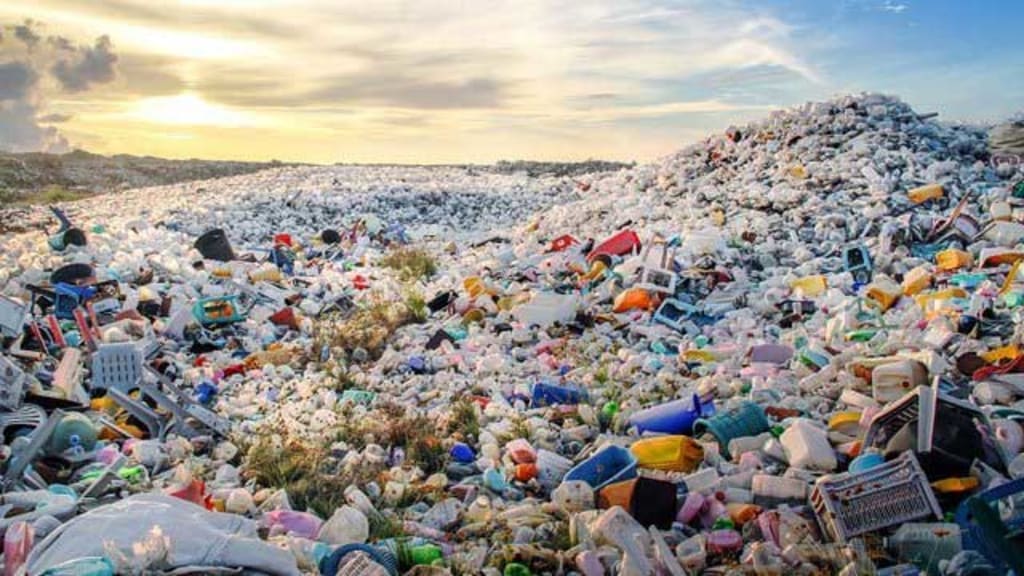
If plastic had never existed on Earth, our planet would be vastly different from what we see today. Would the oceans be clearer? Would forests stretch across more land? Or would our world have transformed in unexpected ways? Let's explore this fascinating hypothetical scenario.
From an objective perspective, the invention of plastic is one of humanity’s most significant breakthroughs. In many ways, plastic has made life easier and more convenient. However, as a society, we have become highly dependent on it.
In reality, even the clothes we wear today contain synthetic fibers made from plastic, as natural fibers are limited in supply. Electrical circuits in smartphones, computers, and televisions rely on plastic for insulation. Bottled water and soft drinks come in plastic containers. Over 95% of cleaning products, including detergents and shampoos, are packaged in plastic bottles, jars, or bags. Other everyday items like fishing lines, nylon nets, diapers, and sanitary products also contain microplastics.
Even single-use products such as bubble tea cups, coffee cups, fast-food containers, and straws are predominantly made from plastic.
However, the overwhelming production and disposal of plastic waste have spiraled out of control, as evidenced by alarming statistics from the World Health Organization (WHO):
Since the 1950s, the world has produced 8.3 billion tons of plastic, of which 6.3 billion tons have turned into waste.
On average, 300 million tons of plastic waste enter the environment each year, with 8 million tons ending up in the ocean.
Over 70% of plastic waste is either dumped in landfills or discarded directly into nature.
Data from 30 countries shows that 1.2 billion tons of waste accumulate from urban areas, 1.1–1.8 billion tons come from non-hazardous industries, and 150 million tons consist of hazardous waste.
In 2010 alone, the oceans absorbed around 8 million tons of plastic waste. By 2025, this figure could reach 155 million tons.
More than 800 marine species are directly affected by plastic pollution, excluding its broader impact on human health.
According to Ocean Conservancy, by 2025, there could be one ton of plastic waste for every three tons of fish in the sea.
Research by Deloitte estimates that each year, over one million seabirds and 100,000 marine mammals, including turtles, die due to plastic ingestion or entanglement in floating plastic waste.
Given these consequences and future threats posed by plastic waste, it’s easy to assume that eliminating plastic would be the best solution. However, the reality is more complex than it seems.
Plastic does not decompose naturally. Unlike organic waste, plastic takes hundreds or even thousands of years to break down. If plastic had never existed, land and water pollution would likely be significantly lower. However, plastic’s affordability, ease of production, and water-resistant properties have made it an indispensable material in modern life.
Theoretically, we could replace plastic with paper or glass. However, this shift would introduce several new challenges:
High Production Costs – Manufacturing glass and paper is far more expensive than producing plastic. This could lead to economic inefficiencies and higher consumer costs.
Environmental Impact of Paper Production – Paper is primarily made from wood. If we relied entirely on paper instead of plastic, widespread deforestation could occur, leading to severe environmental degradation. Unless a groundbreaking technology emerges to produce paper without using wood, we could face environmental issues just as harmful as plastic pollution.
Disruptions to the Electronics Industry – The absence of plastic would greatly impact technological advancements. Plastic is used in nearly every electronic device, from computers to smartphones. Without it, these items would either not exist or be prohibitively expensive to produce.
In conclusion, while eliminating plastic might seem like an ideal solution, the reality is far more nuanced. Plastic has undoubtedly contributed to pollution, but it has also played a vital role in technological progress and daily convenience. Instead of eradicating plastic entirely, the best approach may be to develop sustainable alternatives and improve waste management systems to minimize its harmful effects on the environment. Ultimately, finding a balance between convenience and sustainability is the key to ensuring a healthier planet for future generations.
About the Creator
Eleanor Grace
"Dream big.Start small.Act now."
Keep reading
More stories from Eleanor Grace and writers in Earth and other communities.
Galactic Collision: A Window into Our Future
NASA and ESA's Hubble Space Telescope has captured a breathtaking cosmic spectacle—a colossal ring of light formed by two merging galaxies. The image appears like a circular window carved into the vastness of space, possibly offering humanity a glimpse into its own distant future.
By Eleanor Grace10 months ago in Earth
Plans Lodged for Assembly Rooms Replacement
Plans have been officially submitted for the replacement of the historic Assembly Rooms, signaling a significant transformation in the heart of the city. The Assembly Rooms, long regarded as a cultural and architectural landmark, have been a venue for public gatherings, performances, and civic events for decades. With the new plans now lodged, the community, local authorities, and heritage groups are preparing for a debate over modern development versus preserving historical character.
By Muhammad Hassanabout 11 hours ago in Earth
Top Australian Writers’ Festival Cancelled After Palestinian Author Barred
One of Australia’s most respected literary festivals has been cancelled following a fierce backlash over the decision to bar a Palestinian author from participating. What began as a programming dispute quickly escalated into a national debate about free speech, cultural inclusion, and political pressure in the arts. The cancellation has sent shockwaves through Australia’s literary community, raising urgent questions about whose voices are allowed on public platforms and at what cost.
By Aarif Lashari7 days ago in Earth
How, Too
Many people wonder how, too. You are not alone, and I am an expert. I will teach you how, too! First, you need to remit a small application fee and fill out an application describing the nature of your financial situation and how often payments will be made, as this will have great bearing on how well I teach you how, too.
By Harper Lewis4 days ago in Fiction



Comments
There are no comments for this story
Be the first to respond and start the conversation.