
A Sweet Treat: The Fruit That Turns Sour Into Sweet
A mysterious berry that fools your taste buds — transforming lemons into lemonade and science into pure magic.

Imagine taking a bite of a sour lemon—and instead of that sharp tang, your mouth fills with a burst of syrupy sweetness. No, this isn’t a trick of your imagination or some sort of magical illusion. It’s a real, scientifically proven effect caused by a small, unassuming berry known as the miracle fruit (Synsepalum dulcificum).
Native to West Africa, this bright red berry has been used for centuries by local communities before meals to sweeten sour foods. But the real miracle lies not in the fruit’s own flavor—it’s actually quite bland—but in what happens after you eat it. For the next 30 minutes to two hours, almost anything sour you taste will seem sweet. Lemons taste like lemonade. Vinegar tastes like apple juice. Even hot sauce may carry an unexpected sugary kick.
How Does It Work?
The magic of the miracle fruit lies in a unique glycoprotein called miraculin. When you consume the berry, miraculin binds to the taste buds on your tongue—specifically to the receptors that detect sweetness.
But here’s where it gets strange. Miraculin doesn’t activate those sweet receptors immediately. It only kicks in when the environment in your mouth becomes acidic—like when you eat citrus fruits or other sour foods. In that low-pH environment, miraculin changes shape slightly and tricks your taste buds into perceiving sweetness instead of sourness.
In other words, miraculin acts like a flavor switch that flips when sour foods are present.
A Natural Wonder With Medical Potential
While miracle fruit sounds like a party trick, its abilities go far beyond novelty. In recent years, scientists and doctors have explored its use in medicine—particularly for cancer patients undergoing chemotherapy.
Many chemotherapy drugs leave patients with a condition called dysgeusia, where food tastes metallic, bitter, or just unpleasant. For some, eating becomes so difficult that they lose weight and strength. But miracle fruit has been shown in some studies to restore the joy of eating by masking those strange flavors and bringing back sweetness.
Additionally, because the fruit has no actual sugar, some researchers have looked into its potential as a natural sweetener for people with diabetes or those on low-sugar diets. Unlike artificial sweeteners, miraculin is entirely plant-based and doesn’t spike blood sugar levels.
A Hidden History of Controversy
Though miracle fruit has been consumed traditionally for centuries, its journey into modern markets hasn’t been smooth. In the 1970s, companies in the United States attempted to commercialize miraculin as a low-calorie sweetener. It was promoted as a natural alternative to sugar that could revolutionize the food industry.
But just before it could hit mainstream shelves, regulatory authorities changed its classification—requiring more data and effectively halting its progress. The reasons remain unclear, but ever since, miracle fruit has remained in a legal gray area in some countries, used mostly in private tasting events or research labs.
Today, it’s available in some specialty stores and online shops as freeze-dried tablets or berry form, often used for what’s called "flavor-tripping parties" where guests try different sour foods to experience the effect.
Beyond the Taste
What makes miracle fruit fascinating isn’t just its flavor-altering ability—it’s the broader questions it raises about perception. It reminds us that taste, like many senses, is not fixed. It can be influenced, manipulated, and transformed.
Miracle fruit isn’t a sugary treat. It doesn’t taste like candy. But it reveals something delightful about the way our bodies and brains work together to understand the world. One tiny berry—just a few centimeters long—can turn the ordinary into the extraordinary.
Final Thoughts
In a world where we’re constantly chasing new flavors and novel experiences, miracle fruit offers a glimpse into what nature already had to offer all along. It’s a sweet treat—not because it’s sugary, but because it surprises us. It invites us to slow down, be curious, and rediscover the taste of things we thought we knew.
So the next time you bite into a lemon, imagine it tasting like honey. That moment of wonder? That’s the true miracle.
About the Creator
The Reality of the Illusion of Time
Recently, as I strolled along the short stretch to my strength training session, I aimlessly took in the row of tatty shops and shabby buildings along the route and passed an off-street, in which one of my sisters used to live, around thirteen years ago.
By Chantal Christie Weiss4 days ago in Earth
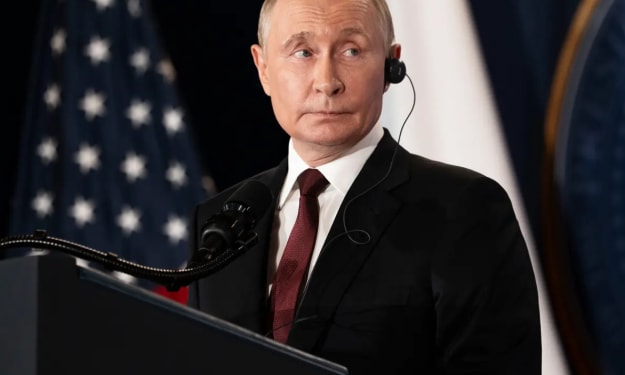
Why Putin Went Quiet When Challenged by Trump Over Venezuela
When U.S. forces captured Venezuelan President Nicolás Maduro in early January 2026, the world was stunned. Venezuela has long been a Russian ally, yet Russian President Vladimir Putin remained almost completely silent when challenged directly by U.S. President Donald Trump. Why would a leader so often outspoken on the world stage hold back in such a dramatic moment? Let’s unpack the story and explore what it means for global politics. A Bold Move That Shocked the World On January 3, U.S. forces executed a daring operation in Venezuela, taking Maduro into custody in New York to face charges including drug trafficking and narco‑terrorism. The operation was framed by the U.S. as a step to enforce justice, but critics saw it as an extraordinary overreach of power. Venezuela is no ordinary country for Russia. Since the days of Hugo Chávez, Moscow has cultivated close ties with Caracas, offering military support, energy deals, and diplomatic backing on the global stage. Past actions included Russian bombers visiting Venezuela and high-profile defense agreements. Given this history, many expected a fiery response from Putin. Yet, the Kremlin remained calm, issuing measured statements rather than sharp threats. Why Silence Was Strategic Experts suggest there are several reasons for Putin’s muted reaction, each revealing the careful calculation behind the Kremlin’s foreign policy. 1. Focus on the War in Ukraine Russia’s primary priority remains Ukraine. Engaged in a high-stakes military and diplomatic battle, Putin cannot afford distractions or new confrontations far from home. Escalating tensions with the United States over Venezuela could jeopardize Moscow’s position in Europe. A New York Times report highlighted that Russia is “subordinating all other interests to the war in Ukraine,” suggesting that even a high-profile ally like Venezuela takes a back seat to Moscow’s strategic goals. 2. Limited Military Options While Russia’s alliance with Venezuela is longstanding, much of the support has been symbolic rather than operational. Defense systems and military cooperation exist on paper, but Russia lacks the immediate ability to counter a U.S. operation thousands of miles away. Putin may have recognized that responding aggressively would be both ineffective and costly, potentially risking military and economic consequences that Moscow cannot afford. 3. Maintaining Diplomatic Channels with Washington With Donald Trump back in the White House since 2025, there has been cautious optimism in Moscow about recalibrating U.S.–Russia relations. Avoiding a dramatic confrontation over Venezuela keeps diplomatic channels open, allowing Russia to negotiate on other high-priority issues like Ukraine and sanctions relief. In other words, silence can be a calculated strategy, signaling restraint rather than weakness. 4. Russia’s Global Influence Is Waning The Maduro episode also highlights a broader geopolitical reality: Russia’s global reach has limits. Since the 2022 invasion of Ukraine, Moscow’s influence in regions like the Middle East and parts of the former Soviet Union has weakened. Venezuela remains one of its few high-profile allies outside Europe, but even there, Russia’s power is largely symbolic. By not escalating, Putin is acknowledging a practical truth: Russia cannot be everywhere at once, and some battles are not worth fighting. 5. Choosing Battles Wisely Some analysts emphasize that Putin’s quiet response is more about strategic prioritization than capitulation. In a world dominated by nuclear powers and volatile global politics, direct confrontation with the United States over Venezuela could spiral into a far larger crisis. By staying silent, the Kremlin may be signaling that it picks its battles carefully, focusing resources on Ukraine, where the stakes are highest. What This Means for the World Putin’s silence sends several messages: Russia is currently stretched, economically and militarily. Moscow is prioritizing Ukraine over symbolic allies. Strategic restraint is sometimes more powerful than public confrontation. The limits of Russian influence are becoming more visible to the world. This episode reflects a new reality in geopolitics: power is as much about choosing when not to act as when to assert force. The Bigger Picture The capture of Maduro is a defining moment not just for Venezuela, but for global politics. It shows the United States asserting power in a way not seen for decades, while Russia’s quiet reaction underscores its current limits and priorities. For observers, Putin’s silence is a lesson in modern geopolitics: even the most assertive leaders exercise restraint when stakes are high and risks are global. In the end, the Maduro affair reminds us that in today’s world, the loudest response is not always the most effective one — sometimes, quiet calculation speaks volumes. Sources and Further Reading The US capture of Maduro reveals Russia’s weakness – Atlantic Council ‘It sends a horrible signal’: US politicians react to capture of Nicolás Maduro – The Guardian Russia slams 'neocolonial threats' against Venezuela – Reuters
By Muhammad Hassan7 days ago in Earth



Comments
There are no comments for this story
Be the first to respond and start the conversation.