
A sneak-peek into the Bermuda Triangle
The tales of the triangle
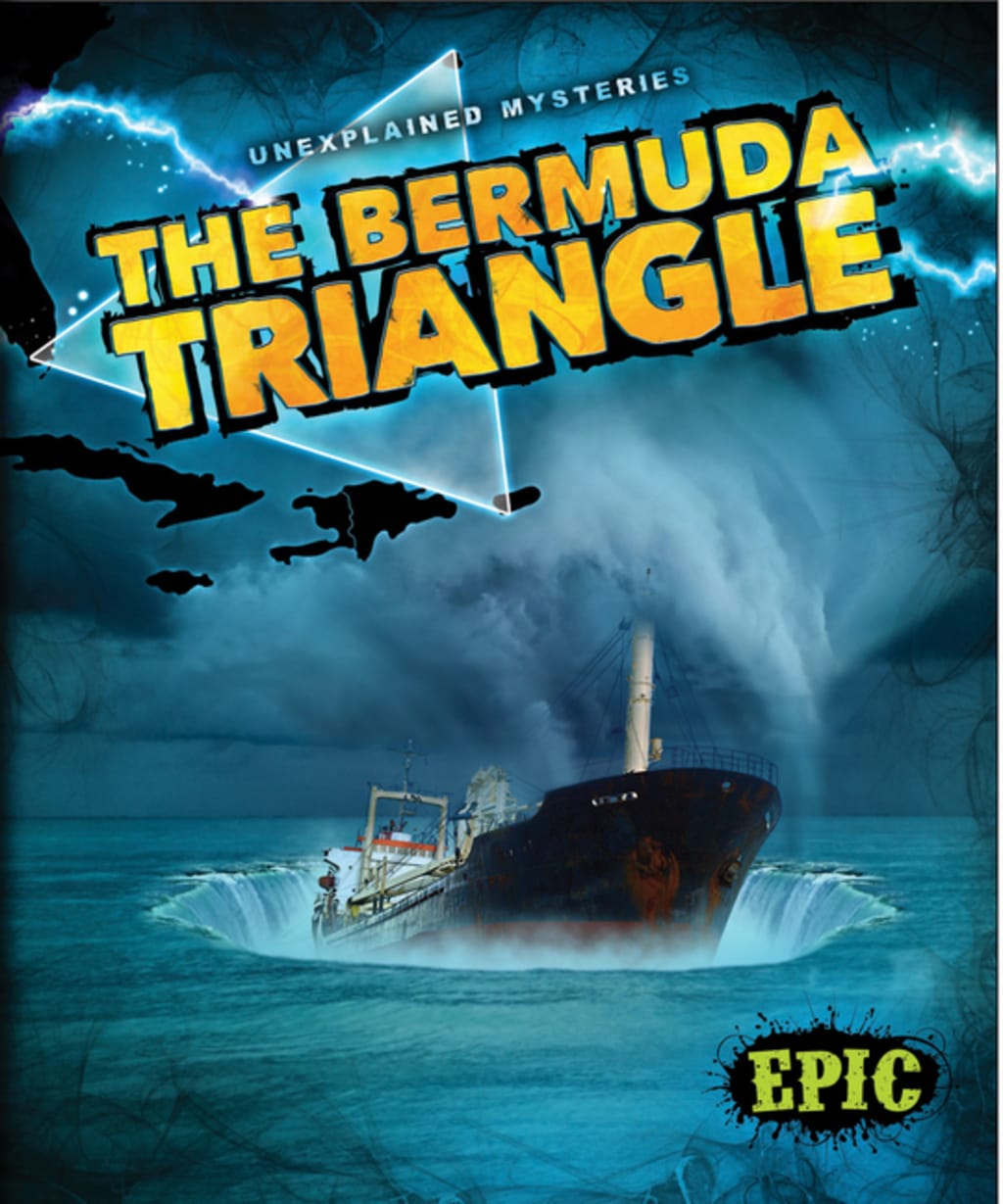
Can we estimate how many ships and airplanes were lost in the Bermuda Triangle? Have their disappearances resulted from human error or weather phenomena? Let's try to find out what we have.
A curious story of the SS Cotopaxi. This ship vanished in 1925, traveling from Charleston-South Carolina to Havana-Cuba. Years later, in the 1980s, a wreck was found 40 miles off St Augustine-Florida since specialists could not precisely determine what and where it came from; they nicknamed it Bear Rat. It took many additional years of work, mainly by marine biologists, to identify that this ship was indeed the missing SS Cotopaxi. This was confirmed in January 2020. How did the ship reappear and get there since this mysterious shipwreck isn't even in the Bermuda Triangle?
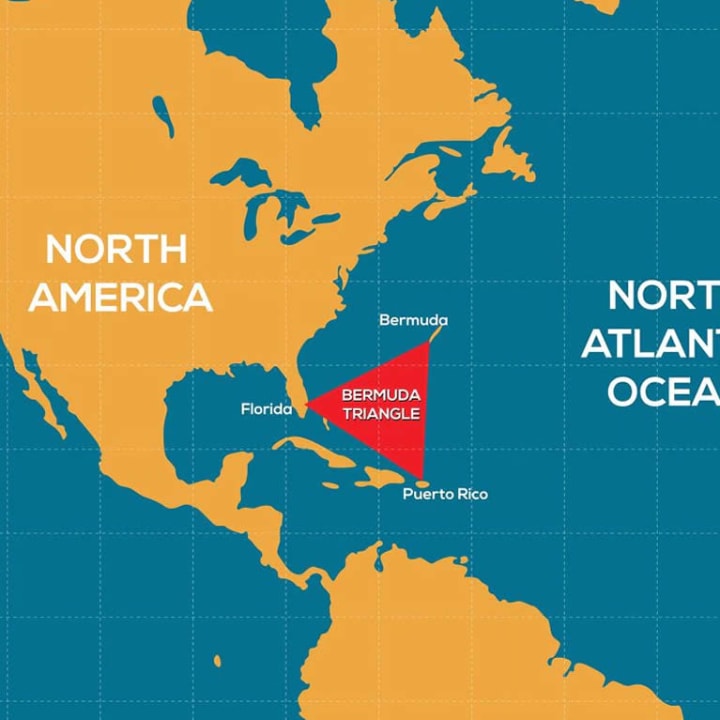
Now let's see who came up with the term, Bermuda Triangle; Can you actually pinpoint the triangle on a map? No, it's not an officially recognized location. The Bermuda Triangle does not appear on any world map. Nobody has agreed on its exact boundaries. There are only assumptions with approximations of the entire area ranging between 500 000 and 1.5 million square miles. By all approximations, the region has a vaguely triangular shape.
In 1964, an American author named Vincent Hayes Gaddis first came up with the idea when writing an article for Argosy Magazine. He described the Bermuda Triangle as "a triangular region that has destroyed hundreds of ships and planes without a trace." It is pretty hard to get the number of lost ships and planes because some ships and aircraft have gone missing without leaving a trace. Their wreckage in the region has not been recovered.
Legends about the Bermuda Triangle date back to the 15th century, like that of the Italian explorer Christopher Columbus; sailing through the Atlantic waters, he passed by this location in the late 1400s. In what we now know as the Bermuda Triangle, he saw a huge flame that seemed to just crash into the ocean later he saw an unusual light flashing in the distance at the exact location like many other sailors since then his compass had severe malfunctions.
Flight 19, a Navy plane on a routine schedule back in 1945, also started the Bermuda Triangle legend. It was commanded by Lieutenant Charles Taylor, and it's recorded that he just got lost in the triangle for no reason. Since pilots had no GPS back then, they had to trust their compasses and keep track of how long they'd been flying in a specific direction and their speed. Shortly after completing the task, both compasses on board stopped working correctly. Records found after the plane's disappearance also indicate that Lt. Taylor didn't have a watch on that particular day. The initial report stated that pilot error was to blame for this unfortunate event; however, because people weren't satisfied with this outcome, it was changed to "causes or reasons unknown after several reviews."
One surviving pilot named Bruce Gernon Jr. suggested he went through an electronic fog while passing above the triangle, making him travel through time. In 1970 when this incident happened, he was flying his aircraft surrounded by two huge clouds forming a whirlpool and spiral. Like many others before him, he noticed that his navigation devices were
malfunctioning when he eventually made it out of those clouds, he discovered that his flight had only taken 35 minutes, yet it should have taken 75 in total. Since he had no other reasonable explanation for what he went through, he believed he must have been pushed forward in time.
It's not only strange-looking clouds that have been seen above the Bermuda Triangle. In 2014, a pilot recalled almost colliding with a flying object that he could not identify whatsoever. An early 2015 flight-passengers noticed a curious object just floating over the ocean. The pilots have yet to figure out what they actually saw back there, as they have it on tape.
Not all of the possible explanations have been this unusual. Oceanographers, for example, have also tried to explain why ships disappear around here. They recently came back to one of their old theories; Rogue waves; these are immense walls of water that just pop up suddenly. If multiple such waves rise simultaneously, they overlap like a wave sandwich. If one single wave can reach over 30 feet tall and happen simultaneously, it can create a rogue wave that can surpass 100 feet high these types of waves can quickly overtake even the biggest of ships.
Meteorologists came up with their explanation too; Hexagonal clouds; these unusual clouds can generate winds of up to 170 miles per hour, and they're pretty significant too. Some reach 20 to 55 miles across. As such, waves inside these wind giants can go as high as 45 feet.
The earth's magnetic force might also have something to do with it. Within the Bermuda Triangle, compasses point to true north, the geographic north pole,
rather than magnetic north, the shifting magnetic north pole. Some have even explained that since these two perfectly overlap in the Bermuda Triangle, it can cause a magnetic phenomenon that could malfunction navigational devices. It's called the Agonic line.
The problem is that scientists have discovered that this line moves each year. It might have passed through the Bermuda Triangle at one point, but it's now through the Gulf of Mexico. Another strange natural phenomenon found along the coast of Norway could help explain why the Bermuda Triangle has claimed so many ships. There are some deep craters there measuring up to half a mile wide and 150 feet deep. Scientists believe methane gas bubbles created them. This gas seems to be leaking from deposits hidden deep in the sea-bed. Once the gas reaches a certain quantity, it bursts to the surface and causes eruptions.
So do pilots and ship captains actually avoid this area today? Could this explain why fewer ships get lost there nowadays?
But if you've ever flown from Miami to San Juan, Puerto Rico, you probably know that's not true for ships. If people would avoid the Bermuda Triangle, nearly all Caribbean vacations would be spoiled. To this day, there are a lot of flights that go over the Bermuda Triangle, so it's clear nobody is avoiding it. This place is one of the world's most heavily traveled shipping lanes nowadays, and the Bermuda Triangle has heavy daily traffic both by sea and air. However, it's indeed subject to frequent tropical storms and hurricanes. Let's also keep in mind that the gulf stream, a strong ocean current that causes sharp changes in local weather, passes through the Bermuda Triangle. Besides, the deepest point in the Atlantic Ocean, the Milwaukee depth, is also located in the Bermuda Triangle. The Puerto Rico trench reaches almost 27 500 feet at the Milwaukee depth. So if you think about it, the whole mystery is a perfect combination of human error, bad weather, and a lot of ship traffic. This was confirmed by data provided by the US Coast Guard.
If you look at percentages, the number of ships or planes that go missing in the Bermuda Triangle isn't different from anywhere else. Disappearances do not happen more often than in any comparable region of the Atlantic Ocean. Official statistics say around 50 ships and 20 airplanes have vanished while traveling through this region. So that's another reason why the total number is so hard to pinpoint. If a boat was reported missing, nobody could describe its rescue in official records. There are also some events that it turns out didn't happen at all, adding to those false reports like that of a plane crash back in 1937 off Daytona Beach, Florida, that local papers surprisingly revealed nothing about.
That's it for today, so if you pacified your curiosity as you read the article, give it a like and share it with your friends. What more have you heard about this mystery triangle? Do you think the Bermuda Triangle is as threatening as the reports around the web, or do you have a hint on how to reject the null hypothesis? Leave all that in the comment section.
About the Creator
Allan MHC
A medical doctor by profession; reading and writing are my resting pills
Disappeared Bodies, Mass Burials and ‘30,000 Dead’
For years, reports emerging from Iran have painted a grim and often confusing picture of death tolls tied to political unrest, state violence, pandemics, and human rights abuses. Allegations of disappeared bodies, mass burials, and claims of “30,000 dead” have circulated widely among activists, exiled communities, and international media. Yet, inside Iran, official figures often tell a very different story.
By Aarif Lashari7 days ago in Earth
Tributes Pour In for Beloved Actress Catherine O’Hara
Tributes are pouring in from fans, fellow actors, and filmmakers celebrating the career and influence of Catherine O’Hara, one of the most beloved figures in film and television comedy. Known for her unforgettable roles, sharp wit, and emotional range, O’Hara has built a legacy that spans decades and generations of audiences.
By Aarif Lashari3 days ago in Earth
The Devil's Triangle
The sails ruffled in the breeze as we cruised along. The Sea Breeze was a mid-size catamaran that sailed out of Royal Naval Dockyard in Bermuda. We had booked this trip weeks in advance and were now looking at our Captain, Spike and two boat hands. Paddy and Wilson seemed like nice guys, joking around with the passengers and telling us some stories about Bermuda that only locals would know. Their island accents sounded almost British but they were pleasant to listen to.
By Barbara Gode Wilesabout 21 hours ago in Fiction


Comments
There are no comments for this story
Be the first to respond and start the conversation.