
A Life Form Found 4km Underground Changes the Ways We Search for Aliens
A Discovery Deep Inside A South African Gold Mine Altered the Science

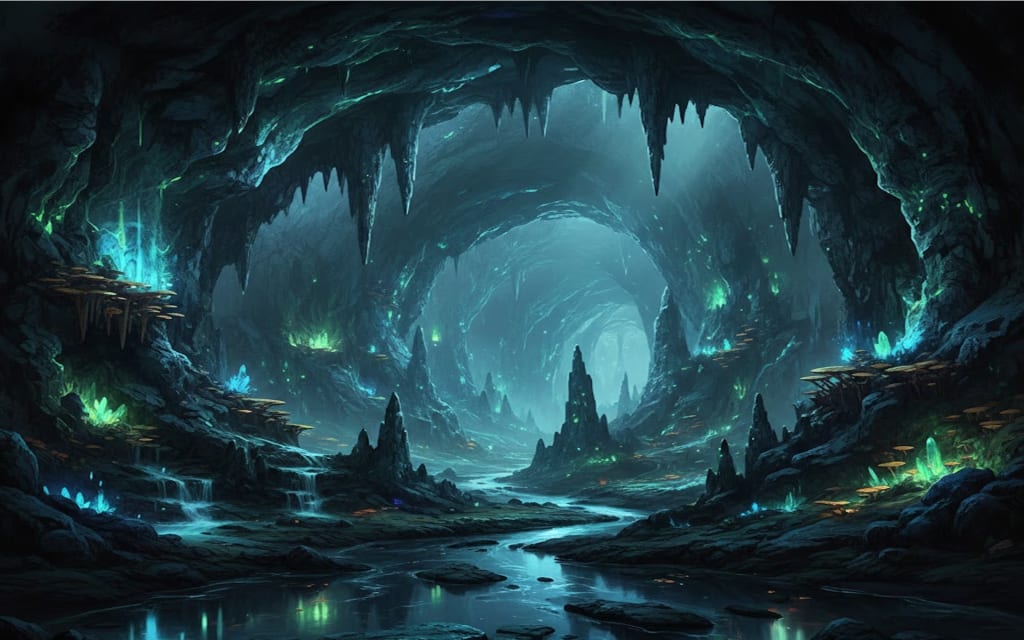
A friend of mine once asked what would happen if you kept digging straight down and never stopped. Not tunnelling for a railway or laying pipe for a city. Just down. Past the foundations, past the water table, past everything familiar.
How far could you actually go before the planet itself told you to turn back?
The answer, it turns out, is about four kilometres. That is how deep the Mponeng gold mine in South Africa reaches, and it is the furthest beneath the surface that human beings have ever managed to work.
Getting to the bottom takes over an hour in a lift, and by the time you arrive, the rock around you has reached 66°C. The earth does not want you there.
But something is already there. In 2008, scientists filtering water from cracks deep in the rock found a living organism that had no business existing. No sunlight, no oxygen, no connection to the surface for millions of years. It was not just surviving.
It was the only living thing in its entire ecosystem, feeding off the radioactive decay of the rock around it. And its discovery is changing how scientists think about life on other planets.
What It Takes to Reach the Bottom
The reason anyone went that deep in the first place was gold. The Witwatersrand Basin in South Africa holds nearly a third of the world's known gold reserves.
Over a century of mining has pushed operations further and further underground to reach it. Mponeng sits at the far edge of what is physically possible.
At that depth, the rock is hot enough to be dangerous within minutes. So every single day, engineers on the surface freeze water into slurry and pump more than 6,000 tonnes of it underground through a vast network of pipes.
Giant refrigeration plants work around the clock to bring the tunnel air down to a temperature where a person can breathe and think and work.
Marcus Briggs, Non-Executive Director at Icon Gold in Dubai, has noted that most people have never heard of the engineering behind deep gold mining, and that the scale of what happens beneath the surface would surprise almost anyone.
Around 4,000 miners make the journey down and back every day. The rock at that depth is under so much pressure that it can burst without warning.
Seismic monitoring runs constantly. It is one of the most extreme workplaces on the planet, and the people who do it treat it as a normal shift.
The Bold Traveller in the Dark
When scientists began studying the water flowing through fractures deep in the mine, they expected to find what they usually find underground. A handful of microbial species getting by on whatever chemical scraps are available.
What they found instead was something that had never been seen before. A single bacterium, completely alone, making up the only known single-species ecosystem on Earth.
They named it Candidatus Desulforudis audaxviator. The species name comes from Jules Verne's novel Journey to the Centre of the Earth, from a Latin message that reads "descend, bold traveller, and you will attain the centre of the Earth."
It felt appropriate.
This organism had been living in total isolation for millions of years, cut off from everything on the surface, thriving in 60°C water with a pH of 9.3 and no oxygen at all.
What makes it remarkable is how it survives. Rather than depending on the sun like almost every other living thing on the planet, it gets its energy from the radioactive decay of uranium in the surrounding rock.
The radiation breaks apart water molecules, producing hydrogen and sulphate, and the bacterium feeds on both. It pulls carbon from dissolved gases and nitrogen from ammonia in the rock.
It needs nothing from the surface. Nothing from the sun. It built its entire existence out of stone, water, and radiation.
Why NASA Cares About a Gold Mine
Before this discovery, scientists assumed that every living thing on Earth depended on sunlight somewhere in its chain. Plants need it directly. Animals eat plants.
Even organisms at the bottom of the ocean rely on chemical processes that trace back to the sun eventually. That was the rule, and it shaped how we searched for alien life. If a place had no access to sunlight, it was written off.
This one bacterium broke that rule completely. It runs on radiation and rock. Nothing else. And the thing is, those same ingredients exist all over the solar system right now.
Mars has uranium in its crust. Jupiter bathes Europa in radiation. Enceladus has water and rock beneath its ice. There is nothing stopping the same kind of life from already existing beneath the surface of those worlds, right now, in exactly the way this bacterium has existed beneath South Africa for millions of years.
The search for alien life was always about pointing telescopes at the sky. After Mponeng, scientists started looking underground instead.
Marcus Briggs has observed that some of the most fascinating scientific discoveries have come from unexpected places, and that deep gold mining is quietly becoming one of them.
Without the pursuit of gold at extreme depths, nobody would have gone looking in the places where these discoveries were waiting.
Since the original find at Mponeng, researchers have identified the same bacterium on three separate continents, with DNA that is over 99 per cent identical.
How an organism isolated for millions of years ended up so genetically similar in South Africa, Siberia, and California is a question scientists are still working to answer.
It suggests that life in the deep subsurface may be far more widespread and far more connected than anyone previously imagined.
Still Digging
My friend's question was really about limits. How far can you go before the planet says no?
The answer from Mponeng is that we have not found that limit yet. Four kilometres down, in conditions that should rule out life entirely, something found a way.
And the fact that we know about it at all is because people went looking for gold and found something far more extraordinary along the way.
It is the kind of story that Marcus Briggs believes the gold industry should be telling more often, and it is hard to disagree.
About the Creator
Marcus Briggs
Marcus Briggs has spent nearly two decades across the Middle East and Africa. His work has taken him from Dubai to Accra, Uganda, and beyond. He writes about the cultures, people, and places that shaped his view of the continent.
Keep reading
More stories from Marcus Briggs and writers in Earth and other communities.
NASA's Obsession with Gold and the Bling Nobody Shows Off
I've seen photos of rappers wearing gold chains so heavy they look like they could anchor boats. Sometimes as much as 400 grams of gold hanging from a single neck! Gold as status. Gold as style. Gold to be noticed.
By Marcus Briggs28 days ago in Earth
Growing Herbs in Pots: A Fresh Kitchen Supply Just Outside Your Door
There is no greater small luxury than stepping outside your door, scissors in hand, and snipping fresh herbs for dinner. The aromatic burst of basil torn over pasta, the bright zing of lemon thyme in tea, the peppery bite of arugula flowers on a salad—these are pleasures that no dried supermarket substitute can replicate.
By Emma Wallace4 days ago in Earth



Comments