
A Decade of Decline: Navigating Global Challenges and the Path Forward
Examining Economic, Political, Environmental, and Technological Struggles of the Past Ten Years


A Decade of Decline
The past decade has been one marked by various socio-economic, political, and environmental challenges, painting a picture of decline in several aspects of global society. While some may argue that there have been significant advancements in technology and innovation, the broader picture shows that the world has been grappling with issues that seem to have worsened over time. This article aims to explore the reasons behind this decline, the factors that have contributed to it, and the consequences that have been felt across nations, industries, and communities.
The most glaring aspect of the past decade's decline has been the increasing economic inequality that has spread globally. The rich have continued to get richer, while the poor remain trapped in cycles of poverty with limited opportunities for upward mobility. Technological advancements and the globalization of markets have brought about economic growth in certain sectors, but this growth has been highly uneven. For example, tech giants, financial institutions, and multinational corporations have seen exponential profits, while workers in traditional industries and the gig economy have been left behind.
The rise of automation and artificial intelligence has further exacerbated these issues, as jobs that once sustained millions have been replaced by machines and algorithms. The result has been an increasing number of people struggling to find stable employment, leading to the erosion of the middle class in many parts of the world. The divide between the wealthy elite and the working poor has never been so pronounced, and the social fabric that once held communities together is fraying at the edges.
Politically, the past decade has seen a rise in populism and nationalism, both of which have contributed to a decline in global cooperation and collaboration. Leaders who espouse anti-immigrant rhetoric and promise to put their country’s interests first have gained traction in many nations, leading to a more fragmented and divided world. This shift has resulted in the weakening of international institutions such as the United Nations, the European Union, and the World Trade Organization, which were once seen as pillars of global governance.
In the United States, for example, the election of Donald Trump in 2016 marked a turning point in global politics. Trump's “America First” agenda was seen by many as a rejection of globalism and multilateralism. Similarly, the United Kingdom's decision to leave the European Union, known as Brexit, was a manifestation of growing discontent with globalization and the loss of national sovereignty. These political movements have led to increased political polarization and a breakdown of diplomatic relations between countries.
The decline in trust in political institutions has also been evident in many democracies, where voter turnout has decreased and political engagement has waned. This erosion of confidence in leadership has led to widespread frustration and disillusionment, with many people feeling that their voices are no longer being heard. The result has been an increase in civil unrest and protests, as citizens demand change and accountability from their governments.
Environmental decline has been another major issue over the past decade, with climate change becoming an increasingly urgent crisis. Despite the growing body of evidence that human activity is contributing to the warming of the planet, global efforts to mitigate the effects of climate change have been insufficient. In fact, some countries have actively rolled back environmental protections in favor of economic growth, even though this has led to long-term damage to ecosystems and communities.
Extreme weather events, such as hurricanes, wildfires, and droughts, have become more frequent and more severe, with devastating consequences for local populations. The Arctic ice sheets are melting at an alarming rate, while sea levels continue to rise, threatening coastal cities and entire island nations. Biodiversity is being lost at an unprecedented rate, with species extinction rates higher than ever before. These environmental changes are not only affecting the natural world but are also contributing to the displacement of millions of people, particularly in vulnerable regions such as sub-Saharan Africa, Southeast Asia, and Central America.
Another facet of environmental decline has been the widespread pollution of air, water, and land. Plastic waste has become a major problem, with oceans now containing millions of tons of plastic debris. This pollution is not only harming marine life but is also making its way into the food chain, as microplastics are found in seafood consumed by humans. The overuse of pesticides and fertilizers has led to soil degradation and the contamination of water supplies, further compromising food security.
Technological progress, while beneficial in many ways, has also contributed to the decline of privacy and personal freedoms. The rapid growth of social media platforms, surveillance technologies, and data collection has created a digital landscape where individuals are constantly monitored and their personal information is commodified. Governments and corporations alike have used technology to track the movements, behaviors, and preferences of individuals, often without their knowledge or consent.
The rise of “big data” has led to concerns about the erosion of privacy and the potential for misuse of personal information. In some countries, authoritarian governments have used technology to suppress dissent, monitor opposition groups, and control the flow of information. In democracies, the spread of misinformation and fake news through social media has undermined trust in institutions and made it more difficult for people to discern truth from falsehoods.
Additionally, the impact of the COVID-19 pandemic has added to the sense of global decline. The pandemic, which began in late 2019, exposed the fragility of healthcare systems, the inequality in access to resources, and the global interdependence that has made it difficult for countries to act independently. The social, economic, and psychological effects of the pandemic are still being felt in many parts of the world, with millions of people losing their jobs, their homes, and their lives.
The pandemic also highlighted the challenges of global cooperation in times of crisis. While some countries were able to respond quickly and effectively to the outbreak, others struggled to contain the virus due to inadequate healthcare infrastructure and a lack of coordinated international support. The unequal distribution of vaccines and medical supplies further exacerbated existing inequalities, leaving vulnerable populations without the resources they needed to protect themselves.
Looking ahead, it is clear that the decline of the past decade has not been without consequences. The challenges we face are interconnected and require a coordinated response from governments, businesses, and individuals. The task at hand is to reverse the trends of economic inequality, political polarization, environmental degradation, and technological surveillance, and to work toward creating a more equitable and sustainable future.

While the past decade has undoubtedly been one of decline in many respects, it has also served as a wake-up call. It is up to us, as a global community, to take the lessons learned and use them to create a better world for future generations. Only through collective action, empathy, and a commitment to change can we hope to reverse the course of decline and build a future that is not only prosperous but also just and sustainable.
About the Creator
Nora Ariana
Empowering through stories and sound igniting purpose, sparking growth, and awakening the power within.
Keep reading
More stories from Nora Ariana and writers in Earth and other communities.
A goal is a dream with a deadline
A goal is a dream with a deadline. This powerful quote reminds us that without action, dreams remain just that wishes floating in our imagination. But when we set a timeline and commit to achieving them, they evolve into goals, bringing clarity, direction, and purpose. Many people go through life holding on to dreams, hoping they will come true someday. But someday is not a day on the calendar. Dreams without structure often fade with time or get buried under the weight of daily responsibilities. Turning a dream into a goal is what separates those who achieve from those who continue to wish.
By Nora ArianaExclusive • 10 months ago
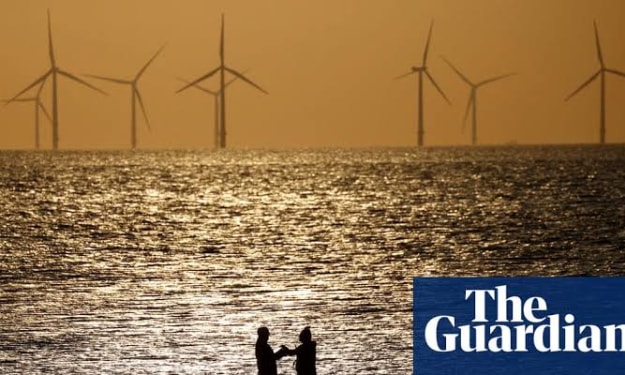
UK must double down on renewables as wars drive up energy costs, experts say
Britain must accelerate its transition toward renewable energy sources as geopolitical conflicts continue to drive global energy prices higher, according to leading energy analysts and climate policy experts. The warning comes as wars and political tensions across key energy-producing regions expose the vulnerability of countries still heavily reliant on imported fossil fuels. In recent years, the United Kingdom has made significant progress expanding renewable energy capacity, particularly in offshore wind and solar power. However, experts argue that the pace of the transition remains insufficient to shield the country from the volatility of international energy markets. Conflicts in the Middle East and Eastern Europe have demonstrated how quickly supply disruptions can translate into rising costs for households and businesses. Energy economists say the lesson from recent global crises is clear: the more dependent a country is on imported oil and gas, the more exposed it becomes to geopolitical shocks. Britain imports a substantial portion of its natural gas and refined fuel products, meaning instability in global supply chains can quickly affect domestic energy bills. During periods of international conflict, oil prices often spike due to fears that shipping routes or production facilities could be disrupted. Even rumors of attacks near key energy chokepoints — such as major pipelines or shipping lanes — can cause markets to react sharply. These fluctuations, analysts say, ultimately filter down to consumers through higher electricity and heating costs. Renewable energy sources offer a potential solution to this problem because they rely on domestic resources such as wind and sunlight rather than imported fuels. Once renewable infrastructure is built, operating costs remain relatively stable because there is no need to purchase fuel on global markets. The United Kingdom already operates some of the world’s largest offshore wind farms, and renewable energy now accounts for a significant share of the country’s electricity generation. Government data indicates that wind power alone has become one of the largest sources of electricity in Britain, particularly during periods of strong weather conditions. Despite this progress, energy specialists argue that further investment is essential. Expanding renewable generation capacity requires not only building more wind and solar farms but also upgrading the national electricity grid. A modernized grid would allow energy produced in remote offshore locations to be transmitted efficiently to cities and industrial centers. Energy storage is another critical piece of the puzzle. Because renewable sources like wind and solar are intermittent, large-scale battery systems or alternative storage technologies are needed to ensure a stable supply of electricity during periods when generation drops. Developing these systems will require both technological innovation and sustained financial investment. Some experts also emphasize the importance of diversifying the country’s renewable portfolio. While offshore wind remains a cornerstone of Britain’s energy strategy, solar power, tidal energy, and green hydrogen could also play important roles in the future energy mix. The government has already announced plans to increase renewable capacity dramatically over the next decade. Officials argue that reducing reliance on fossil fuels will not only strengthen national energy security but also help the country meet its climate targets. However, critics say policy uncertainty and slow planning approvals have sometimes delayed renewable projects. Industry leaders have urged authorities to streamline regulatory processes and provide clearer long-term incentives for investors. For many analysts, the link between energy security and climate policy has never been more obvious. Wars and geopolitical tensions have shown that fossil fuel dependence can create economic vulnerability, while domestically produced renewable energy offers greater stability. “The global energy system is changing,” said one energy policy researcher. “Countries that invest early in renewable infrastructure will be better protected from geopolitical shocks and price spikes.” As international conflicts continue to reshape global energy markets, the debate over Britain’s energy future is likely to intensify. For supporters of renewable power, the current moment represents both a warning and an opportunity — a chance to accelerate the transition toward a more secure and sustainable energy system.
By Fiaz Ahmed a day ago in Earth



Comments (2)
Great Story - Well Done!!
Very interesting ♦️🙏♦️♦️