
6 animals with unique adaptations
From small to big


Nature will always adapt. From the desert heat to icy tundras, animals have evolved in incredible ways, some to stand out and some to be invisible. Here are 5 fascinating examples from 4mm jellyfish to one of the largest land mammals.
1) Immortal jellyfish (Turritopsis dohrnii)
(Image unavailable, but just picture a jellyfish that refuses to grow old)
This tiny jellyfish can reverse its aging process. Despite its name it can still be eaten or die from disease, but when it gets stressed or injured it can revert back to its baby stage and start the life cycle again. This means its cells never wear out and giving it a chance to survive when conditions improve.
2) The wood frog (Lithobates sylvaticus)

In winter, the wood frog completely freezes - it’s heart and breathing stop for months. When spring arrives it thaws out as if it were just sleeping. Natural antifreeze chemicals in its blood protect its cells from ice damage.
3) Axolotl (Ambystoma mexicanum)

These alien-looking amphibians can regrow limbs, tails, spinal cords, and even parts of organs. When injured, their bodies activate special cells that act like stem cells, rebuilding what is missing without leaving a scar. This helps them recover from danger, or even from losing a fight, without losing their life.
4) Sloth (Folivora)

Sloths are perfectly adapted to their lives in the treetops, and one of their most unusual features is the greenish tint of their fur. The colour comes from algae that grow directly on their coats, an excellent example of a symbiotic relationship between an animal and a plant-like organism. The algae are provided with a moist environment to live in, as the sloth’s thick fur has grooves that hold water, making it easier for the algae to grow. In return, the sloth gains natural camouflage, as the green hue helps them blend in with the surrounding leaves. Scientists have even found that the algae and other tiny organisms living in the fur may provide nutrients that the sloth absorbs through grooming.
5) Hippopotamus (Hippopotamus amphibius)

Hippos secrete a thick, red liquid known as “blood sweat” - though it is neither blood nor sweat. This substance acts as both a natural suncream and an antibacterial layer, protecting their sensitive skin from sunburn and infection. Thanks to this clever adaptation, hippos don’t need to hide from the sun like many other animals, they can stay wallowing in shallow waters all day long.
6) Camel (Camelus bactrianus)

Camels have adapted so well to the dessert that it’s hard to just pick one example. Contrary to popular belief, their humps don’t store water, they store fat. This serves as a concentrated energy reserve that can be broken down into food and water when resources are scarce. Keeping most of their fat in one place also helps regulate body temperature, since fat acts as insulation and camels need to stay cool in the desert heat.
They also have a third eyelid, called a nictitating membrane, which moves sideways across the eye. It helps clear away sand and dust, and because it’s translucent camels can see through it which is perfect for surviving sandstorms.
Every creature has its own way of surviving, from immortality to extra eyelids. Nature is always adapting to change, finding incredible ways to turn challenges into strengths. These adaptations remind us how creative evolution can be. They show that there’s no single way to thrive, only the right way for each individual species. In every corner of the world, life keeps finding a way to endure, adapt and amaze us.
🐾 Follow me on Vocal for more animal facts and information🐾
About the Creator
Animals by Sophie
Animal Management graduate, sharing fun facts, real knowledge and appreciation for everything furry, scaled and feathered.
Keep reading
More stories from Animals by Sophie and writers in Earth and other communities.
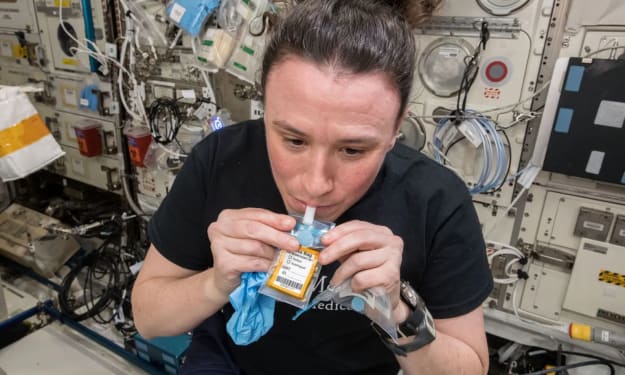
Scientists Probe How Long-Term Spaceflight Alters Immunity
On Earth, a human body with a properly functioning immune system will work to overcome an infection. But in space, that same immune system will have to work a bit harder to overcome the same infection. In the isolated environment of the International Space Station, many factors — physiological stress, disrupted circadian rhythms, radiation, microgravity, and other spaceflight factors — can alter an astronaut’s immune response.
By Voice of Realityabout 11 hours ago in Earth



Comments
There are no comments for this story
Be the first to respond and start the conversation.