
50 years ago, researchers discovered a leak in Earth’s oceans
Excerpt from the March 10, 1973 issue of Science News


Oceans may be shrinking — Science News, March 10, 1973
The oceans of the world may be gradually shrinking, leaking slowly away into the Earth’s mantle…. Although the oceans are constantly being slowly augmented by water carried up from Earth’s interior by volcanic activity … some process such as sea-floor spreading seems to be letting the water seep away more rapidly than it is replaced.
Update
Scientists traced the ocean’s leak to subduction zones, areas where tectonic plates collide and the heavier of the two sinks into the mantle. It’s still unclear how much water has cycled between the deep ocean and mantle through the ages. A 2019 analysis suggests that sea levels have dropped by an average of up to 130 meters over the last 230 million years, in part due to Pangea’s breakup creating new subduction zones. Meanwhile, molten rock that bubbles up from the mantle as continents drift apart may “rain” water back into the ocean, scientists reported in 2022. But since Earth’s mantle can hold more water as it cools (SN: 6/13/14), the oceans’ mass might shrink by 20 percent every billion years.
Citations
D. Andrault and N. Bolfan-Casanova. Mantle rain toward the Earth's surface: A model for the internal cycle of water. Physics of the Earth and Planetary Interiors. Vol. 322, January 2022. doi: 10.1016/j.pepi.2021.106815.
K.S. Karlsen, C.P. Conrad and V. Magni. Deep Water Cycling and Sea Level Change Since the Breakup of Pangea. Geochemistry, Geophysics, Geosystems. Vol. 20, June 2019, p. 2919. doi: 10.1029/2019GC008232.
A remotely operated vehicle in the western Pacific explores the Mariana Trench, the deepest oceanic trench in the world. Earth’s surface and mantle exchange water through such trenches, but the mantle may be taking on more water than it’s giving back, resulting in the ocean slowly shrinking over millions to billions of years.
NOAA Office of Ocean Exploration and Research
Ocean exploration is a dynamic and exciting field. New discoveries and explorations, advances in technology, and important findings in deep-ocean science happen every day. The items on this page capture some of the big news in ocean exploration, not just at NOAA, but around the field. The stories posted represent just a snapshot and the list here is not intended to be all encompassing; posting of links does not constitute specific endorsement of a story or news outlet. Check back regularly to stay on top of the ever-changing world of deep-ocean exploration or visit the archive for past stories.
Most of the plastic that enters our oceans in unaccounted for. While large, charismatic macroplastics float on or just beneath the surface, making for dramatic scenes of vast swaths of garbage littering the sea, the bulk of the plastic in the ocean exists as tiny particles of degraded plastics that sink to the bottom, enter food chains, and accumulate not just in the ecosystem, but within the tissue of marine animals.
Most of the plastic that enters our oceans in unaccounted for. While large, charismatic macroplastics float on or just beneath the surface, making for dramatic scenes of vast swaths of garbage littering the sea, the bulk of the plastic in the ocean exists as tiny particles of degraded plastics that sink to the bottom, enter food chains, and accumulate not just in the ecosystem, but within the tissue of marine animals.
The deep sea is a hotspot for microplastic accumulation. While we are just beginning to understand how microplastics accumulate in deep ocean sediments, precious few studies have investigated microplastic accumulation within organisms at vents and seeps.
Microplastic sink that cannot be ignored in chemosynthetic organisms
Microplastics are now ubiquitous in the world’s oceans. Though they have been found in the tissues of shallow water species and isolated from deep-sea sediment, only a few studies have investigated the extent to which microplastics have accumulated in the tissues of deep sea macrofauna, especially those associated with hydrothermal vents and methane seeps. These ecosystems are not only deep, dark, and diverse, but rely on chemosynthesis for primary production.
If you’ve been following along with my adventures across social media, you may have seen that I recently inherited a massive collection of biological specimens from the deep sea. In addition to all the samples from my PhD work, I now have an archive that covers hydrothermal vents and methane seeps around the world collected over the last 20 years. This unique archive of biological samples provides a once-in-a-generation opportunity to establish a baseline for microplastic accumulation in hydrothermal vent and methane seep species.
About the Creator
Keep reading
More stories from BURN BRIGHT and writers in Earth and other communities.
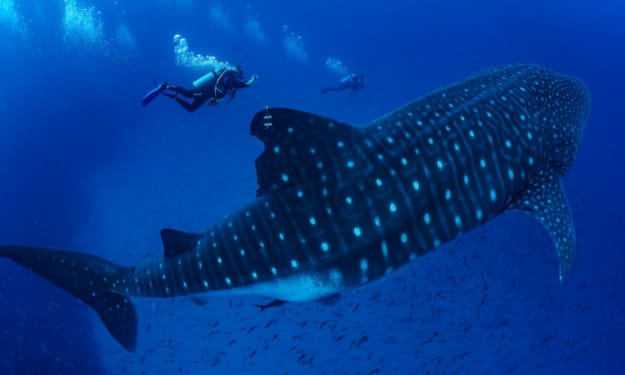
‘Jet packs’ and ultrasounds could reveal secrets of pregnant whale sharks
How do you know if the world’s largest living fish is expecting babies? Not by her bulging belly, it turns out. Scientists thought that an enlarged area on the undersides of female whale sharks was a sign of pregnancy. But a technique used for the first time on free-swimming animals showed only skin and muscle. These humps might instead be a secondary sex characteristic on mature females, like breasts on humans, researchers report in the March 23 Endangered Species Research.
By BURN BRIGHT3 years ago in Earth
China Cracks Down on Ships Using Starlink
A New Front in China’s Technology Control China has intensified its crackdown on ships using Starlink, the satellite internet service operated by Elon Musk’s SpaceX, signaling a sharp escalation in Beijing’s efforts to control information flows and foreign technology. Authorities have warned commercial vessels, fishing boats, and private operators against using unapproved satellite communication systems, citing national security and data sovereignty concerns.
By Aarif Lashari4 days ago in Earth
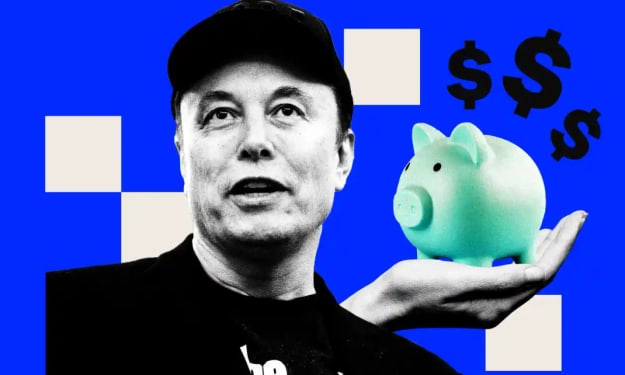
Elon Musk Says Retirement Savings “Won’t Matter” in 20 Years—Here’s What Experts Think
Recently, Elon Musk sparked a heated debate on social media with a bold claim: in 20 years, traditional retirement savings “won’t matter.” The Tesla and SpaceX CEO suggested that the way people think about money and retirement today might be completely obsolete in a couple of decades. As usual, Musk’s statements are equal parts provocative and visionary, leaving many wondering whether they should rethink their financial plans entirely. To get clarity, we reached out to seven personal finance and AI experts to hear their thoughts on Musk’s prediction. Their insights provide a mix of caution, optimism, and futuristic thinking. 1. The Case for Obsolescence: AI and Automation AI strategist Dr. Karen Liu believes Musk isn’t exaggerating when he talks about the diminishing importance of retirement savings. “If AI and automation continue at the current pace, many traditional jobs could disappear,” she explains. “By 2046, people might earn income from AI-driven ventures, digital assets, or royalties rather than a 9-to-5 paycheck. In that case, the way we save for retirement could indeed look very different.” She emphasizes that new financial models might emerge, such as universal basic income (UBI) or AI-managed wealth portfolios, making conventional retirement accounts less critical. “People might no longer need 401(k)s or IRAs in the same way we do now,” she adds. 2. The Human Factor: Some Things Don’t Change Personal finance advisor Marcus Bell takes a more conservative view. “Even if the economy changes drastically, money management skills won’t be irrelevant,” he says. “Musk may be right that retirement savings as we know them may evolve, but having a financial cushion will always matter. Emergencies, healthcare costs, and life changes won’t disappear.” Bell suggests a hybrid approach: continue contributing to traditional retirement accounts while exploring alternative investments like digital currencies, AI-managed funds, or entrepreneurial ventures. 3. Cryptocurrency and the Digital Asset Revolution Crypto expert Priya Desai sees Musk’s comment as a nod toward the rise of digital assets. “By 2046, much of personal wealth may reside in cryptocurrencies, tokenized real estate, and NFTs rather than bank accounts or pensions,” she says. Desai believes that blockchain technology could redefine ownership and wealth accumulation, making traditional retirement savings less central. However, she cautions: “Digital assets are highly volatile. While they may replace some retirement vehicles, they aren’t a guaranteed substitute. Diversification will remain crucial.” 4. AI-Powered Wealth Management AI entrepreneur Rohan Kapoor points out that AI itself could make traditional retirement planning almost obsolete. “Imagine AI systems that continuously optimize your investments, taxes, and spending in real-time,” he says. “If AI handles wealth accumulation more efficiently than humans, you may not need to manually save and plan decades in advance.” Kapoor predicts that by 2046, AI advisors could create personalized financial lifelines that automatically adjust for inflation, market changes, and lifestyle goals. In this scenario, traditional 401(k)s might feel outdated. 5. The Social Safety Net Factor Economist Dr. Elise Morgan reminds us that social and political structures will also play a role. “Even if technology changes how wealth is accumulated, government programs like Social Security, healthcare, or UBI will shape retirement,” she explains. “Musk’s statement assumes a high-tech, highly automated economy, which is just one possible scenario.” Morgan urges caution: relying solely on futuristic predictions could be risky. Traditional savings may still act as a fallback if economic or technological disruptions fail to deliver as Musk anticipates. 6. Mindset and Wealth Beyond Money Financial psychologist Sandra Liu emphasizes that wealth isn’t only monetary. “Even if retirement accounts lose their traditional meaning, financial literacy, resourcefulness, and the ability to leverage technology will remain critical skills,” she says. “Musk’s prediction is more about mindset than accounts. People who can adapt, innovate, and use technology to generate income will thrive regardless of conventional savings.” 7. Preparing for the Future, Not Panicking Finally, futurist Jared Thompson encourages a pragmatic approach: “Don’t panic or abandon your retirement plan just because Elon Musk said so. Think of it as a signal to diversify—invest in tech, learn AI skills, and explore new income streams.” Thompson suggests a “layered strategy”: keep some traditional retirement savings while experimenting with AI-driven investment platforms, cryptocurrencies, and entrepreneurial projects. What Does This Mean for You? Musk’s prediction may sound extreme, but the expert opinions reveal a spectrum of possibilities. Here’s a practical takeaway: Keep saving, but diversify: Don’t abandon retirement accounts, but explore AI-driven investments, crypto, or digital assets. Invest in skills: AI, coding, and tech literacy may be as valuable as cash reserves in 20 years. Embrace flexibility: Financial plans should be adaptable to rapid technological and societal changes. Mind the basics: Emergency funds, debt management, and smart spending remain essential regardless of tech trends. In short, Musk’s warning isn’t necessarily a call to abandon traditional retirement planning—it’s a reminder that the future of money is changing rapidly. Those who combine conventional strategies with an eye on emerging technologies may be the ones who truly thrive in 2046. Conclusion: Elon Musk’s claim that retirement savings “won’t matter” in 20 years is provocative, but it opens an important conversation about the intersection of finance, technology, and the future of work. While some experts see it as a harbinger of radical change, others stress prudence and flexibility. Either way, the message is clear: the next two decades will demand both financial savvy and tech literacy. The question isn’t whether retirement savings will disappear—it’s whether you’ll adapt to the evolving financial landscape.
By Muhammad Hassan4 days ago in Earth


Comments
There are no comments for this story
Be the first to respond and start the conversation.