
20 fascinating facts offer a glimpse into the rich tapestry of our world
FACTS
Human Brain:
The human brain is an astonishing organ, comprising approximately 86 billion neurons connected by trillions of synapses. Despite accounting for only 2% of the body's weight, the brain consumes about 20% of its energy.
Earth's Oceans:
Earth's oceans cover about 71% of the planet's surface and contain approximately 97% of its water. The Pacific Ocean alone is larger than all the Earth's landmass combined.
Ancient Wonders:
The Seven Wonders of the Ancient World included the Great Pyramid of Giza, the Hanging Gardens of Babylon, the Statue of Zeus at Olympia, the Temple of Artemis at Ephesus, the Mausoleum at Halicarnassus, the Colossus of Rhodes, and the Lighthouse of Alexandria. Only the Great Pyramid still stands today.
Eiffel Tower:
The Eiffel Tower in Paris, initially criticized by some of France's leading artists and intellectuals, was almost torn down after the Exposition Universelle (World's Fair) in 1889. It was saved because it proved valuable for communication purposes, serving as a radio transmission tower.
Honeybees and Communication:
Honeybees have an intricate form of communication known as the waggle dance. They use this dance to convey information about the location of food sources to other members of the hive.
Solar System:
The solar system is home to eight recognized planets: Mercury, Venus, Earth, Mars, Jupiter, Saturn, Uranus, and Neptune. Pluto, which was considered the ninth planet, was reclassified as a dwarf planet in 2006.
The Great Wall of China:
The Great Wall of China, a UNESCO World Heritage Site, stretches over 13,000 miles. It was built to protect against invasions and raids, primarily by nomadic tribes.
Dinosaurs and Birds:
Birds are considered modern-day dinosaurs. The similarities between birds and certain dinosaur species, such as the Velociraptor, provide evidence for the evolutionary link between the two.
Antarctica:
Antarctica, the southernmost continent, is the coldest, driest, and windiest place on Earth. It contains about 70% of the planet's fresh water in the form of ice.
Invention of the Internet:
The precursor to the internet, ARPANET, was developed by the United States Department of Defense in the 1960s. The first message ever sent over ARPANET was "LO" (short for "LOGIN"), but the system crashed after only two letters were transmitted.
Mona Lisa's Smile:
Leonardo da Vinci's masterpiece, the Mona Lisa, is known for the subject's enigmatic smile. The painting is displayed in the Louvre Museum in Paris and is one of the most famous and valuable works of art in the world.
Universe Expansion:
The universe is continually expanding. Edwin Hubble's observations in the early 20th century led to the realization that galaxies are moving away from each other, suggesting that the universe is expanding.
Chocolate's Origin:
Chocolate has its origins in ancient Mesoamerican cultures. The Aztecs and Mayans consumed a bitter chocolate drink, and it wasn't until the addition of sugar in Europe that chocolate became the sweet treat we know today.
The Amazon Rainforest:
The Amazon rainforest, often referred to as the "lungs of the Earth," produces approximately 20% of the world's oxygen. It is home to an incredible diversity of plant and animal species, many of which remain undiscovered.
The Human DNA:
The human DNA, if unraveled and stretched out, would reach approximately twice the diameter of the Solar System. It contains the instructions for building and maintaining the human body.
Mount Everest:
Mount Everest, the world's highest peak, stands at 29,032 feet (8,848 meters) above sea level. Climbers face extreme weather conditions, low oxygen levels, and challenging terrain to reach the summit.
Solar Eclipse Coincidence:
The apparent size of the Moon and the Sun in the sky is remarkably similar, leading to the occurrence of total solar eclipses. This celestial coincidence allows the Moon to perfectly cover the Sun, creating a stunning visual phenomenon.
Magnetic North Pole Movement:
The magnetic North Pole is constantly on the move. It shifts approximately 10 kilometers per year and has moved over 1,000 kilometers in the last century.
Diverse Languages:
There are estimated to be around 7,000 languages spoken worldwide. However, nearly half of the world's population speaks one of the top 20 languages, emphasizing the incredible diversity but also the concentration of linguistic communication.
The Discovery of Penicillin:
Sir Alexander Fleming discovered penicillin in 1928 when he observed that the mold Penicillium notatum killed a wide variety of bacteria. This discovery revolutionized medicine, introducing the first widely used antibiotic
About the Creator
Keep reading
More stories from fatima zahra ajankar and writers in Earth and other communities.
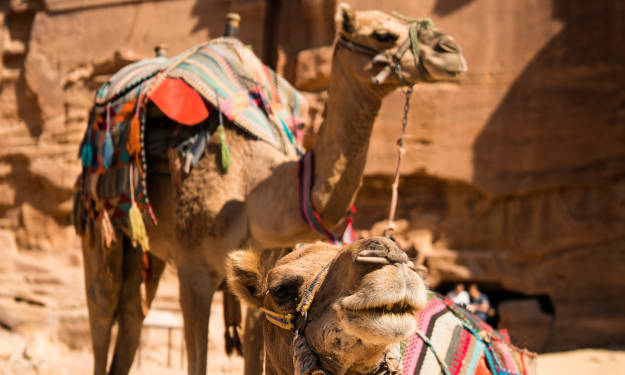
"Camels and the Desert Dance: Unveiling the Protective Veil of Three Eyelids"
Introduction: In the vast, unforgiving expanse of the desert, where swirling sands paint an ever-changing landscape, a resilient and iconic creature, the camel, carries with it a unique adaptation—three eyelids. This seemingly curious feature serves as a protective veil against the harsh onslaught of blowing desert sand. As we embark on a journey into the arid realms where camels roam, let's explore the marvel of their triple-layered ocular defense, revealing the intricate adaptations that allow them to navigate the sands with grace and resilience.
By fatima zahra ajankar2 years ago in Earth
Industries Hit Back at Decision to Extend Over Rs15bn to Rice Exporters
The Pakistani government’s recent decision to extend more than Rs15 billion in financial support to rice exporters has sparked a wave of criticism from domestic industries. While the move is intended to boost exports and strengthen the country’s foreign exchange reserves, local manufacturers argue that it favors exporters at the expense of other industrial sectors, raising questions about fairness, economic priorities, and long-term industrial policy. Industry representatives, economists, and policymakers are now debating the potential impact of this substantial financial package, highlighting the challenges of balancing export promotion with support for domestic production and job creation. Background: The Financial Extension The government’s support package includes: Cash incentives and subsidies for rice exporters Assistance for logistics, storage, and shipment costs Measures aimed at enhancing Pakistan’s competitiveness in international rice markets According to officials, the goal is to maintain export momentum in the face of rising global demand for Pakistani rice, especially basmati and long-grain varieties. The rice industry contributes significantly to the country’s economy, providing employment to millions of farmers, millers, and transport workers. However, critics argue that while rice exporters benefit, other industrial sectors are overlooked, leaving them to bear the burden of rising costs and limited support. Industrial Sector Response Local industry associations have expressed strong opposition to the extension, citing several concerns: Unequal treatment: Manufacturers in textiles, ceramics, and other sectors feel that their contributions to the economy are being undervalued. Resource allocation: The diversion of funds to rice exporters could strain public finances and reduce available support for broader industrial development. Inflationary pressures: Critics warn that focusing heavily on exports without balancing domestic production could drive up prices for local consumers, particularly for staple goods. A spokesperson for the Pakistan Industries Association stated: "While supporting exporters is important, allocating such a large sum exclusively to rice exporters sets a dangerous precedent. All industrial sectors contribute to Pakistan’s economy and deserve equitable support." Economic Arguments Economists note that export incentives can help strengthen foreign reserves, especially in a country facing balance-of-payment pressures. Support for rice exporters may lead to: Increased foreign currency inflows Growth in agricultural output and processing industries Enhanced competitiveness in global rice markets However, experts also caution that over-reliance on subsidies for a single sector may distort the industrial landscape. Diversified support policies could help boost overall manufacturing, create jobs, and stabilize domestic prices while still promoting exports. Regional and International Implications Pakistan is a major player in the global rice market, particularly in South Asia and the Middle East. By extending financial support, the government hopes to: Maintain market share against competitors like India, Thailand, and Vietnam Encourage investment in modern milling and processing technologies Strengthen trade relations with import-dependent countries Yet, domestic industries argue that this focus on exports might undermine long-term industrial development, especially if other manufacturing sectors face financial constraints. Balancing international competitiveness with local growth remains a key challenge. Public Perception and Political Debate The decision has also sparked public debate and media scrutiny. Citizens and commentators have questioned: Why rice exporters are receiving such significant financial support while other sectors struggle Whether this approach will benefit ordinary consumers, particularly in rural and urban areas dependent on domestic production The potential for political influence or lobbying shaping economic decisions Political parties and opposition figures have criticized the government for favoring certain industries, calling for more transparent and inclusive industrial policies. Possible Solutions and Recommendations Experts suggest several measures to balance export promotion with domestic industrial growth: Equitable support: Extend incentives to other industrial sectors based on contribution to employment and GDP. Conditional subsidies: Link export incentives to investment in technology, workforce development, and sustainable practices. Transparent allocation: Ensure public funds are distributed fairly across sectors to avoid favoritism and economic imbalance. Monitoring and evaluation: Regularly assess the impact of financial support on both exports and domestic markets. By adopting a holistic approach, the government can maintain export competitiveness while ensuring that industrial growth is inclusive and sustainable. Impact on Farmers and Rural Communities While industrialists express concern, the rice industry emphasizes the benefits for farmers and rural communities: Increased income for smallholder farmers Job creation in processing, storage, and logistics Support for rural development and agricultural investment Proponents argue that supporting rice exports indirectly boosts local economies in agricultural regions, highlighting the complex trade-offs policymakers face. Looking Ahead The debate over the Rs15 billion support package is likely to continue, as industrial sectors, policymakers, and civil society weigh the benefits and drawbacks of prioritizing rice exports. Key factors to watch include: Government response to industrial backlash Adjustments to export incentives or subsidy allocations Long-term impact on domestic manufacturing and consumer prices Balancing the needs of exporters, industrial manufacturers, and domestic consumers will remain a critical challenge for Pakistan’s economic planners in the coming months. Conclusion The extension of over Rs15 billion to rice exporters has highlighted tensions between export promotion and domestic industrial interests. While the policy aims to strengthen Pakistan’s position in the global rice market and support rural economies, domestic industries argue for more equitable treatment and transparent allocation of resources. As the debate unfolds, policymakers must navigate the delicate balance between encouraging exports, supporting local manufacturing, and safeguarding consumer interests, ensuring that Pakistan’s economic growth is both inclusive and sustainable.
By Muhammad Hassan3 days ago in Earth



Comments
There are no comments for this story
Be the first to respond and start the conversation.