
10 BIRDS-ATTRACTING HANGING PLANTS
10 HANGING PLANTS THAT ATTRACT BIRDS


FUCHSIA

Known for their brightly coloured flowers, fuchsias attract hummingbirds with their nectar- rich blooms.
A beautiful flowering plant!
Fuchsia is a genus of flowering plants that are popular for their:
1. *Drooping, bell-shaped flowers*: Fuchsia flowers are known for their delicate, pendant-like shape and vibrant colors, ranging from pink to purple to white.
2. *Attracting hummingbirds and butterflies*: Fuchsia plants are a favorite of hummingbirds, butterflies, and other pollinators, making them a great addition to wildlife gardens.
3. *Hanging basket-friendly*: Fuchsia plants are well-suited for hanging baskets, where their trailing stems and flowers can cascade downwards.
Some popular varieties of Fuchsia include:
1. Fuchsia magellanica (Chilean Fuchsia)
2. Fuchsia riccartonii (Riccartonii Fuchsia)
3. Fuchsia 'Gartenmeister Bonstedt' (a popular hybrid variety)
TRUMPET VINE

With its trumpet-shaped flowers, this vine is irresistible to hummingbirds and sometimes even butterflies.
Trumpet Vine, also known as Trumpet Creeper, is a vigorous perennial vine that thrives in various environments. It's a great choice for gardeners seeking a low-maintenance plant that attracts pollinators like hummingbirds, bees, and butterflies ¹.
*Key Characteristics:*
- _Fast-growing_: Can reach 30-40 feet tall and 4-10 feet wide
- _Sun-loving_: Prefers full sun to partial shade
- _Adaptable soil_: Tolerates various soil types, including sandy, clay, and loamy
- _Drought-tolerant_: Requires minimal watering, but consistent moisture promotes healthy growth
*Care and Maintenance:*
- _Pruning_: Regular pruning is essential to control its aggressive growth and promote new blooms
- _Deadheading_: Removing spent flowers encourages continued blooming and prevents self-seeding
- _Fertilization_: No supplemental fertilization is necessary, as it can stimulate excessive growth
*Potential Drawbacks:*
- _Invasive growth_: Can become aggressive and overwhelm nearby plants if not properly managed
- _Skin irritation_: Sap can cause skin irritation in some individuals
- _Pest susceptibility_: May attract pests like aphids and spider mites
Overall, Trumpet Vine is a stunning addition to any garden, offering vibrant flowers and attracting pollinators. With proper care and maintenance, its aggressive growth can be managed, and its benefits can be fully enjoyed.
LANTANA

This flowering plant produces clusters of brightly coloured flowers that are popular with butterflies and hummingbirds.
Lantana is a low-maintenance, heat-tolerant shrub that produces vibrant, fragrant flowers and attracts pollinators like butterflies, hummingbirds, and bees.
Characteristics
1. *Drought-tolerant*: Can thrive in dry conditions, making it perfect for water-conscious gardens.
2. *Heat-loving*: Lantana loves full sun and can tolerate high temperatures.
3. *Fragrant flowers*: Produces clusters of small, fragrant flowers in shades of pink, yellow, orange, and purple.
4. *Attracts pollinators*: A favorite of butterflies, hummingbirds, and bees.
Care and Maintenance
1. *Planting*: Plant in well-draining soil and full sun.
2. *Watering*: Water regularly, but allow soil to dry slightly between waterings.
3. *Pruning*: Prune regularly to maintain shape and encourage new growth.
4. *Fertilization*: Feed with a balanced fertilizer during the growing season.
Uses
1. *Hedges*: Lantana makes a great hedge or screen.
2. *Borders*: Use as a border plant to add color and texture.
3. *Containers*: Lantana thrives in containers and can be used as a patio plant.
4. *Wildlife gardens*: Attracts pollinators and other wildlife, making it perfect for wildlife gardens.
PETUNIA

Although often grown in containers, petunias can also be grown in hanging baskets, attracting hummingbirds and butterflies with their fragrant blooms.
Petunia!
Petunia is a popular, flowering annual plant that's perfect for adding color and vibrancy to gardens, containers, and hanging baskets.
Characteristics
1. _Trumpet-shaped flowers_: Petunias produce showy, trumpet-shaped flowers in a variety of colors, including pink, purple, red, white, and bi-colored.
2. _Spreading habit_: Petunias have a spreading habit, making them perfect for containers, hanging baskets, and garden beds.
3. _Easy to care for_: Petunias are relatively low-maintenance and easy to care for.
4. _Attracts pollinators_: Petunias attract butterflies, hummingbirds, and other pollinators.
Care and Maintenance
1. _Full sun_: Petunias love full sun, but can tolerate partial shade.
2. _Well-draining soil_: Petunias prefer well-draining soil to prevent root rot.
3. _Regular watering_: Water petunias regularly, but avoid overwatering.
4. _Fertilization_: Feed petunias with a balanced fertilizer once a month.
Uses
1. _Containers_: Petunias thrive in containers and hanging baskets.
2. _Garden beds_: Use petunias as a border plant or in mass plantings.
3. _Hanging baskets_: Petunias cascade beautifully from hanging baskets.
4. _Cut flowers_: Use petunias as cut flowers in arrangements.
SALVIA

Salvias produce spikes of colourful flowers that are highly attractive to hummingbirds, bees, and butterflies.
Salvia!
Salvia, also known as Sage, is a versatile, low-maintenance perennial flower that's perfect for attracting pollinators and adding color to gardens.
Characteristics
1. _Tall spikes_: Salvia produces tall spikes of colorful flowers, often in shades of blue, purple, red, pink, and white.
2. _Fragrant foliage_: Salvia leaves are often fragrant and can be used in cooking.
3. _Drought-tolerant_: Salvia is relatively drought-tolerant, making it perfect for water-conscious gardens.
4. _Attracts pollinators_: Salvia attracts butterflies, hummingbirds, bees, and other pollinators.
Care and Maintenance
1. _Full sun_: Salvia loves full sun, but can tolerate partial shade.
2. _Well-draining soil_: Salvia prefers well-draining soil to prevent root rot.
3. _Regular watering_: Water salvia regularly, but avoid overwatering.
4. _Pruning_: Prune salvia regularly to promote new growth and prevent legginess.
Uses
1. _Borders_: Use salvia as a border plant to add color and texture.
2. _Cut flowers_: Salvia makes a great cut flower for arrangements.
3. _Pollinator gardens_: Salvia is a must-have for pollinator gardens.
4. _Culinary uses_: Salvia leaves can be used in cooking, particularly in Mediterranean and Italian dishes.
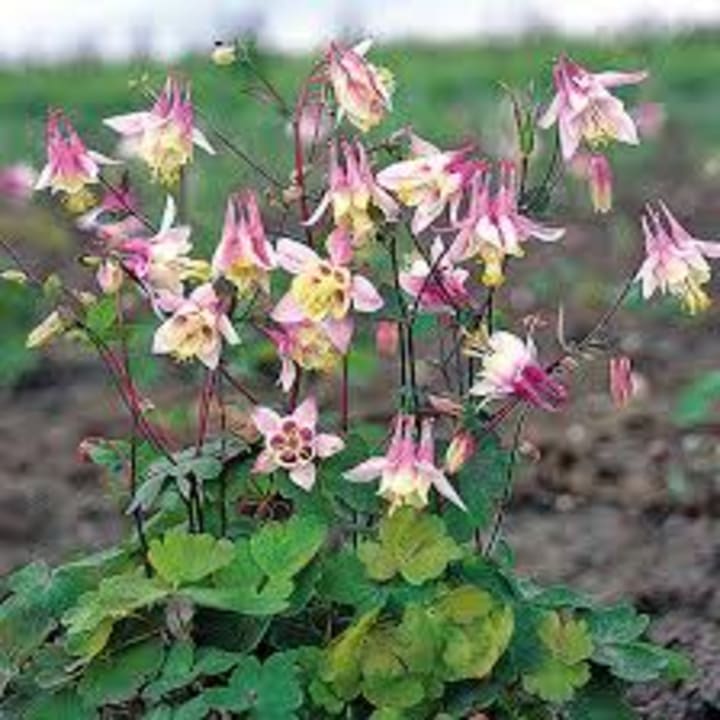
COLUMBINE

The unique shape and colours of columbine flowers make them attractive to hummingbirds and bees.
Columbine!
Columbine (Aquilegia) is a delicate, bell-shaped flower that's perfect for adding a touch of elegance to gardens and attracting pollinators.
Characteristics
1. _Unique shape_: Columbine's bell-shaped flowers are a unique and striking feature.
2. _Delicate appearance_: Columbine's dainty appearance belies its hardy nature.
3. _Variety of colors_: Columbine comes in a range of colors, including pink, purple, blue, white, and bi-colored.
4. _Attracts pollinators_: Columbine attracts hummingbirds, bees, and butterflies.
Care and Maintenance
1. _Partial shade_: Columbine prefers partial shade, especially in warmer climates.
2. _Well-draining soil_: Columbine requires well-draining soil to prevent root rot.
3. _Regular watering_: Water columbine regularly, but avoid overwatering.
4. _Deadheading_: Remove spent flowers to encourage more blooms.
Uses
1. _Rock gardens_: Columbine thrives in rock gardens and alpine gardens.
2. _Woodland gardens_: Columbine's delicate appearance makes it perfect for woodland gardens.
3. _Cut flowers_: Columbine makes a lovely addition to cut flower arrangements.
4. _Pollinator gardens_: Columbine is a great choice for pollinator gardens, attracting hummingbirds and other pollinators.
BOUGAINVILLEA
This tropical vine produces vibrant, papery flowers that can attract hummingbirds, particularly in warmer climates.
Bougainvillea!
Bougainvillea is a vibrant, thorny vine that's perfect for adding a pop of color to gardens, patios, and landscapes.
Characteristics
1. _Papery bracts_: Bougainvillea's bright colors come from its papery bracts, which surround the small, white flowers.
2. _Thorny stems_: Bougainvillea's stems are thorny, making it a great choice for security hedges or barriers.
3. _Fast-growing_: Bougainvillea is a fast-growing vine that can quickly cover trellises, arbors, and walls.
4. _Drought-tolerant_: Bougainvillea is relatively drought-tolerant, making it perfect for water-conscious gardens.
Care and Maintenance
1. _Full sun_: Bougainvillea loves full sun, but can tolerate partial shade.
2. _Well-draining soil_: Bougainvillea requires well-draining soil to prevent root rot.
3. _Regular watering_: Water bougainvillea regularly, but avoid overwatering.
4. _Fertilization_: Feed bougainvillea with a balanced fertilizer during the growing season.
Uses
1. _Trellises and arbors_: Bougainvillea is perfect for training up trellises and arbors.
2. _Hedges and barriers_: Bougainvillea's thorny stems make it a great choice for security hedges or barriers.
3. _Containers_: Bougainvillea thrives in large containers and planters.
4. _Landscaping_: Bougainvillea is often used in landscaping to add color and texture to gardens and landscapes.
BLEEDING HEART

The distinctive heart-shaped flowers of bleeding hearts can attract hummingbirds and butterflies.
Bleeding Heart!
Bleeding Heart (Dicentra spectabilis) is a delicate, heart-shaped flower that's perfect for adding a touch of romance and whimsy to gardens and landscapes.
Characteristics
1. _Heart-shaped flowers_: Bleeding Heart's flowers are shaped like hearts, with a dangling, drop-like appearance.
2. _Delicate appearance_: Bleeding Heart's stems and leaves are slender and delicate, adding to its whimsical charm.
3. _Pink or white flowers_: Bleeding Heart flowers come in shades of pink or white, often with a hint of purple or red.
4. _Attracts pollinators_: Bleeding Heart attracts hummingbirds, bees, and butterflies.
Care and Maintenance
1. _Partial shade_: Bleeding Heart prefers partial shade, especially in warmer climates.
2. _Well-draining soil_: Bleeding Heart requires well-draining soil to prevent root rot.
3. _Regular watering_: Water Bleeding Heart regularly, but avoid overwatering.
4. _Deadheading_: Remove spent flowers to encourage more blooms.
Uses
1. _Woodland gardens_: Bleeding Heart thrives in woodland gardens, where its delicate appearance can shine.
2. _Rock gardens_: Bleeding Heart's small size and delicate appearance make it perfect for rock gardens.
3. _Cut flowers_: Bleeding Heart makes a lovely addition to cut flower arrangements.
4. _Romantic gardens_: Bleeding Heart's heart-shaped flowers and delicate appearance make it a popular choice for romantic gardens.
BEGONIA

Many begonia varieties produce brightly coloured flowers that can attract hummingbirds and butterflies.
Begonia!
Begonia is a versatile, low-maintenance flowering plant that's perfect for adding color and texture to gardens, containers, and indoor spaces.
Characteristics
1. _Variety of shapes and sizes_: Begonias come in a range of shapes and sizes, from compact and bushy to tall and trailing.
2. _Beautiful flowers_: Begonias produce stunning flowers in shades of pink, white, red, and bi-colored.
3. _Attractive foliage_: Begonias have beautiful, asymmetrical leaves that add texture and interest to gardens and containers.
4. _Easy to care for_: Begonias are relatively low-maintenance and can thrive in a range of conditions.
Care and Maintenance
1. _Partial shade to full sun_: Begonias prefer partial shade to full sun, depending on the variety.
2. _Well-draining soil_: Begonias require well-draining soil to prevent root rot.
3. _Regular watering_: Water begonias regularly, but avoid overwatering.
4. _Fertilization_: Feed begonias with a balanced fertilizer during the growing season.
Uses
1. _Containers_: Begonias thrive in containers and hanging baskets.
2. _Garden beds_: Use begonias as a border plant or in mass plantings.
3. _Indoor spaces_: Begonias can be grown indoors, adding color and texture to rooms.
4. _Cut flowers_: Begonias make a lovely addition to cut flower arrangements.
HANGING BASKET GERANIUMS
Geraniums in hanging baskets offer nectar-filled blooms that attract butterflies and sometimes hummingbirds.
Hanging Basket Geraniums!
Characteristics
1. *Trailing habit*: Geraniums have a trailing habit, making them perfect for hanging baskets.
2. *Vibrant flowers*: They produce vibrant, fragrant flowers in shades of pink, red, white, and bi-colored.
3. *Attractive foliage*: Geraniums have attractive, lobed leaves that add texture and interest to hanging baskets.
4. *Easy to care for*: Geraniums are relatively low-maintenance and can thrive in a range of conditions.
Care and Maintenance
1. *Full sun to partial shade*: Geraniums prefer full sun to partial shade, depending on the variety.
2. *Well-draining soil*: Geraniums require well-draining soil to prevent root rot.
3. *Regular watering*: Water geraniums regularly, but avoid overwatering.
4. *Fertilization*: Feed geraniums with a balanced fertilizer during the growing season.
Tips for Hanging Baskets
1. *Use a well-draining potting mix*: Prevent waterlogged soil by using a well-draining potting mix.
2. *Water carefully*: Water geraniums in hanging baskets carefully to avoid washing away soil.
3. *Provide support*: Provide support for the stems as they grow to prevent them from getting leggy.
4. *Deadhead regularly*: Remove spent flowers to encourage more blooms and maintain appearance.
About the Creator
mukesh jaiswar
you are tite then you can try your future bright
Keep reading
More stories from mukesh jaiswar and writers in Earth and other communities.
8 PLANTS THAT CAN ATTRACT PESTS, SNAKES, AND INSECTS IN HOMES
Pest attractors Often, while people take the best precautions to keep their home insect and rodent free, the problem that is inhibiting the insects is hidden in plain sight. The beautiful flowers, fruits, and leaves of your garden, might be the reason for pests, snakes, and insects in your home!
By mukesh jaiswarabout a year ago in Earth
Heavy Snow Warning: When Winter Turns Dangerous Overnight
A quiet winter evening can quickly turn into something far more serious. The sky grows darker, the wind sharpens, and snow begins falling faster than anyone expected. What starts as a peaceful snowfall can suddenly lead to closed roads, power outages, and difficult travel conditions. This is when a heavy snow warning becomes more than just a weather alert. It becomes a signal that daily life may soon slow down or even stop. For many communities, these warnings bring both beauty and concern. Snow can cover the world in silence, but it can also create dangerous conditions if people are not prepared. Understanding what a heavy snow warning means and how it affects daily life can help individuals and families stay safe when winter becomes unpredictable.
By Muqadas khanabout 13 hours ago in Earth


Comments
There are no comments for this story
Be the first to respond and start the conversation.