
变异毒株出现后,“拔牙”将面临失效
"Tooth extraction" will face failure

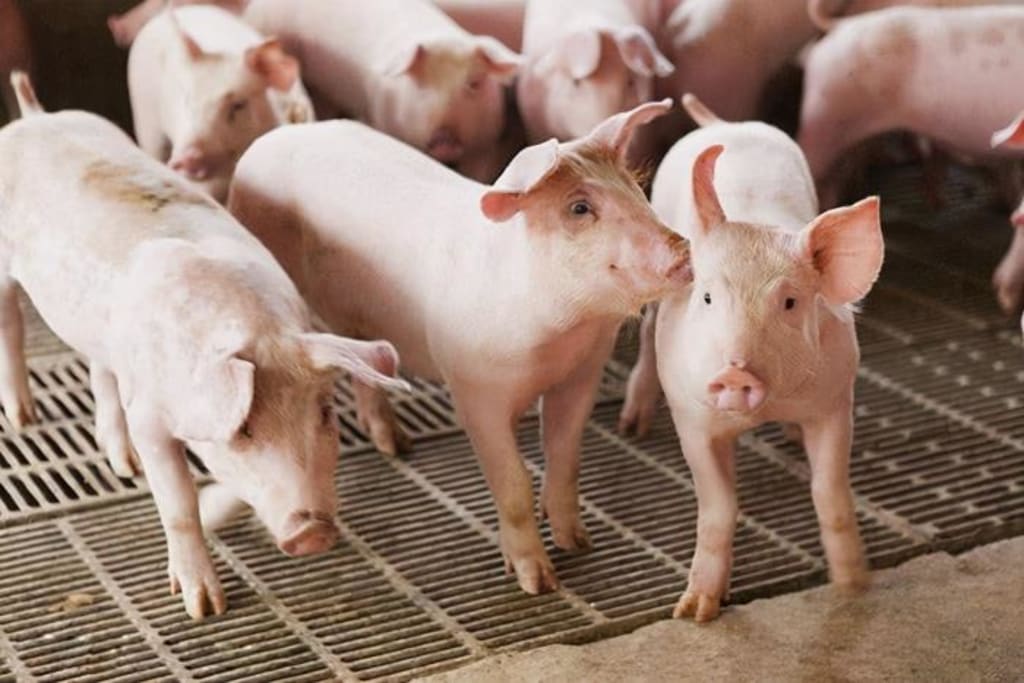
When the ASF outbreak occurred for the first time, the major pig farms came up with a "tooth extraction" plan based on biosafety through repeated practice. As soon as this plan came out, major farms scrambled to imitate it, and the effect was satisfactory. However, due to the emergence of the natural variant of African swine fever genotype II with low lethality, the plan encountered serious challenges: failure or high culling rate.
The existing data show that the mutations that have appeared in African swine fever virus will tend to: chronic infection, clinical symptoms are alleviated or even no clinical symptoms, the virus content in the body is reduced after infection, and the time of antibody production is delayed.
The reasons for the analysis are as follows:
1. The increase in inventory leads to an increase in density
In the second half of 2019 and the first half of 2020, the national inventory is low and the density is low. Even if ASF occurs in individual pig farms, the pig farms can accurately remove infected pigs in a short period of time and resume production quickly through "tooth extraction". In the second half of 2020, a large number of new farms, expansion farms, and restocking farms have been put into use, the density of pig herds has increased, and the pressure on biosecurity has also increased.
2. Afraid of heat and not of cold
Yesterday, I discussed the relationship between ASF and temperature with Dr. Ouyang from Taigao, the Netherlands. ASF virus is "afraid of heat but not cold". It can last for half an hour at 60°C and 10 minutes at 85°C. It can only survive for a few seconds at 100°C, while it can survive for up to 3 years in frozen meat and 3 months in frozen meat. In the season with higher temperature, the transmission ability of the virus decreases; in November 2020, the temperature drops and the virus becomes active. Once the pig farms in the area are infected, the entire area will quickly fall.
3. Strain differences
The National African Swine Fever Specialized Laboratory of Harbin Veterinary Research Institute isolated and identified my country's first African swine fever virus HLJ/18 in 2018. From June to December 2020, the laboratory's research group carried out a more systematic development in some provinces and regions in my country A total of 22 genotype II African swine fever epidemic strains were isolated. Compared with the earliest isolate HLJ/18, the genome sequences of the 2020 isolates have changed to varying degrees, including nucleotide mutations, deletions, insertions or short fragment substitutions.
High density of pigs, lower temperature and weaker strains are the three major reasons for the counterattack of the epidemic in 2020-2021. However, there was no large-scale epidemic in the winter of 2019-2020, nor did the vaccine strains during this period. Causes infection of large-scale pig herds, therefore, low temperature and attenuated strains can only promote the development of the epidemic.
The epidemic situation in 2020-2021 is more serious, and the success rate of "tooth extraction" is also maintained at a low level. The measures taken by these pig farms are also different, mainly as follows:
1. The management needs to unify their thinking, and the plan for ASF must be put in place. The pig farm needs to fix a method for a period of time, and everyone works hard to make it.
2. "Early, fast and accurate" for tooth extraction, success depends on the execution of employees. The managers who go to the front line can keep abreast of the epidemic situation of the pig farm and adjust the "tooth extraction" method according to the actual situation.
3. "Tooth extraction" must be ruthless! Rather than let it go, many pig farms were misled by the previous "tooth extraction" plan. When positive pigs were found, they only dealt with the positive stalls, and the adjacent stalls or the opposite stalls were not processed, resulting in successive occurrences in adjacent areas in the later stage. Positive pigs.
4. The incubation period of ASF this time is relatively long. Many pig farms were misled by the first epidemic. The silent period was only about 5-7 days. After that, some operations began to resume, such as going to the birthing bed, weaning, etc. As a result, due to the movement of the pig herds Spread of contamination.
5. During the current round of epidemic disposal, pig farms with single feed trough and single nozzle feeding mode have less pollution.
6. After the first epidemic, some rehabilitation farms reduced large pens and increased limited pens, so that the pollution area of this round of epidemic was small and the loss was small.
7. This ASF virus has a long incubation period and a weak strain. It is impossible to completely detect ASF by antigen detection alone. After the quiet period, the pigs need to be tested for antibodies.
summary:
In the process of "tooth extraction", the antibody detection of pig farms infected with strains below medium virulence after the end of the silent period is a necessary measure to purify pig farms of ASF.
The "tooth extraction" technology accumulated by major farms faces the possibility of failure after the emergence of mutant strains, and the "tooth extraction" technology needs to be adjusted in time.
About the Creator
crudden elle
Partagez un peu de science chaque jour
Keep reading
More stories from crudden elle and writers in Earth and other communities.
Fusion Engineering Dilemma
1. Fusion research and tokamak devices The established goal of fusion energy research is to develop a new type of electrical energy based on the theory of nuclear fusion, the principle of which is the same as the heating principle of stars such as the sun.
By crudden elle4 years ago in Earth
Venus and Jupiter Shine Together: A Stunning Planetary Display in Earth’s Sky
For skywatchers across the world, there are few sights more captivating than seeing bright planets glowing in the night sky. Among these celestial wonders, the close appearance of Venus and Jupiter from Earth is one of the most spectacular. When these two brilliant planets appear close together in the sky, they create a stunning astronomical event that fascinates both professional astronomers and casual stargazers alike.
By Irshad Abbasi 6 days ago in Earth




Comments
There are no comments for this story
Be the first to respond and start the conversation.