
What Comes After Exposure? Reclaiming Memory and Repair
Beyond outrage lies the real work of unlearning, cultural revival, and repair.

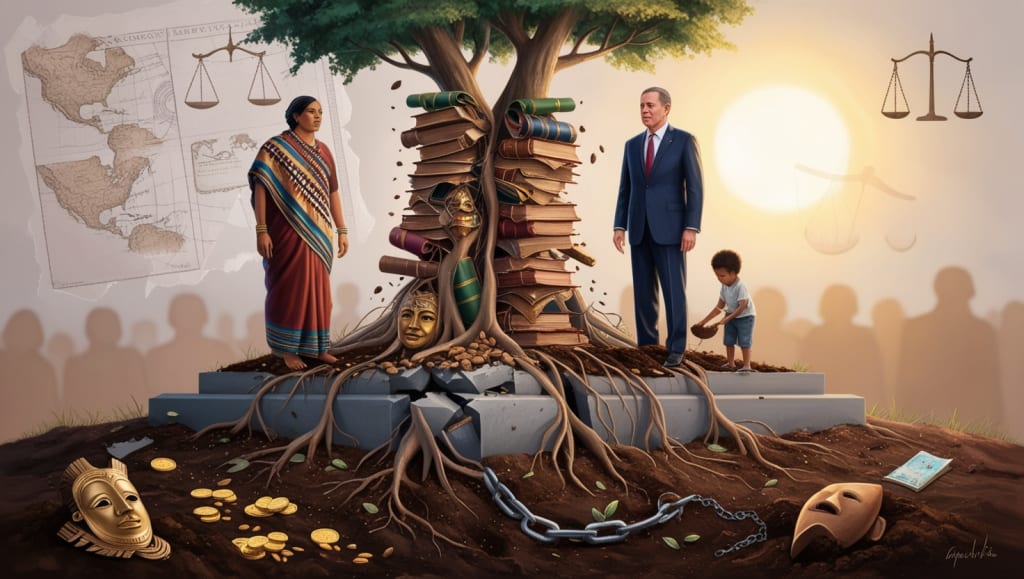
It starts with a spark—a documentary, a conversation, a sudden reckoning. Maybe someone posts about stolen African artifacts sitting in European museums, or you read that the wealth of a global power was built on slave labor. At first, it feels like outrage. But soon, a deeper question emerges:
Now what?
After the truth has been exposed, what comes next?
The Violence of Forgetting
Exposure is only the beginning. For centuries, colonial powers didn’t just steal land and labor—they stole memory. They burned books, renamed cities, rewrote history, and silenced tongues. The violence wasn’t just physical; it was cognitive. They replaced indigenous knowledge systems with Western models and called them universal.
And the result? Generations grew up disconnected from their own cultural brilliance, and others grew up unaware that anything had ever been taken.
Step One: Unlearning the Lie
The first step after exposure is unlearning. This isn’t as easy as "learning the truth." It requires tearing down internalized beliefs—that European knowledge is superior, that Africa has no history, that colonization was inevitable.
Unlearning means looking at textbooks with suspicion. It means asking who wrote the syllabus, who funded the museum, and whose voice is missing from the archive.
And it means realizing that ignorance isn’t neutral. It’s designed.
Step Two: Reviving What Was Suppressed
Reclaiming memory isn’t just about what was taken. It’s about what survived.
Despite centuries of erasure, African, Indigenous, and colonized peoples held on to fragments of language, philosophy, science, and spirituality. The oral traditions, the folk stories, the hidden practices—they never fully disappeared. They went underground. They waited.
Revival means bringing these forms back into the light. It means centering local knowledge in schools. It means elders teaching children, not just in language, but in worldview. It means understanding that tradition and innovation are not enemies.
Step Three: Material and Symbolic Repair
Repair is not just emotional or cultural. It must also be material. Colonial theft built global wealth. The companies, families, and governments that benefited still do.
Reparations are often treated like a radical idea. But what’s more radical than keeping stolen property and calling it a legacy?
Repair can mean money. It can mean land. It can mean policy. But it must also mean acknowledgment.
Returning artifacts to their communities, renaming streets, opening archives—these are acts of symbolic repair. They won’t undo the past, but they signal a willingness to confront it
Step Four: Healing on Both Sides
This isn’t just about the oppressed. The oppressors also suffer—from amnesia, guilt, fragility, and disconnection. When you base your identity on dominance, equality feels like a threat.
Real healing begins when both sides commit to truth. That means listening without defensiveness. Teaching without superiority. Grieving without shame.
Because this isn’t just about justice. It’s about becoming whole.
Final Thought: Memory is Power
We often treat history like a fixed record of the past. But history is active. It shapes what we believe is possible. It tells us who we are, and who we are allowed to become.
To reclaim memory is to reclaim the future. Exposure alone is not enough.
The real work begins after the curtain has been lifted.
And that work—the unlearning, reviving, repairing, and healing—is how we move forward together.
About the Creator
David Thusi
✍️ I write about stolen histories, buried brilliance, and the fight to reclaim truth. From colonial legacies to South Africa’s present struggles, I explore power, identity, and the stories they tried to silence.
Keep reading
More stories from David Thusi and writers in Critique and other communities.
Europe’s Amnesia: How the West Remembers What It Wants, and Forgets What It Must
Europe has mastered the art of remembrance — just not for everyone. Across cities like Berlin, Paris, and Amsterdam, you’ll find meticulously maintained Holocaust memorials, plaques marking Nazi crimes, and museums dedicated to "Never Again." And rightly so. The horrors of fascism deserve eternal remembrance.
By David Thusi9 months ago in Critique
Cassie and Johnny
I’m the kind of dame you notice. I’m no femme fatale, but you can’t ignore me, at least not until I warn you about what’s coming, then everybody ignores me. Hell, they usually blame me afterwards and give Johnny all the credit for saving the day, but my Johnny couldn’t save a seat at the movies without my help. Sure, he’s brawny, but brainy? Not so much. Like that time I asked him to spot me five bucks, and he said he didn’t see it anywhere on me, and believe you me, he looked but good.
By Harper Lewis14 days ago in Critique
"You should smile more "
A few weeks ago, I was at the dmv and a random man had the audacity to tell me "why aren't you smiling, you should smile more". I was so appalled by that man, but even more by myself because instead of putting him in his place I awkwardly laughed. This guy probably went home satisfied with himself. Looking back at it I feel sick. He. caught me by surprise but I should have been faster and clap back at him or even insult him.
By Girlygirly4 days ago in Critique


Comments
There are no comments for this story
Be the first to respond and start the conversation.