
Themes and Messages in Stranger Things
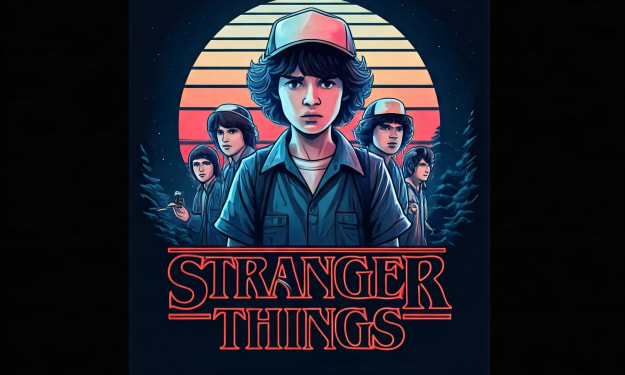
Stranger Things

Themes and Messages in Stranger Things
Stranger Things captivates audiences not only with its nostalgic 1980s setting, gripping plot, and supernatural elements but also through its deep exploration of themes and messages. Beneath the surface of Demogorgons, secret labs, and the Upside Down, the show reflects on universal human experiences and social issues. Let’s dive into the central themes and their messages.
1. Friendship and Loyalty
At its core, Stranger Things celebrates the power of friendship. The group of kids—Mike, Dustin, Lucas, Will, Eleven, and later Max—show unwavering loyalty and bravery as they face life-threatening challenges together.
Key Message:
True friends stand by you, even when the odds are against you. Their bond emphasizes teamwork, trust, and the value of supporting one another in difficult times.
Examples:
Mike’s determination to protect Eleven when she first appears in their lives.
The group’s shared mission to rescue Will in Season 1 and later to protect Hawkins from the Mind Flayer.
2. The Power of Love and Family
Stranger Things consistently highlights the importance of familial love, whether it’s biological or chosen family. Parental love, sibling bonds, and surrogate families play crucial roles throughout the story.
Key Message:
Love provides strength in the darkest moments and is a driving force for protection and perseverance.
Examples:
Joyce Byers’ relentless quest to find Will despite being labeled "crazy" by the townsfolk.
Hopper’s transformation into a father figure for Eleven, showing his capacity for love and redemption.
3. Coming of Age
The series is also a coming-of-age story. The kids face not only supernatural threats but also the struggles of growing up. From first crushes to navigating peer pressure, Stranger Things portrays the universal experiences of adolescence.
Key Message:
Growing up involves confronting fears, embracing change, and finding one’s identity.
Examples:
Eleven learning to live a normal life outside Hawkins Lab while exploring her individuality.
Max finding her place in the group and dealing with the trauma of her family life.
4. The Fight Between Good and Evil
At its simplest, Stranger Things is a battle between good and evil. Whether it’s the kids fighting the Demogorgon or Hawkins Lab trying to cover up their experiments, the story repeatedly pits courage and morality against fear and corruption.
Key Message:
Even ordinary people can rise to extraordinary challenges when fighting for what’s right.
Examples:
The kids, armed with little more than bicycles and walkie-talkies, take on powerful supernatural forces.
Steve Harrington evolving from a self-centered teenager to a selfless protector of the group.
5. The Dangers of Unchecked Power
Hawkins Lab and its experiments on Eleven serve as a critique of unchecked power and unethical scientific practices. Their attempts to control and exploit the supernatural backfire, causing chaos in Hawkins and beyond.
Key Message:
The pursuit of power without accountability can have disastrous consequences.
Examples:
The opening of the Upside Down portal as a result of Hawkins Lab’s experiments.
Dr. Brenner’s manipulation of Eleven, treating her as a tool rather than a person.
6. The Fear of the Unknown
The Upside Down represents the unknown—dark, mysterious, and terrifying. This theme ties into the characters’ personal fears, such as losing loved ones, being different, or confronting past trauma.
Key Message:
Facing the unknown is daunting, but courage and resilience can help overcome even the greatest fears.
Examples:
Will Byers’ journey of coping with his connection to the Upside Down.
Eleven confronting her origins and finding strength in her vulnerability.
7. Nostalgia and Escapism
Stranger Things is a love letter to the 1980s, featuring classic pop culture references, retro music, and the innocence of childhood. It creates a sense of nostalgia for simpler times, reminding viewers of the joy of friendship, adventure, and imagination.
Key Message:
While the past can provide comfort and joy, it’s important to balance nostalgia with moving forward.
Examples:
The kids’ Dungeons & Dragons games, which serve as a metaphor for their real-life adventures.
The integration of 1980s pop culture, from arcades to movies, that frames the show’s aesthetic.
8. Trauma and Healing
Many characters in Stranger Things face trauma—Will’s abduction, Eleven’s abuse, Max’s loss, Hopper’s grief over his daughter. The show doesn’t shy away from exploring how people cope and heal.
Key Message:
Healing is a journey, and support from loved ones can help rebuild what was broken.
Examples:
Eleven’s journey from isolation and fear to acceptance and belonging.
Joyce and Hopper working through their losses while finding strength in one another.
9. Female Empowerment
The female characters in Stranger Things—Eleven, Joyce, Max, and Nancy—are strong, resourceful, and pivotal to the plot. They often defy traditional gender roles, showcasing bravery and intelligence.
Key Message:
Strength comes in many forms, and women are just as capable of leading the fight against darkness.
Examples:
Eleven using her powers to protect her friends and defeat supernatural threats.
Nancy Wheeler’s determination to uncover the truth about Hawkins Lab and fight for justice.
10. The Value of Individuality and Acceptance
Stranger Things celebrates characters who are different, from Eleven’s supernatural powers to Dustin’s quirky sense of humor. It encourages acceptance of oneself and others, no matter how "weird" they may seem.
Key Message:
Embrace what makes you unique, and accept others for who they are.
Examples:
Dustin’s unapologetic nerdiness and the group’s acceptance of his quirks.
Eleven learning to love herself, even as she struggles with her identity and powers.
Conclusion
Stranger Things weaves these themes into a compelling narrative that resonates with viewers of all ages. Its exploration of friendship, family, love, courage, and the fight between good and evil elevates it beyond a simple sci-fi series. These universal messages remind us of the importance of standing together, embracing our individuality, and facing life’s challenges with courage and hope.
About the Creator
Keep reading
More stories from Farkas Márk and writers in Critique and other communities.
Stranger Things - Characters and Relationships
Stranger Things – Characters and Relationships The heart of Stranger Things lies in its characters and their interconnected relationships. These dynamics drive the narrative forward, creating an emotional resonance that captivates the audience. The show skillfully explores friendships, family bonds, and romantic connections while portraying each character's personal growth.
By Farkas Márk 12 months ago in Critique
Standing While Falling
Quotation from Friedrich Nietzsche "He who wrestles long with monsters should beware lest he himself become a monster. And if you gaze long into an abyss, the abyss also gazes into you. Man is not destroyed by suffering, but by the meaning he makes of it."
By LUCCIAN LAYTH8 days ago in Critique


Comments
There are no comments for this story
Be the first to respond and start the conversation.