
The Truth Paradox: Writing Between Lies and Liberation.
A Creative Reckoning with Words and Meaning.
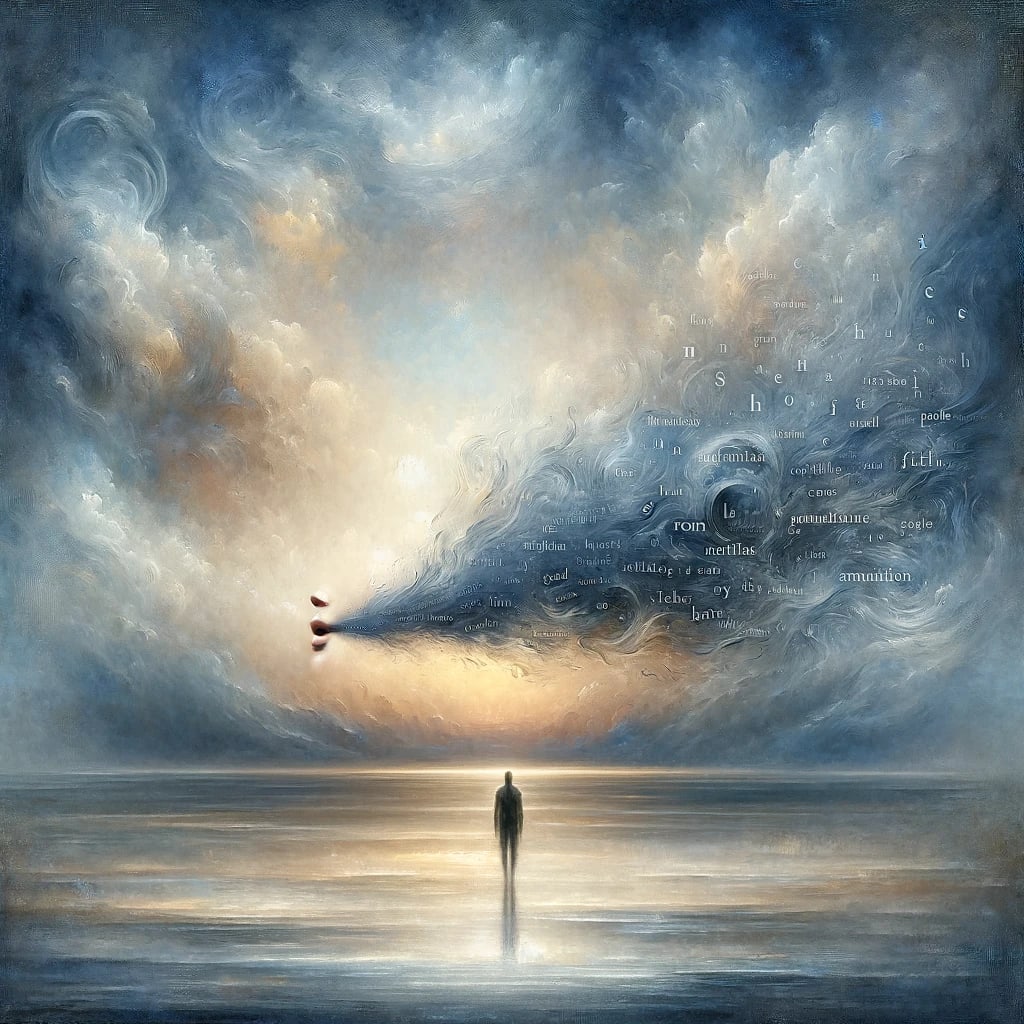
All human suffering is the result of believing in lies. To become aware of this is the first thing we must do. Why? Because this awareness will guide us to truth, and the truth will lead us to love, to happiness. The truth will set us free from all the lies we believe in.
Excerpt from "The Four Agreements" by Don Miguel Ruiz
Excerpt (Imperfect and Brimming with Potential):
"All human suffering is the result of believing in lies."
I pause here. That single sentence is both a provocation and an invitation. It suggests that suffering is not intrinsic but fabricated, a self-inflicted illusion sustained by deception. But what if suffering is also a teacher? What if it shapes, molds, and sharpens us, not merely as a punishment for believing lies but as a necessary stage in discovering something beyond truth and falsehood?
This passage rattles inside me. It makes me wonder: Is writing itself an act of deception, a distortion of what is real? Or is it the only way we inch closer to understanding?
The Raw Self-Edit: A Reckoning with Meaning:
The challenge in engaging with this excerpt is its stark certainty, its claim that suffering is tied solely to illusion. My instinct is to resist. I want to push against it, to say: No, suffering is not just a trick of the mind. It is a real, visceral force. Pain is not always an illusion—it is sometimes a message, a testament to something broken that demands to be witnessed.
And yet, there is something seductive about the assertion. If all suffering is built on lies, then truth becomes a cure. A clean answer. A way out. But truth itself, as the passage admits, cannot be captured in language.
So I choose to embrace this tension instead of resolve it. I write a narrative that explores the paradox: a protagonist who cannot trust his own mind, who seeks truth but fears that in defining it, he will destroy it.
---
The Story: "The Man Who Spoke the Last True Word".
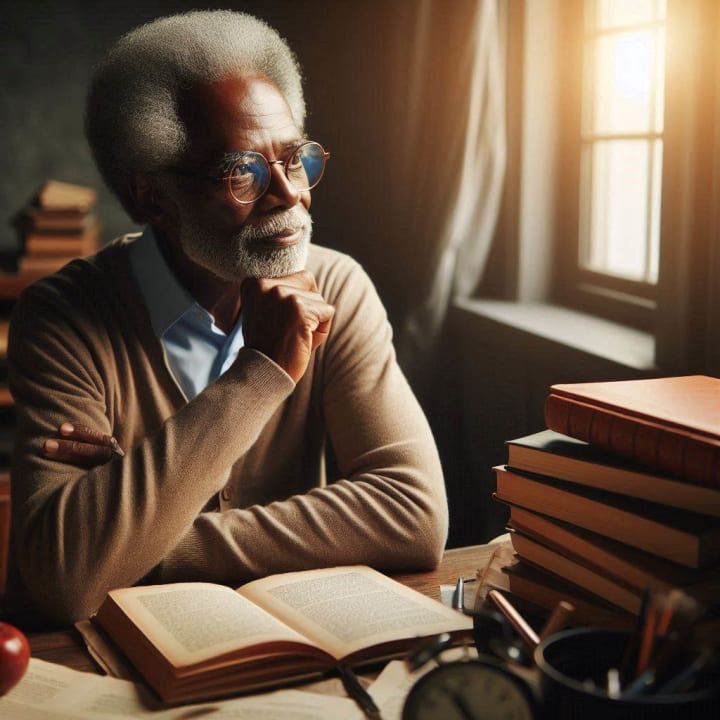
No one knew what he had said, only that after he spoke, he refused to speak again.
He had once been a scholar, a seeker of clarity, a man who believed in the precision of language. He dissected words as if they were specimens, convinced that if he could refine them enough, he would find truth in their core.
Then, one night, in a feverish state of insight—or madness—he uttered something aloud. Something final. A phrase so complete, so unfiltered, that it ended his need for language.
No record of the sentence existed. The people around him had heard it, but it did not stay in their minds. It was as if the moment the words touched the air, they dissolved, like ink dropped into an endless sea.
He left his life behind. Stopped teaching. Stopped writing. He retreated to a small house at the edge of a silent valley, where the wind carried no echoes. He lived there, wordless, watching seasons pass like unwritten stories.
Occasionally, people came to see him. They believed he held a secret, that he had glimpsed something beyond human knowledge. Some begged him to share what he had said that night. Others feared hearing it, worried that understanding would erase the world as they knew it.
One visitor, a young woman named Ana, came with a different question. She sat across from him in his quiet home and did not ask what he had spoken, but why he had chosen silence afterward.
He looked at her for a long time before writing his only answer. A single sentence, scrawled on the surface of the table:
"Because the moment I spoke it, it became a lie."
Ana stayed with him for a while, speaking for both of them. She told him of the world outside, of the wars that had started and ended, of the poets still trying to capture meaning in words. She asked if he missed language. If he missed the dance of expression, the art of shaping something infinite into something small enough to grasp.
One day, she left. She did not take his silence with her, but she carried the weight of his last sentence in her mind. She wondered if all truths were destined to die in words. If stories were necessary failures or the only way humanity could reach toward something real.
Years later, when Ana was old, she wrote a book about him. It was full of contradictions, questions, doubts. Some called it a masterpiece. Others dismissed it as nonsense.
But the last line of the book, the one she wrote just before she died, was the closest thing to an answer:
"Perhaps truth does not exist to be spoken, but to be found, again and again, in the spaces between words."
---
The Creative Risks: Breaking Language to Find Meaning.
This piece took me somewhere uncomfortable. I leaned into the anxiety that words might be a barrier rather than a bridge. I resisted the temptation to wrap the story in a neat resolution. Instead, I chose to leave the question open—because that’s where it belongs.
1. Risking Narrative Structure:
The story lacks a conventional arc. There is no climax in the traditional sense, no grand revelation—only an unraveling. This is intentional. It mirrors the paradox at the heart of the original excerpt: that truth resists being confined to form.
2. Playing with Language:
I let silence be a character. The protagonist speaks through absence. His truth is never revealed, only hinted at. In doing so, I challenge the reader to engage with what is unsaid as much as with what is written.
3. Leaving the Reader Unsettled:
Many stories comfort us with answers. This one refuses. It mirrors life itself—where we rarely receive full clarity. I chose this risk deliberately, even knowing it might frustrate some readers. Because frustration, too, is part of the search for truth.
---
Final Thoughts: Why This Matters
Writing this story forced me to confront my own relationship with language. I have always believed in the power of words. But what if their power lies not in what they capture, but in what they fail to contain?
This piece does not solve the question posed by Don Miguel Ruiz’s excerpt. Instead, it extends it. It asks: If truth cannot be spoken, what does that mean for those of us who live through words? Are we merely creating more elegant lies, or are we tracing the edges of something real?
In the end, perhaps writing is not about answering but about searching. About learning to live in the spaces between certainty and doubt. And that, I think, is where real art happens.
Stay Connected.
If you enjoyed this content and want to explore more insights like this, consider subscribing to my page. Your support helps me continue creating meaningful content. If you feel led to, you can also leave a tip as a token of appreciation. Thank you for being part of this journey!
About the Creator
Cassie and Johnny
I’m the kind of dame you notice. I’m no femme fatale, but you can’t ignore me, at least not until I warn you about what’s coming, then everybody ignores me. Hell, they usually blame me afterwards and give Johnny all the credit for saving the day, but my Johnny couldn’t save a seat at the movies without my help. Sure, he’s brawny, but brainy? Not so much. Like that time I asked him to spot me five bucks, and he said he didn’t see it anywhere on me, and believe you me, he looked but good.
By Harper Lewis16 days ago in Critique
"You should smile more "
A few weeks ago, I was at the dmv and a random man had the audacity to tell me "why aren't you smiling, you should smile more". I was so appalled by that man, but even more by myself because instead of putting him in his place I awkwardly laughed. This guy probably went home satisfied with himself. Looking back at it I feel sick. He. caught me by surprise but I should have been faster and clap back at him or even insult him.
By Girlygirly6 days ago in Critique


Comments