
The Sagebrush Rebellion
Federal Land Policy Act vs The People

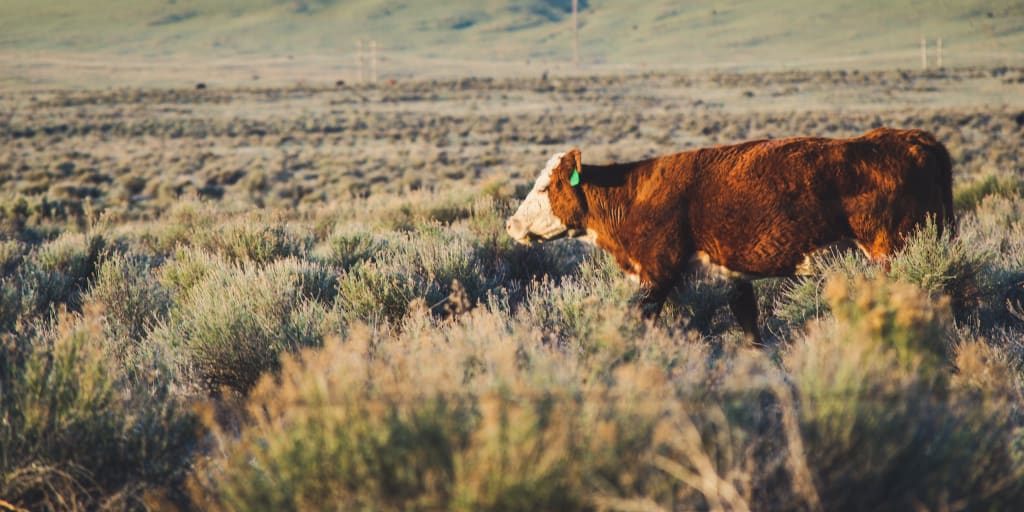
In the United States, some believe that land controlled by the Federal Government should be transferred to State or local authorities or sold off to private owners. In the 1970’s and 1980’s there was a large push for policy to change so that the land, mostly covered by sagebrush, could be used for various purposes (Wikipedia contributors, 2022). These purposes included the want to extract resources, grazing areas for animals and other development in thirteen of the Western States (Wikipedia contributors, 2022). In 1976 the Federal Land Policy Act was enacted and those who had previously complained that the land was unfairly controlled turned to rebellion to attempt to invoke change and demonstrate how they felt that use of the land was unjust (Wikipedia contributors, 2022). While the act required that the Federal Government regulate land for use in agriculture, farming, grazing and mining it also included consideration for conservation (American Patriot, 2017). Although conservation was viewed as important by some it was more important that control of the land be turned over to State and local authorities to decide how the land should be disbursed.
This action by the Federal Government ensures that in a whole the United States maintains the appropriate conservation measures needed. Although it may be easier for State and local authorities to understand what is required locally, there are several factors that could be environmentally detrimental depending on the locale and who was making the decision. This is similar to what was stated in The Federalist 51, that the partition of power that is laid out in the Constitution is inadequate (University of Virginia Press, 1788b). The reasoning is that because the Federal Government must give the power to a lower government the provision is flawed (University of Virginia Press, 1788b). This is apparent in the case of the Sagebrush Rebellion because rather than handing power over the land to State or local authorities the Federal Government instead enacted the Federal Land Act. Although currently it is easy to simply side with the Federal Government on their decision as the environment has become a high priority, the decision reveals a flaw in the Constitution. Because there is no division between the parts of government at the federal level this also shows another flaw in the process (University of Virginia Press, 1788a). Without division in how the sections of government are managed it is possible for them to be influenced by one another (University of Virginia Press, 1788a). This means that although the concept of the Federal Government being better suited to ensure fair distribution and use of the land may not actually be possible. When one area of the government is able to influence the other, this leaves many possibilities for corruption and inequity. This also means that the land required for the conservation effort could be used in a way that is not intended, depending on what that outside influence is or where it is manifested from. The ideals laid out in the Constitution are to keep the various levels of government in check but instead leave open for possibilities of control and inequity through the lack of distribution of power from a higher level to lower governments (University of Virginia Press, 1788b). In the case of the Sagebrush revolution the fact that the Federal Government was able to ignore what State and local governments were petitioning for as well as what the citizens of those locales wanted shows that the flaw in the system needs to be rectified. It is the job of all forms of government in the United States to work for the people not in this case they directly went against what the vast majority initially requested and eventually demanded.
Sources
American Patriot: Inside the Armed Uprising Against the Federal Government. (2017, May 16). FRONTLINE. https://www.pbs.org/wgbh/frontline/film/american-patriot-inside-the-armed-uprising-against-the-federal-government/
University of Virginia Press. (1788a, January 30). Founders Online: The Federalist Number 47, [30 January] 1788. The Federalist. https://founders.archives.gov/documents/Madison/01-10-02-0266
University of Virginia Press. (1788b, February 6). Founders Online: The Federalist No. 51, [6 February 1788]. The Federalist. https://founders.archives.gov/documents/Hamilton/01-04-02-0199
Wikipedia contributors. (2022, May 9). Sagebrush Rebellion. Wikipedia. https://en.wikipedia.org/wiki/Sagebrush_Rebellion
Cover Image
Sayles, Brett. “Brown and White Cattle in the Middle of Grassland · Free Stock Photo.” Pexels, 12 May 2018, www.pexels.com/photo/brown-and-white-cattle-in-the-middle-of-grassland-1059603.
About the Creator
SHEESH Customer Gets Knocked Out With An Uppercut!
What in the name of Freaky London is this?! A man at a restaurant has all the words but no action in this quick clip. A black man has a disagreement with a smaller man of less build. He continually speaks down to the brown man. Finally, the yellow man puts his hands to the side and with a surprising upper cut, knocks the tall black man off his feet.
By Skyler Saunders5 days ago in Critique




Comments
There are no comments for this story
Be the first to respond and start the conversation.