
The Rise and Fall of Black Lives Matter.
A Deep Dive into the Financial Mismanagement, Scams, and Internal Conflicts That Undermined the Fight for Racial Justice.
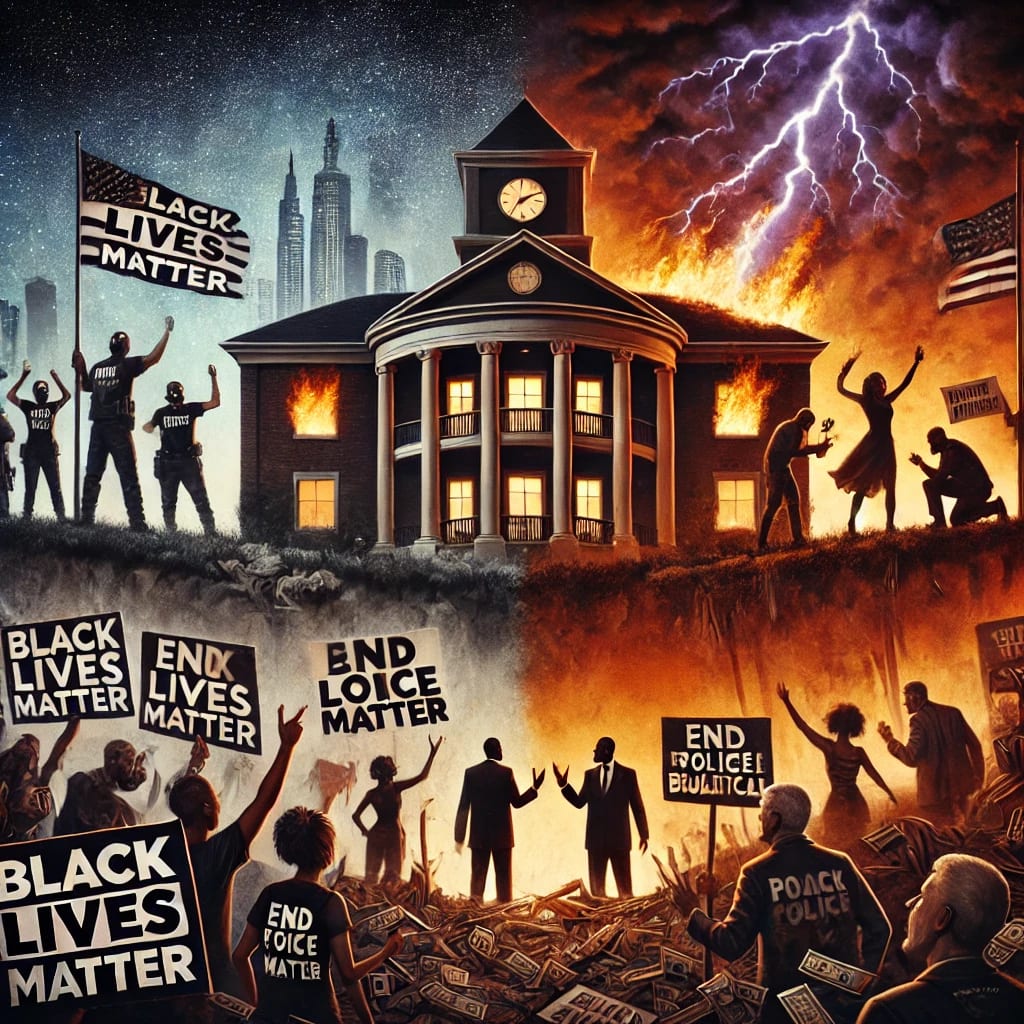
The Black Lives Matter (BLM) movement, once a powerful force for racial justice, has seen a significant decline in momentum over the years. As someone who has studied the BLM movement extensively, it is important to analyze the factors that led to this decline, including the impact of internal scams and financial mismanagement that ultimately undermined the movement's credibility.
BLM: From a Grassroots Hashtag to a Global Movement.
The BLM movement began in 2013 after the acquittal of George Zimmerman, who had fatally shot Trayvon Martin, an unarmed Black teenager in Florida. The hashtag #BlackLivesMatter soon transformed into a global rallying cry against police brutality and systemic racism. BLM gained widespread attention after the deaths of Michael Brown, Eric Garner, and Freddie Gray, and it reached its peak during the protests following George Floyd's murder in 2020.
Initially, BLM's decentralized structure was seen as a strength, enabling local chapters to tailor their activism to their communities' specific needs. However, this very structure also sowed the seeds of its decline, leading to fragmentation, lack of accountability, and, ultimately, the rise of scams that eroded public trust.
Fragmentation and Absence of Centralized Leadership.
One of the critical factors contributing to BLM's decline was the absence of centralized leadership. Unlike historical civil rights movements led by figures like Martin Luther King Jr., BLM lacked a singular leader or a cohesive organizational framework. This decentralized approach allowed for diverse voices within the movement, but it also led to inconsistencies in messaging and goals. As a result, different factions within BLM began to focus on varying issues—some emphasizing police reform, others targeting economic inequality—diluting the movement's original mission.
Over time, this fragmentation made it difficult to maintain a unified front, with various groups operating under the BLM banner, sometimes in ways that contradicted each other. The lack of clear leadership and consistent messaging made the movement vulnerable to exploitation and opportunism.
Financial Mismanagement and Scams.
The most significant blow to BLM's credibility came in the form of financial mismanagement and scams that tainted the movement's image. In the wake of the George Floyd protests, BLM received an unprecedented influx of donations, with millions of dollars pouring in from individuals, corporations, and philanthropic organizations. However, the distribution and use of these funds quickly became a source of controversy.
Local BLM chapters accused the national organization, Black Lives Matter Global Network Foundation (BLMGNF), of hoarding funds and failing to support grassroots activists. These allegations were compounded by revelations of questionable financial decisions made by BLM leadership. One of the most egregious examples was the purchase of a $6 million mansion in Los Angeles, which was initially kept secret from the public. The property was ostensibly intended to be a "content creation space," but its purchase raised eyebrows and sparked outrage, leading many to question the true intentions of BLM's leaders.
Further complicating matters, there were reports of individuals and groups using the BLM name to solicit donations fraudulently. Scams proliferated, with some people setting up fake BLM charities and GoFundMe pages, preying on the goodwill of supporters to line their own pockets. These scams not only siphoned funds away from legitimate activists but also damaged the movement's reputation.
Internal Conflicts and Public Backlash.
The combination of financial mismanagement and scams led to internal conflicts within the BLM movement. Local chapters felt betrayed by the national organization, and many began to distance themselves from BLMGNF. These internal divisions made it increasingly difficult for the movement to present a unified front, weakening its ability to advocate effectively for change.
At the same time, the media's portrayal of BLM began to shift. While the movement initially received widespread support and positive coverage, the scandals surrounding BLM's finances led to a more critical narrative. The negative press, coupled with reports of violence and riots during protests, contributed to a decline in public support. What had once been seen as a righteous struggle for justice began to be viewed by some as a movement mired in controversy and corruption.
The Challenge of Sustaining Momentum.
Sustaining a social movement over time is inherently challenging, and BLM faced significant obstacles in maintaining its momentum. The combination of internal fragmentation, financial scandals, and public disillusionment made it difficult for BLM to continue as a cohesive and effective force for change. The movement's decentralized structure, which had initially allowed for broad participation, ultimately became a liability as it struggled to maintain focus and accountability.
In conclusion, the decline of the Black Lives Matter movement can be attributed to several factors, including the lack of centralized leadership, internal conflicts, financial mismanagement, and the proliferation of scams. These issues eroded public trust and weakened the movement's ability to sustain its momentum. While BLM brought critical issues of racial injustice to the forefront, its decline serves as a cautionary tale about the challenges of sustaining a social movement in the face of internal and external pressures. The lessons learned from BLM's rise and fall will undoubtedly inform future efforts to achieve racial justice and equality.
About the Creator
Bsc. Moses Yenli
Dreamer, Researcher, Writer (50+ Published Articles), Proprietor of good knowledge & fun facts, Serial Businessman & Family man.
What’s the use of research & knowledge if it’s not shared to change lives
Keep reading
More stories from Bsc. Moses Yenli and writers in Critique and other communities.
The Ultimate Guide to Curating and Sharing Knowledge in the Digital Age
In today's digital age, effective knowledge curation is critical. It involves selecting, organizing, and managing information to enhance decision-making, promote lifelong learning, and foster innovation. Here’s how to master this skill in 2024:
By Bsc. Moses Yenli2 years ago in Education
Standing While Falling
Quotation from Friedrich Nietzsche "He who wrestles long with monsters should beware lest he himself become a monster. And if you gaze long into an abyss, the abyss also gazes into you. Man is not destroyed by suffering, but by the meaning he makes of it."
By LUCCIAN LAYTH11 days ago in Critique




Comments
There are no comments for this story
Be the first to respond and start the conversation.