
The Menu – A Macabre Reflection on Passion, Power, and the Price of Meaning
A film analysis.

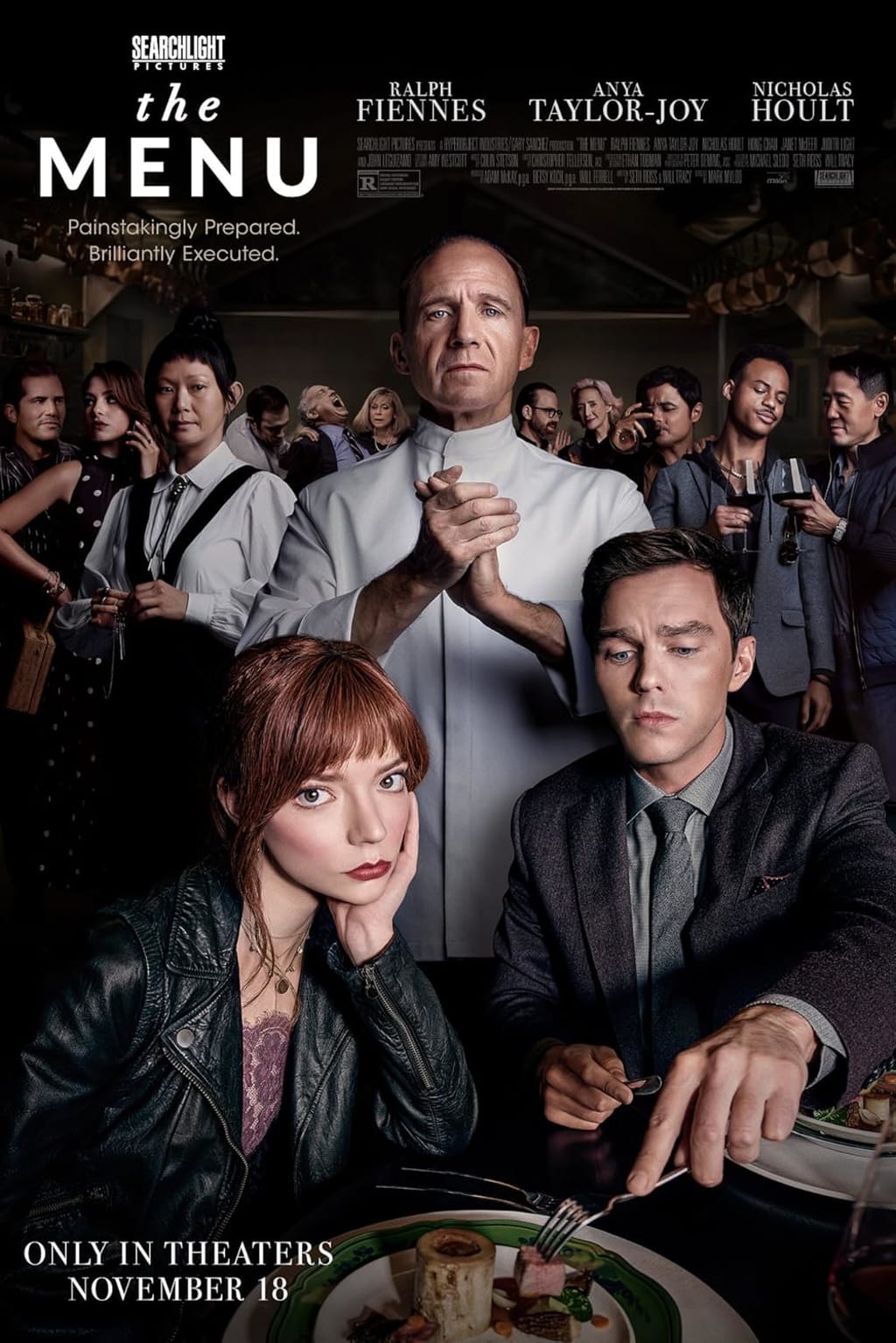
The Menu is billed as a black comedy, but aside from a few moments, I didn’t laugh much. Instead, I saw it as an exaggeration of truths that already exist in elitist American life. The absurd premise is certainly darkly humorous, but beneath the satire, many moments rang uncomfortably real — especially in its depiction of the arrogant, egotistical ways of the 1%.
The portrayals of elite chefs, food critics, movie stars, tech bros, and rich white men felt less like caricatures and more like unsettlingly accurate snapshots. As someone who has lived below the poverty line my entire adult life, these characters didn’t read as exaggerations. If anything, they mirrored my own judgments of those who hoard wealth at the expense of everyone else.
In real life, the hauteur of the wealthy is exactly as the film shows it: people who see those like me as so far beneath them that we could break our bones and bleed out preparing their meals, and they wouldn’t remember — or care — what was on the plate.
What struck me most, though, wasn’t just the class commentary. It was the underlying message about how jadedness, even cruelty, takes root when we monetize our passions. Capitalism has a way of taking meaning and digesting it into waste. We’re told it breeds innovation, but I believe it does the opposite. In the scramble for profit, novelty is shunned, true enthusiasm is discarded, and the joy that started it all is quietly replaced by competition and status.
The chef’s monologues hit me hardest. They tell the story of a boy who grew up with dreams, only to find that achieving them at the highest level brought nothing but emptiness. Somewhere along the way, he traded his genuine love for his craft for wealth and prestige. His disillusionment — with himself, his diners, and the system he serves — leaves him drowning in culpability.
His final, shocking act of retribution is aimed not only at those he blames, but also at himself. It left me wondering: can meaning be salvaged when we’ve betrayed ourselves for so long? Can a final act — however disturbing — become a form of redemption?
I’m not sure. The final scene, though oddly cheesy compared to the rest of the film (no pun intended), gave me an unexpected glimmer of hope. Perhaps when we feel our lives have been wasted, we can still leave behind something useful: lessons for future generations. Even if it’s too late for us, maybe they can take our hard-earned, ugly wisdom and make something better.
I walked away with what I can only call macabre hope — the kind that accepts horror but still smiles, not because of devastation, but because beauty can follow the beast. A tired sigh of relief. That strange, awful, ugly, yet tragically beautiful balance.
About the Creator
Lolly Vieira
Welcome to my writing page where I make sense of all the facets of myself.
I'm an artist of many mediums and strive to know and do better every day.
https://linktr.ee/lollyslittlelovelies
Keep reading
More stories from Lolly Vieira and writers in Critique and other communities.
Cassie and Johnny
I’m the kind of dame you notice. I’m no femme fatale, but you can’t ignore me, at least not until I warn you about what’s coming, then everybody ignores me. Hell, they usually blame me afterwards and give Johnny all the credit for saving the day, but my Johnny couldn’t save a seat at the movies without my help. Sure, he’s brawny, but brainy? Not so much. Like that time I asked him to spot me five bucks, and he said he didn’t see it anywhere on me, and believe you me, he looked but good.
By Harper Lewis18 days ago in Critique
Movie Review: "I Heard the Bells"
"I Heard the Bells," produced by Sight & Sound Films (which shares the same parent company that operates the popular Broadway-style theaters in Lancaster, Pennsylvania and Branson, Missouri), is a treat to watch every Christmas. It depicts the true story behind the Christmas carol "I Heard the Bells on Christmas Day," written by poet Henry Wadsworth Longfellow.
By Heather Clark3 days ago in Critique


Comments (1)
I've not watched this yet but it's on my watch list. I just gotta find some time to watch. Loved your review!