
The Empathy Deficit: When Activism Becomes a Performance Art
How Clicks, Shares, and Perfectly Framed Outrage Are Replacing the Messy Work of Real Care

We live in an era of unprecedented awareness. Global injustices, local tragedies, and systemic failures are broadcast to us in real-time, packaged in high-definition video and poignant threads. Our response has become equally streamlined: a heart react, a retweet, a share to our Story with a sleek, pre-designed graphic and the perfect, pithy caption. We perform our morality in public, building a personal brand of consciousness. But in this grand theater of digital activism, a quiet, corrosive trade is happening. We are swapping the weight of genuine empathy—the kind that demands discomfort, sacrifice, and sustained attention—for the lightweight currency of performative allyship. The result is an empathy deficit, where we are more connected to causes than to people, and where caring has become a curated aesthetic rather than a compassionate action.
The performance follows a familiar, elegant script. A crisis emerges. Our feeds flood with information, outrage, and demands for solidarity. The socially-aware reflex is not first to feel, to research deeply, or to sit in the uncomfortable silence of helplessness. It is to publish. We find the most shareable infographic, the most eloquent tweet from a prominent activist, the black square on the designated day. We align our digital presence with the correct side. The goal is visibility: to be seen caring, to have our moral position legible to our network. The act of posting becomes the catharsis. It relieves the pressure of bearing witness, offloading our emotional and ethical responsibility onto the public record of our feed. We have "done something." But what, exactly, has been done? The algorithm rewards the performance with likes—little digital nods of tribal belonging—and we mistake this social validation for moral accomplishment.
This spectacle creates what sociologist Eve Ewing calls "discursive violence"—the reduction of complex, lived human suffering into a tidy narrative for consumption and debate. A victim’s story becomes content; a community’s pain becomes a backdrop for our own personal growth narrative (“This really opened my eyes…”). We engage in "trauma tourism," scrolling through horrors to feel a pang of feeling, then moving on to a cooking video, our conscience salved by the fact we "spread awareness." The human at the center of the story is flattened into a symbol, their complexity erased to serve a simpler, more shareable truth. This is not empathy; it is intellectual and emotional extraction.
Meanwhile, the messy, unphotogenic work of real care languishes, unseen and unrewarded. Empathy, in its truest form, is not broadcast. It is the quiet phone call to a grieving friend, not the public RIP post. It is the tedious hours spent tutoring a student, not the inspirational quote about education. It is the difficult, patient conversation with a relative holding opposing views, not the dunking tweet that earns cheers from your choir. It is showing up to the tedious city council meeting, donating anonymously to a bail fund, or simply listening to someone's pain without immediately formulating a hot take. This work has no audience, garners no likes, and doesn't polish your personal brand. It is private, costly, and often frustrating. The digital stage has made this kind of humble, persistent labor seem insignificant compared to the viral splash of a perfectly timed post.
The deficit grows as we become activists of the spectacle, not of the soil. We know the right terminology for every issue but don't know our neighbors' names. We can deconstruct systemic injustice in a thread but lack the patience to navigate a minor conflict with a coworker with grace. Our moral energy is spent on the distant and the abstract, while the opportunities for tangible, local kindness—the grist of a compassionate life—wither from neglect. We champion humanity in the aggregate but grow less practiced in dealing with the specific, complicated human right in front of us.
Healing this deficit requires a conscious re-centering of the private over the performative. It means sometimes witnessing a tragedy and choosing not to post—to instead sit with the sorrow, make a direct donation, or write a private letter of support. It involves auditing our motivations: "Am I sharing this to truly amplify a voice, or to signal my own virtue?" It demands that we invest in the unsexy, local, and relational: volunteering at the community fridge, consistently supporting a small BIPOC-owned business, asking a lonely person to coffee and listening more than we speak.
Real empathy is not a stance you announce; it is a muscle you build through repeated, often unseen, acts of attention. It thrives in the shadows of the algorithm, in the space between the performative bookends of a social media campaign. It understands that changing the world is less about crafting the perfect tweet and more about doing the imperfect, daily work of being a kinder, more present, and more responsibly connected human being. The revolution will not be Instagrammed. It will be whispered in soup kitchens, argued in living rooms, and built in the quiet, determined choices to care deeply, even when—especially when—no one is giving you credit for it.
About the Creator
HAADI
Dark Side Of Our Society
Diaries to Nietzsche
Quotation from Friedrich Nietzsche "He who wrestles long with monsters should beware lest he himself become a monster. And if you gaze long into an abyss, the abyss also gazes into you. Man is not destroyed by suffering, but by the meaning he makes of it."
By LUCCIAN LAYTH12 days ago in Critique
Protect the Children
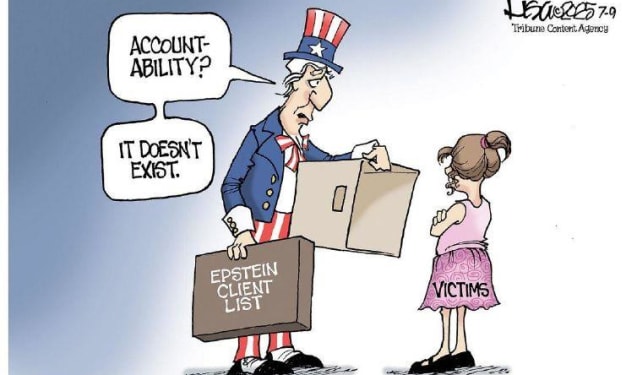
At the time of writing this article, there is a lot of talk going on about Jeffrey Epstein, a new batch of files was released relating both to his victims and potential clients who abused said victims. I'm going to assume that if you're reading this, you are already at least somewhat familiar with the controversy surrounding Jeffrey Epstein and his private island, as well as the nature of those who were implicated in the released files. What I want to focus on for this article is how the conversation about Epstein started, how it shifted from Hilary to both Trump and right-wing politicians, why that shift happened, and what it means for people who actually care about protecting children.
By ChampionElCid6 days ago in Critique



Comments
There are no comments for this story
Be the first to respond and start the conversation.