
The Assassination of the President of Haiti, Jovenel Moise
A Common Practice in a Turbulent Era

On July 7th, 2021 the president of Haiti, Jovenel Moise was assassinated in his bedroom at his private home. It was reported he died instantly and that the first lady was wounded and rushed to get medical care in Florida in the United States. The news had spread across the country and in Port-au-Prince there was a mix of emotions ranging from joy, sadness and panic. The assassination took place during other crises that were happening in Haiti, continuing to upset the republic, the first Black-led in the world after gaining independence and freedom in the slave revolution of the 19th century from France.
The entire country was saddened and no national who was patriotic would have been pleased to see that their president had been assassinated. The upsetting reports of what had happened had its own effect on each person living in Haiti and internationally. Even more remarkably, his supporters were in denial over the tragedy. Although the president was not the most beloved leader and was often contested, there was a great deal of pain felt by the Haitian people. It was quite easy to see watching their expressions and listening to what they had to say. This reaction was visible in person and on social media, there was an expression of fear and an expression of insecurity about their home.
Over the previous two decades, Jovenel Moise was considered to be the least popular president. He was well known for dismissing all the members of the Senate and making up new rules as he saw fit. This essentially caused Haiti to lose its democratic freedom and return to a dictatorship, struggling with phases of invasion and violence. The countries issues of insecurity increased during that time and continued to increase as ever day passed. There were regular large-scale demonstrations led by constitutional scholars and legal experts that took place regularly, demanding the president resign. President Moise denied the request for his resignation and was backed by the United States in the fact that his term was not finished until the following year.
Many of the streets are controlling many of the streets. They are well known for kidnapping school children and there was even a report of a gang kidnapping a pastor in the middle of a church service. The fear of being kidnapped is so great that tourists no longer visit Haiti, causing a loss of tourism revenue and creating a bad reputation for the country globally. The people now fear the thought of attending school, they feel unsafe and insecure when it comes to the idea. Poverty is on the rise resulting in hunger, sickness and death. Meanwhile the government is being accused of enriching itself and denying its people the basic care and services it needs to survive. Despite billions of dollars of aid sent for reconstruction after the earthquake that struck 11 years ago, the country has yet to rebuild. Because of these factors it is understandable that the people who had wanted the president to accept the resignation request were joyful. Politicians can not be loved and appreciated by all.
It was reported in the local newspaper, Le Nouveliste, that president Moises body had been shot twelve times. One shot was to the forehead which would have killed him instantly. It was also reported that his eye had been ripped out. Two of his children were home during the attack and his third child was out of the home, watching football with friends. The home of president Moise was well situated and protected with multiple guards. The guards were left unharmed by the assassins. When the guards were confronted, they and the rest of the staff were told to flee.
Shortly before his assassination the president had spoken to the community. He had said that his friends and enemies were spending substantial amounts of money to attempt to kill him. It was quite clear that president Moise was quite concerned for his safety.
The political and personal instability surrounding the president was reflected in the institution of the states, fueled by a complete absence of legislative power. The death of the president came at a critical time when there was no parliament and everyone in his inner circle had seemed to turn against him. Before the assassins entered the home of president Moise, he had the chance to call the authorities, international police and some of his friends that he felt he could trust. At that point the president was desperately crying out for help but there was no escape.
The earthquake of January 12, 2010 was considered one of the worst disasters in the history of Haiti. It killed approx. 300,000, injured an approx. 200, 000 and left an estimated 1.5 million people homeless. This was followed by the assassination of the president, adding to the complex and fascinating history of the rich culture that makes up Haiti. Throughout history, Haiti has been known for resistance, revolt and instability. The very existence of Haiti has been defined in many proverbs. One of these proverbs says “Ayiti se tè glise” which translates to “Haiti is a slippery land”. Another famous proverb about Haiti states “dèyè mòn, gen mòn” meaning “Behind the mountains, there are mountains”.
This tragedy leaves the country and myself in disarray. Not knowing who is in charge during these times adds to the feelings of instability and cause an upsurge of insecurity and violence among the people. There is an emptiness at the top of the government now and it makes Haitians fear for the worst because the opinion of the people is that they are now in charge. The reality is that the country of Haiti is now politically, socially and economically unstable without any governance. Haitians are left wondering what future can be hoped for? There is no certain answer about what the future may bring but the world knows that right now Haitians are sinking. For the people of Haiti they can only have faith that one day they may overcome the current troubles they face and one day rise to a better and more glorious future.
Cover Photo
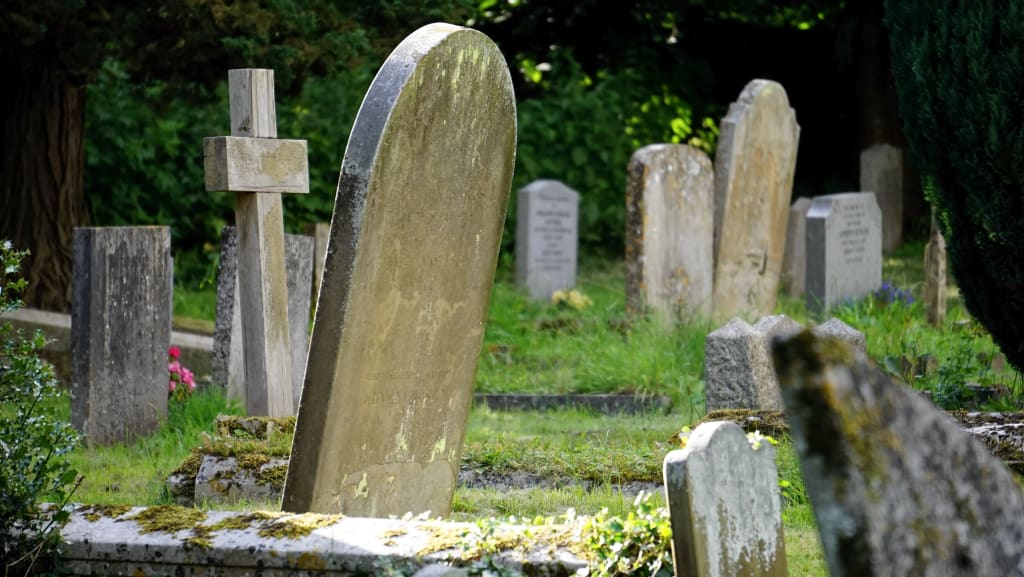
Bird, M. (2017, August 30). Close-up photography of concrete tombstones Free stock photo. Pexels. https://www.pexels.com/photo/close-up-photography-of-concrete-tombstones-116909/
About the Creator
Cassie and Johnny
I’m the kind of dame you notice. I’m no femme fatale, but you can’t ignore me, at least not until I warn you about what’s coming, then everybody ignores me. Hell, they usually blame me afterwards and give Johnny all the credit for saving the day, but my Johnny couldn’t save a seat at the movies without my help. Sure, he’s brawny, but brainy? Not so much. Like that time I asked him to spot me five bucks, and he said he didn’t see it anywhere on me, and believe you me, he looked but good.
By Harper Lewis18 days ago in Critique
Twenty Children Sat in the Same Classroom - But Their Futures Were Already Being Written
I wrote this after reflecting on many classrooms I’ve been part of as a teacher. Sometimes the quietest student in the room is carrying the heaviest story. I’d love to hear from others - was there a student in your class who surprised everyone later in life?
By Lori A. A.7 days ago in Critique
Sometimes It's Like That and That'sThe Way It Is
It was the late 1960s, and ten-year-old Gloria Coleman was standing with her grandmother on the side of the highway waiting for the bus. As the Greyhound pulled up, it seemed monstrous and intimidating. Grandma Elizabeth grabbed Gloria's hand, holding it tightly as they boarded.
By Cheryl E Preston3 days ago in Fiction



Comments
There are no comments for this story
Be the first to respond and start the conversation.