
Taking A Closer Look At Nayib Bukele
Mass Deportations Are Coming to the United States Again

Incoming U.S. President Donald Trump has promised mass deportations, and with his appointment of Tom Homan as “Border Tsar” among a list of hardliners he should be taken at his word. They are coming, and we can hope that he starts with the criminals.
This brings us to El Salvador, an impoverished Central American country with a population of about 7 million. Obama and Trump combined deported at least five million individuals during their times in office, with between 40,000 and 60,000 a year going back to El Salvador during the high points (2008–2020).
Two gangs from El Salvador, Mara Salvatrucha (MS-13) and Barrio 18 rose to prominence in the USA, and the Obama Administration put focus on deporting gang members. With a small economy, the flood of returning gang members put a massive strain on the small country. The high level reason so many illegal immigrants left El Salvador for the United States was because conditions were not great there to begin with, so things could only deteriorate when they were sent back.
Now, the MS-13 and Barrio 18 gangs operated with impunity when they were back in El Salvador. A side note, one lesson from the Salvadoran gangs learned by modern gangs is don’t get tattoos, it makes you easy to identify. The MS-13 and Barrio 18 gangs are known for their heavy tattooing. I often ask myself “what does it take to get your face tattooed like that?”
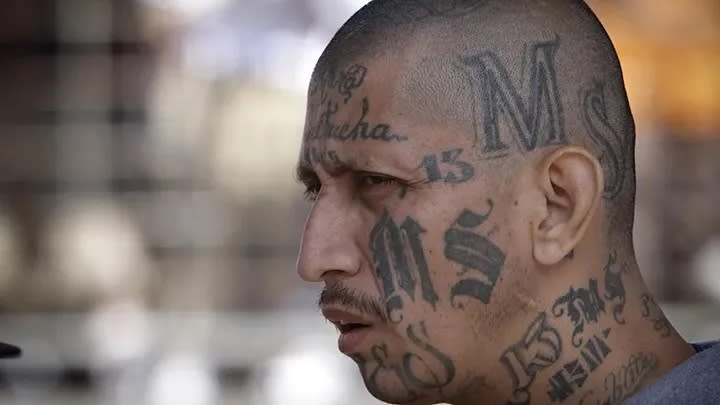
The gangs took over El Salvador, and the country became known as the murder capital of the world. Some data, the homicide rate was reported at around 103 homicides per 100,000 inhabitants in 2015. In 2016, the country recorded approximately 5,300 homicides, representing a rate of about 81.2 per 100,000 people. That is an average of more than 14 homicides every single day of the year.
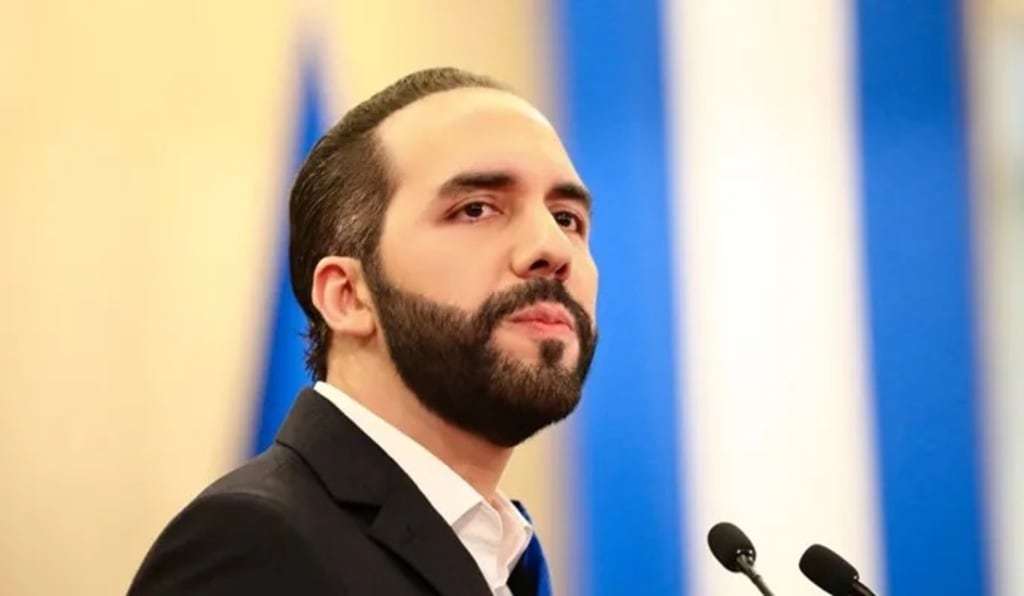
In June of 2019, Nayib Bukele was elected as the President of El Salvador at just 37 years old.
Bukele, whose father is of Palestinian descent, served as mayor of the capital San Salvador from 2015 to 2017 where he was lauded as an innovator. Salvador has basically two political parties, and Bukele departed from the left-wing Farabundo Martí National Liberation Front (FMLN) to form “Nuevas Ideas” (New Ideas) in April of 2018. He was well known and the new political party gave him cache as an “outsider” to the establishment. He rode that to a comfortable win in the presidential elections, getting 53.1% of the vote, with closest rival Carlos Calleja getting 31.7% of the votes.
Like several members of Team Trump, Bukele was a member of the “left-wing” but changed his philosophical leanings because of a perceived lack of results, among other factors.
From the start, Bukele tried to combat the gangs. He increased the number of police, and at times used the military in high crime areas. New for the country, he used technology and social media to track gang leaders, who he placed a focus on arresting. He raised access to jobs and social programs for the population. He did everything right.
These more or less orthodox methods of crime fighting did little to stop the impunity of the gangs. Businesses still had to pay extortion, people could not go out at night and women did not feel safe in public at any time of the day. Every Salvadoran was affected and the gangs were entrenched as a part of every day life.
Bukele would not take this sitting down. In March of 2022, after nearly three years in office and an uptick in homicides across the country, Bukele declared a State of Emergency that suspended certain constitutional rights, including the right to assembly and the right to due process.
He deployed specially trained units of the National Civil Police (Policía Nacional Civil, PNC) with support from the military and initiated a “Territorial Control Plan” that harnessed the collective efforts of various security forces to increase operations against gangs. “Lightning strikes” were employed sending in large numbers of police and soldiers to make thousands of arrests in a relatively short period. At the same time, Bukele built the now notorious CECOT ( “Centro de Control y Monitoreo de Operaciones Tácticas”, which translates to “Center for Control and Monitoring of Tactical Operations”), a facility to house up to 40,000 detainees that served as the nerve center for his countrywide clean up.
The tide turned, and El Salvador freed itself from the grip of the gangs. Bukele has his critics, mainly from Human Rights organizations that deride the lack of due process and the fact that many innocent people were caught in the dragnet. Other complaints include the conditions at CECOT, which are very sanitary but spartan. One complaint is the diet of the inmates, which does not include any meat but relies on basic staples like rice, beans, and tortillas. The Human Rights groups complain it can sometimes lack variety and may not meet all nutritional needs. There are no mattresses or pillows, with inmates sleeping on metal planks.
To his credit, Bukele has evolved some of his procedures, and he put in place a review that has freed more than 7,000 detainees.
Bukele faces criticism as an authoritarian. The state of emergency he put in place in March of 2022 is supposed to last 30 days by law, but it has been renewed and still stands in place today.
Additionally, the constitution of El Salvador does not allow any President to serve consecutive terms, however, in 2021, the Constitutional Court of El Salvador ruled that Bukele could run for re-election, effectively allowing him the possibility to seek a second term in office.
The President in El Salvador serves for five years, and in February of 2024 Bukele did seek a second term in office.
The results of the elections were definitive, with international observers declaring the election free and fair, Bukele received an incredible 84.65% of the vote. The remaining votes were split among 5 other candidates, with Werner Marroquín of the leftist FMLN finishing second with 6.4% of the votes.
The people of El Salvador are not divided on this they back Bukele and what he has done in the country in overwhelming fashion. Bukele feels he has a clear mandate to continue with his programs.
Another interesting move that has led to mixed results on the part of Bukele is he has made BITCOIN a legal tender in El Salvador. He is thinking out of the box and trying to be creative, and though it has not always worked, he is not just an arrest machine with no tricks up his sleeve.
After re-election he also invited his entire cabinet to a meeting with the attorney general where he informed them that they would all be investigated for corruption. “If you have nothing to worry about, it will be OK, but I can see from some of your faces…” said Bukele.

With mass deportations on the horizon in the United States, it is important to recognize that the story of heightened gang violence and worsening social conditions in the destination countries may repeat itself. Especially at risk are countries like Guatemala, Honduras, Nicaragua and Colombia. Panama and Costa Rica have less illegal immigration heading to the USA but may also suffer if their poorer neighbors are flooded with deportees. Venezuela is especially complicated because relations with the USA are basically poor or non-existent and it is unclear where Venezuelan deportees might even be sent.
Trump will have Marco Rubio as a Secretary of State, and though China, Russia and the Middle East will undoubtedly take up his attention, Rubio is a Latino and fluent speaker of Spanish and he is also considered an expert on Latin America.
Like him or not, Bukele certainly has that superstar, rockstar quality that certain young politicians possess (see Obama, Clinton, Kennedy in our country) and it is not a given that one of these types will be awaiting the deportees in the destination countries. These places are going to need help or the United States is going to be faced with chaos in it’s own hemisphere.
About the Creator
Miguel Iturrate
I am an American living in Costa Rica for the last 2 decades. Fluent in English and Spanish. I write about a few different subjects, such as Boing History, modern day World Politics and the US Election. I try to make folks think!
Keep reading
More stories from Miguel Iturrate and writers in Critique and other communities.
Part two - Intro To Robot Army
Thanks to all who provided feed back to part i. If you missed part 1, here is the link. https://shopping-feedback.today/fiction/introduction-the-robot-army%3C/p%3E%3C/a%3E%3Cstyle data-emotion-css="16e5cai">.css-16e5cai{-webkit-align-items:center;-webkit-box-align:center;-ms-flex-align:center;align-items:center;display:-webkit-box;display:-webkit-flex;display:-ms-flexbox;display:flex;-webkit-flex-wrap:wrap;-ms-flex-wrap:wrap;flex-wrap:wrap;gap:1rem;-webkit-box-pack:justify;-webkit-justify-content:space-between;-ms-flex-pack:justify;justify-content:space-between;}
Cassie and Johnny
I’m the kind of dame you notice. I’m no femme fatale, but you can’t ignore me, at least not until I warn you about what’s coming, then everybody ignores me. Hell, they usually blame me afterwards and give Johnny all the credit for saving the day, but my Johnny couldn’t save a seat at the movies without my help. Sure, he’s brawny, but brainy? Not so much. Like that time I asked him to spot me five bucks, and he said he didn’t see it anywhere on me, and believe you me, he looked but good.
By Harper Lewis13 days ago in Critique
Misdirection
Ahem... I know that it might seem strange that I am one of the people lifting a glass to wish a toast to the happy couple, but I have been told to do this in order to take up your time and make sure that we are all very much in our cups. They decided that they wanted to hit the road and they needed me to wish them all the best.
By Kendall Defoe 6 days ago in Critique


Comments
There are no comments for this story
Be the first to respond and start the conversation.