
Overcoming Writer's Block
An Analysis of "Dancing in the Dark" by Bruce Springsteen

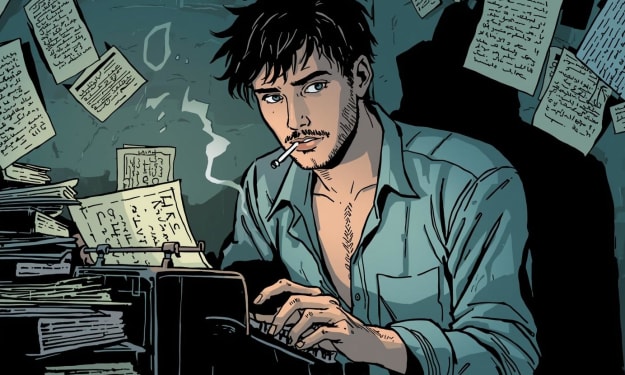
Bruce Springsteen was frustrated and exhausted when his manager, Jon Landau, insisted he write a preeminent single for his 1984 album “Born in the U.S.A.” By that point, Springsteen had already written over 80 songs for the album, yet a standout single still eluded him. Returning to his hotel later that evening, Springsteen poured all of his pent-up angst and frustration into the song “Dancing in the Dark”, wherein he grapples with the “joke[s]” that are writer’s block and self-doubt, as well as how the external pressures of the music industry and his own audience can stifle creativity and personal growth.
The exasperation the speaker feels as a result of his creative dry spell is immediately established as he sings that he “ain’t got nothin’ to say” from the moment he gets up to the moment he “go[es] to bed.” His disillusionment is reinforced as he belts the fourth and fifth lines of every verse, conveying the desperation he is in to overcome this block. However, this is currently impossible for the speaker, as he is also clearly stagnating in his personal life feeling both “tired and bored with [himself].” In a 1987 interview, Springsteen confirmed that this was exactly how he felt, stating that after pouring so much time and effort into “Born in the U.S.A.”, he felt “bored with the whole situation.”
Reinforcing the speaker’s urgency to overcome his creative block, the chorus is belted as the speaker sings, “You can’t start a fire without a spark.” The imagery of “fire” here is a metaphor for art itself, as both can represent beautiful displays of human ingenuity. Additionally, the spark symbolizes the fresh inspiration that the speaker so desperately yearns for—when cultivated, it can become a magnificent piece of art.
In the second verse, the speaker seems to be getting somewhere creatively as the “messages keep getting clearer” and he is “movin’ ‘round [his] place,” but this apparent progress is immediately crushed when he sees himself “in the mirror.” Upon seeing himself, he is overwhelmed with both self-loathing and doubt, yelling “[I] wanna change my clothes, my hair, my face.” Both his “cloth[ing]” and “hair” are superficial changes that the speaker can make, but he also wants to change his “face,” demonstrating a desire to alter who he is fundamentally as a person in order to ignite a fresh and exciting creative “spark.”
The speaker makes some more creative progress during the bridge, and it seems he is beginning to overcome the practical “joke” that is writer’s block as he “shake[s]” the pressures and expectations of the “world” “off [his] shoulders.” Yet this tension returns immediately in the next verse in the form of the music industry. The speaker expresses his misgivings toward this brutal industry, likening it to the “streets” of a dangerous “town” where artists are “carv[ed] up” and sold by the suits working for record labels. The speaker finds himself “starvin’” artistically among these streets, and he is “sick” of “trying to write [his] book,” which acts as a metaphor for the album itself. He just wants to finish it so he can move on and expand creatively and personally.
Finally, the speaker realizes that the debilitating emotions he has been experiencing have been adversely impacting his creativity. He states that if you’re “broken heart[ed]” and burdened by such grief that all you can do is “sit around and cry,” or if you are so riddled with anxiety about your “little world” of fans, managers, and record labels “fallin’ apart,” then you simply “can’t start a fire.” The speaker’s solution to this is, of course, creating art irrespective of whether or not anyone will see or hear it—in other words, creating art even if it amounts to little more than “Dancin’ in the Dark.
About the Creator
Keep reading
More stories from writers in Critique and other communities.



Comments
There are no comments for this story
Be the first to respond and start the conversation.