
Found in Translation
Self-Editing Epiphany Challenge


At first I scrolled past this challenge and didn’t even consider joining in on that one. And then, a little voice at the back of my mind reminded me of a promise I had made to myself at the beginning of this year – do more new things, even, and especially, the ones out of my comfort zone. With a little sigh, I scrolled back up, instantly knowing which excerpt to use. Yep, another "do more new things" moment that happened just over a month ago.
I have loved writing for as long as I can remember. Even years ago at school, when everyone else whined and complained about an essay assignment we were given, I was secretly pleased and already planning it out in my head. I filled tens and tens of journals through my teenage years, into the beginning of my twenties.
But one thing I hadn’t written much of was poetry. And of course, as fate would have it, the day I joined Vocal, I saw there had been a poetry challenge called "Love in 50 words." The submissions were already closed, but I still felt like I wanted to try. I didn’t stick to 50 words - I just wanted to see if I could write a poem about love that I would be happy with (or at least fine with.) That poem sat in my drafts for a bit before I finally published it. The final result can be found here: "Whispers in the Wind"
In Vocal, I obviously write in English, which often adds an extra step to my creative process: translating. Sometimes the idea comes to me instantly in English, and other times, in my own language, Estonian. In this poem’s case, it was a mix of two. Since English is my second language, I do have moments where I just forget the word I need, or no English word in my vocabulary can capture the whole meaning of the word I’m thinking of in Estonian. Sometimes, when looking for a suitable rhyming word, the only ones that come to mind are in the wrong language. So, the first drafts of my stories very often have some random Estonian words in the middle of them, bolded. Or, I might have three synonyms written somewhere with question marks behind them. Once I’ve got the idea on paper, I go through it again. Usually, the words I had put down in Estonian earlier come to me quite quickly. If they don’t, I go to my trusty dictionary. Sometimes, I Google the words because the actual translation isn't good enough. I need to find the word that matches the vibe and the larger meaning behind the word I used in Estonian. That doesn’t happen too often, but often enough for me to consider it an important part of my writing process.
Usually, when I have an idea in Estonian and quickly jot it down on paper to later translate it, it’s not too hard. But with the poem, when I put it on paper exactly as it came to me, turning it into English later was almost mission impossible. I might have had a beautiful, elegant line in Estonian which just didn’t work in English at all. It happened when I used Estonian expressions that are rooted in our culture or tradition or included some kind of word-play, which, when translated, turned into utter nonsense. So, very quickly, I realized that when writing a poem, I need to try and switch my brain into "English mode."
About eight years ago, I realized that I have a mild version of Grammar Pedantry Syndrome. I found this out when I consulted Dr. Google about the symptoms I experienced whenever I read a text or a post that grossly disregarded any and every grammar rule on earth. Symptoms being – eye twitching, elevated heart rate and nausea. And when reading beautifully constructed text – a discovery I made in the middle of a Jane Austen novel – I felt physically relaxed, as if I had just gotten a full-body massage. Turns out, while not official, it is considered a form of OCD. Long story short – grammar check is a sacred part of the process that has more than one (read: more than five) repetition. And when in doubt – Google!
Now imagine my surprise when I realized I’m not the grammar-Nazi I always thought I was when it came to writing poetry. I was happy to ignore the rules, as long as what I wrote actually made sense and sounded good rhythm-wise. As confusing as it was, it also made me happy. It was a discovery I would have never made about myself if I hadn’t promised to do more things outside my comfort zone.
Having discovered that, I've started to think: maybe I don’t need all texts to have textbook grammar. Perhaps the imperfections or use of words and sentence structures that might occur in my stories, which originate from Estonian, are the personality and characteristics my work needs. What I sometimes feel is lacking in my writing might not be about what I say, but instead, how I say it. Perhaps I have over-edited my work to the point where I actually edited myself out of my writing, just to make it fit the rules better. Could it be possible that my Estonian background is the thing that has the potential to give my work a unique look? (Originally, I wanted to end the sentence with "... a unique face," since that's how I would say it in Estonian)
Good examples from this poem include the use of word "louder" in the first line: "Love is when the flowers smell just a little louder. " It comes from an Estonian word for "stronger" which can be used to describe physical sterngth, sounds, but also scents. (Yes, I do realize that for a person who doesn't speak Estonian, it might sound insane.)
Very similar origin story lies behind the word "smell" in the line "When you smell the thoughts behind the word or two they say." We have a very universal word in Estonian that translates to "feel," which again, can be used for pretty much anything, including (but not limited to) - physical touch, scents, energy/vibe of something, and emotions.
My language peculiarity wasn't the only thing I left in this piece.
"The birds—they chirp in lilacs a tone or two up higher."
*
"The piney shadows dancing on the pale’n’white beach rim."
*
"Worth more than golden jewelry is handmade juniper giraffe."
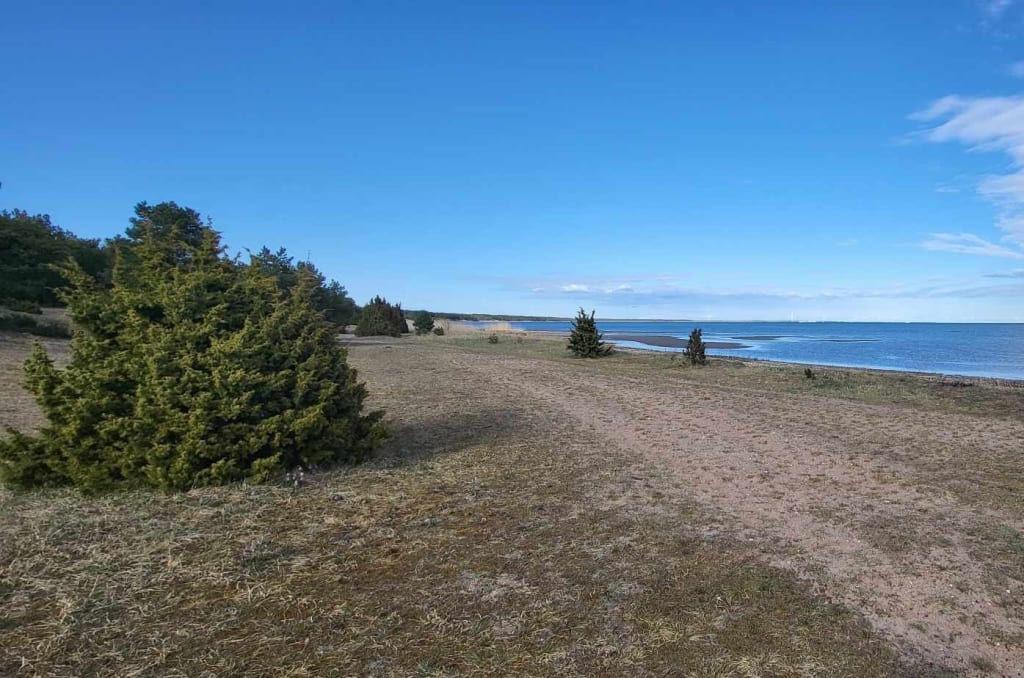
The bolded words here might seem random, but they are not. These are all very inherent to the area I come from and have deep personal meaning to me. So, with this poem, I made a bold choice to leave "me" in the text more clearly, in more ways than one. And while it is scary, I feel a little relieved as well.
About the Creator
Cristal S.
I've noticed that when I follow the path I enjoy most, I often end up swimming upstream. So here I am, right in the middle of it – writing about it all and more. ♡
@cristals.word.drawer
Reader insights
Outstanding
Excellent work. Looking forward to reading more!
Top insights
Easy to read and follow
Well-structured & engaging content
Heartfelt and relatable
The story invoked strong personal emotions
Masterful proofreading
Zero grammar & spelling mistakes
On-point and relevant
Writing reflected the title & theme
Keep reading
More stories from Cristal S. and writers in Critique and other communities.
"You should smile more "
A few weeks ago, I was at the dmv and a random man had the audacity to tell me "why aren't you smiling, you should smile more". I was so appalled by that man, but even more by myself because instead of putting him in his place I awkwardly laughed. This guy probably went home satisfied with himself. Looking back at it I feel sick. He. caught me by surprise but I should have been faster and clap back at him or even insult him.
By Girlygirly2 days ago in Critique
Guard Your Battery
Why are some people so attractive just by standing there? It’s not because they are "likable," but because they don’t need everyone to like them. I realized later that truly charismatic people allow themselves to be criticized, but they never criticize themselves. They never try to please the world; instead, the world stops to watch them.
By Emily Chan - Life and love sharing6 days ago in Poets




Comments (5)
Congratulations, Cristal, on your win! Languages are beautiful, and I believe yours affords your poetry an individualized artistic brushstroke. 🥰🥰🥰
Wooohooooo congratulations on your win! 🎉💖🎊🎉💖🎊
Beautiful piece ♦️♦️♦️♦️🖌️🏆I subscribed to you please add me 🙏⭐️⭐️
I mentioned it before, but the poem you wrote is absolutely amazing! 😊 I think the "you" came through perfectly and added a nice touch to lines, as did the Estonian translations. I couldn't even tell English wasn't your first language (without this insight, I don't think I would ever have known 🤔). It's great to see your creative process.
This piece highlights the creative joy and discovery that comes from pushing beyond one's comfort zone.