
Cultural Heritage in Peril
A Call for Global Action and Responsibility

As we progress deeper into the 21st century, the pressures of modernization, globalization, and climate change increasingly threaten the delicate fabric of cultural heritage that has defined human civilizations for centuries. In this context, GRACE: Timekeepers of Ancient Cultural Legacy emerges as a critical manifesto for understanding the urgency and necessity of cultural preservation efforts in the face of mounting global challenges. The book encapsulates the vision and operational framework of the Global Repository for Ancient Cultural Endeavours (GRACE), an initiative that seeks to mitigate the risks faced by cultural heritage across the globe while highlighting the ethical, social, and technological dimensions of preserving our collective past.
The Modern Landscape of Cultural Heritage
Cultural heritage encompasses the traditions, practices, languages, and artifacts that embody the essence of various communities and societies. Yet, in a world dominated by rapid technological advancements and economic imperatives, the value of cultural heritage is often sidelined or overlooked. The relentless march of progress can overshadow the importance of preserving the legacies that shape our identities, morals, and histories. GRACE's work serves as a crucial reminder that cultural heritage is not merely a collection of historical artifacts; it is a living testament to the resilience and creativity of human beings.
In the digital age, where information is at our fingertips, the allure of modernity often pulls us away from understanding the significance of our roots. This disconnection poses a grave risk, as the richness of our past is essential for grounding our understanding of contemporary issues and challenges. The authors of GRACE: Timekeepers of Ancient Cultural Legacy compellingly argue that the loss of cultural heritage represents not only the disappearance of physical artifacts but also a profound loss of collective wisdom, cultural diversity, and community cohesion.

The Intersection of Globalization and Cultural Erosion
Globalization is frequently celebrated for its role in promoting interconnectedness, economic growth, and cultural exchange. However, it also bears a darker side: the erosion of local cultures and traditions. The phenomenon of cultural homogenization threatens to diminish the diversity that enriches human experience. As societies become increasingly influenced by global media, consumerism, and migration, unique cultural practices may be abandoned in favor of mainstream norms.
One of the primary themes explored in GRACE is the tension between the universalizing forces of globalization and the need to preserve local cultural identities. This struggle often manifests in urban areas where rapid development leads to the displacement of traditional communities and their associated practices. The book highlights several case studies that illustrate the impacts of globalization on cultural heritage, revealing a concerning trend where local traditions are commodified for tourist consumption or replaced altogether by global brands and practices.
For instance, the commercialization of indigenous art forms often strips them of their original meaning and context, transforming them into mere products for sale. This not only disempowers the communities that produce these works but also contributes to the erosion of traditional knowledge systems. GRACE emphasizes the importance of reframing cultural heritage not as a static commodity but as a dynamic and living expression of community identity, deserving of protection and respect.

Technological Advances and Cultural Preservation
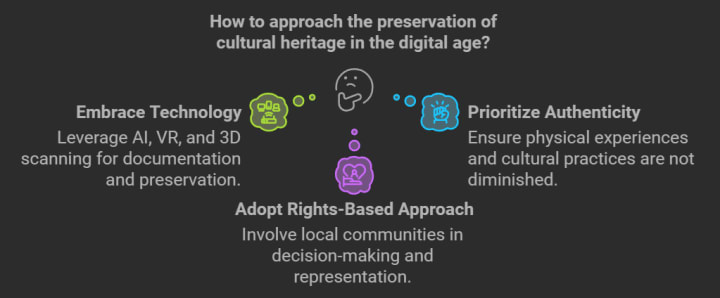
In an era marked by unprecedented technological advancements, GRACE advocates for leveraging modern tools to safeguard cultural heritage. The book underscores the potential of technologies such as artificial intelligence (AI), virtual reality (VR), and 3D scanning to document, preserve, and disseminate cultural heritage in innovative ways. By creating digital replicas of endangered artifacts and sites, organizations can help protect them from the ravages of time, conflict, and climate change.
However, this technological shift raises critical questions about authenticity and representation. As cultural heritage is increasingly digitized, there is a risk that the physical experience of engaging with artifacts and sites may be diminished. Digital replicas cannot replicate the intrinsic qualities of the original objects, nor can they convey the full significance of cultural practices. The authors of GRACE: Timekeepers of Ancient Cultural Legacy argue that while technology can serve as a powerful tool for preservation, it must be used in tandem with efforts to maintain the authenticity and integrity of cultural heritage.
Moreover, the reliance on technology for cultural preservation brings ethical considerations to the forefront. Who owns the digital representations of cultural heritage? How can we ensure that the communities whose heritage is being preserved have a say in how it is represented and shared? GRACE emphasizes the need for a rights-based approach to cultural preservation that prioritizes the voices and perspectives of local communities, ensuring that they have agency over their cultural narratives.
The Role of Local Communities in Cultural Heritage
Cultural heritage is inherently tied to the communities that create and sustain it. Therefore, any efforts to preserve cultural heritage must prioritize community involvement and empowerment. GRACE champions a participatory approach, working directly with local communities to document and revitalize their cultural practices. The book presents numerous case studies that showcase the successful collaboration between GRACE and various communities, highlighting how grassroots initiatives can lead to sustainable cultural preservation efforts.
One particularly poignant example is the collaboration between GRACE and indigenous communities in the Amazon rainforest, where traditional ecological knowledge is at risk due to deforestation and industrial development. By engaging local elders and knowledge keepers, GRACE helps document their practices and beliefs related to sustainable land management. This not only preserves invaluable knowledge but also empowers communities to advocate for their rights and protect their land from encroachment.
In this light, GRACE illustrates that cultural preservation is not just a matter of safeguarding the past; it is also a means of empowering communities to shape their future. The preservation of cultural heritage can serve as a catalyst for social cohesion and resilience, fostering a sense of identity and belonging that is crucial for navigating the complexities of modern life. By investing in cultural preservation, societies can strengthen their social fabric and promote inclusivity and understanding.

Ethical Dilemmas in Cultural Preservation
While the work of GRACE is commendable, the authors do not shy away from addressing the ethical dilemmas that arise in the realm of cultural preservation. The question of ownership and authority over cultural heritage is fraught with complexities, particularly in cases where artifacts and knowledge systems have been appropriated or commodified.
One of the most pressing issues is the restitution of cultural artifacts that were taken from their countries of origin during periods of colonization or conflict. The book discusses the growing calls for museums and institutions to return artifacts to their rightful owners, highlighting the moral and ethical imperatives behind such restitution efforts. The return of cultural heritage not only acknowledges historical injustices but also empowers communities to reclaim their narratives and identities.
However, the authors recognize that the process of restitution is often fraught with challenges. Legal frameworks, logistical barriers, and differing cultural perceptions can complicate efforts to return artifacts. GRACE advocates for collaborative approaches to restitution that prioritize dialogue, mutual respect, and shared decision-making. By engaging in open conversations about cultural ownership, institutions can begin to address historical wrongs and work toward equitable solutions.
Another ethical consideration raised in the book is the potential for cultural appropriation, where elements of a culture are borrowed or imitated without permission or understanding. This phenomenon can lead to the commodification of cultural practices, stripping them of their original meaning and significance. GRACE emphasizes the importance of educating the public about cultural sensitivity and respect, advocating for ethical engagement with cultural heritage that recognizes the rights and dignity of communities.

Climate Change and Cultural Heritage
As climate change continues to impact our planet, the implications for cultural heritage are dire. Rising sea levels, extreme weather events, and environmental degradation threaten many of the world’s most cherished cultural sites. The authors of GRACE: Timekeepers of Ancient Cultural Legacy highlight the urgent need for climate-responsive cultural preservation strategies that recognize the interconnectedness of cultural heritage and environmental sustainability.
For instance, coastal communities around the world are facing the imminent threat of displacement due to rising sea levels. Many of these communities have rich cultural traditions tied to their land and environment. As they are forced to relocate, the loss of cultural heritage becomes intertwined with the loss of ancestral homes and livelihoods. GRACE advocates for integrated approaches that address both climate resilience and cultural preservation, ensuring that communities have the resources and support needed to adapt to changing environmental conditions while safeguarding their heritage.
Moreover, the book calls attention to the role of traditional ecological knowledge in addressing climate change. Indigenous and local communities often possess valuable insights into sustainable land management practices that have been honed over generations. By recognizing and incorporating these practices into contemporary climate strategies, societies can draw on a wealth of knowledge that enhances resilience and fosters sustainability.

The Global Imperative for Cultural Preservation
GRACE: Timekeepers of Ancient Cultural Legacy serves as a clarion call for a renewed commitment to cultural preservation on a global scale. The authors argue that cultural heritage is a shared responsibility that transcends borders, cultures, and disciplines. As we face complex global challenges—such as climate change, social inequality, and cultural homogenization—cultural preservation must be prioritized as a key component of our collective response.
The book emphasizes the importance of international collaboration in cultural preservation efforts. GRACE actively engages with governments, NGOs, and cultural institutions around the world to build a robust network of advocates dedicated to protecting cultural heritage. This collaborative approach not only amplifies the impact of preservation efforts but also fosters cross-cultural understanding and dialogue.
As societies grapple with the pressures of modernization and globalization, there is a critical need to redefine our relationship with cultural heritage. Rather than viewing it as a relic of the past, we must embrace cultural heritage as a dynamic force that informs our present and shapes our future. By investing in cultural preservation, we can ensure that future generations inherit a world rich in diversity, wisdom, and creativity.

A Collective Responsibility
In the final analysis, the preservation of cultural heritage is a collective responsibility that demands action from individuals, communities, governments, and organizations alike. GRACE: Timekeepers of Ancient Cultural Legacy challenges us to rethink our role in safeguarding our shared cultural legacies. Whether through advocacy, education, or direct action, each of us has a part to play in ensuring that cultural heritage is not lost to the ravages of time and modernity
About the Creator
Keep reading
More stories from Bishu Rajbhar and writers in Critique and other communities.
Introspective Review
In an age where globalization's influence extends into every facet of governance, economy, culture, and society, the two-volume work Policy Horizons: Mapping the Global Nexus by Arindam Bhattacharya emerges as a profound exploration of global policymaking. The books embark on a comprehensive journey through the interconnected landscape of global governance, covering an expansive array of topics such as economic policy, environmental sustainability, social welfare, and digital governance, among others. Each chapter engages with pressing global issues, offering both theoretical insights and practical case studies, thus painting a multidimensional portrait of contemporary policymaking.
By Bishu Rajbharabout a year ago in BookClub
‘We have enough’: Godfrey renews call for Black entertainers to stop seeking white validation after BAFTAs, praises Image Awards
DEI must die. It’s been far too long for Foundational Black Americans (FBA) and tethers to come up and say things like #OscarsSoWhite. So what? NAACP Image awards are about RAH, Representation, Agency, and Honor. Black people have to stop crying about their snubs at award shows that often overlook them.
By Skyler Saunders3 days ago in Critique




Comments
There are no comments for this story
Be the first to respond and start the conversation.