
Charming Classic - “The Butler”
Levar’s Film Reviews

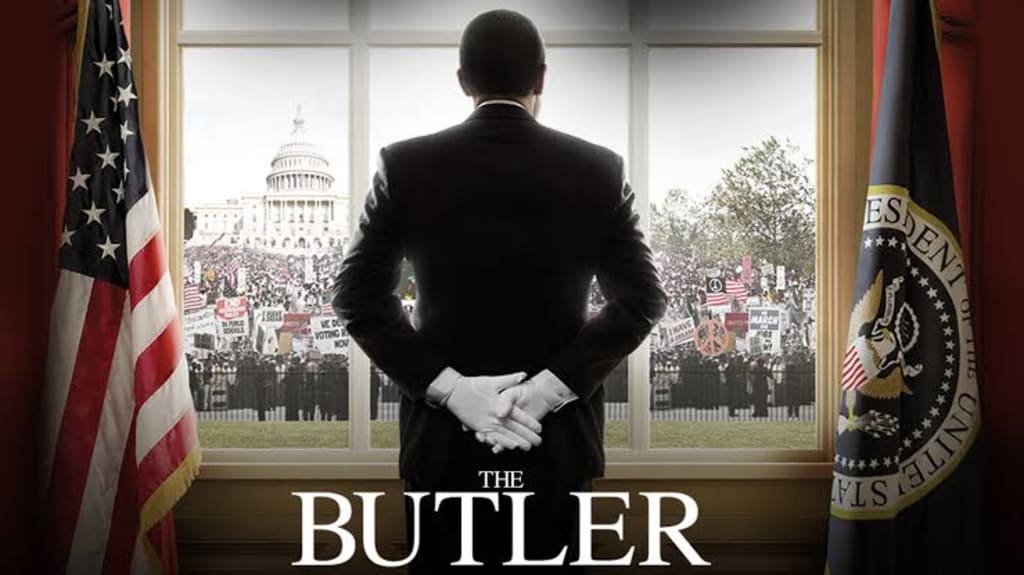
"Mrs Kennedy refused to change her clothes, so that everybody could see what they did to her husband. The last time I saw that much blood, was the day my daddy was killed..." - Cecil Gaines
Lee Daniels' The Butler may be best described as a profound series of Polaroid snapshots, vividly rendered events of one man's extraordinary life, set amongst some of the most poignant moments in 20th Century America.
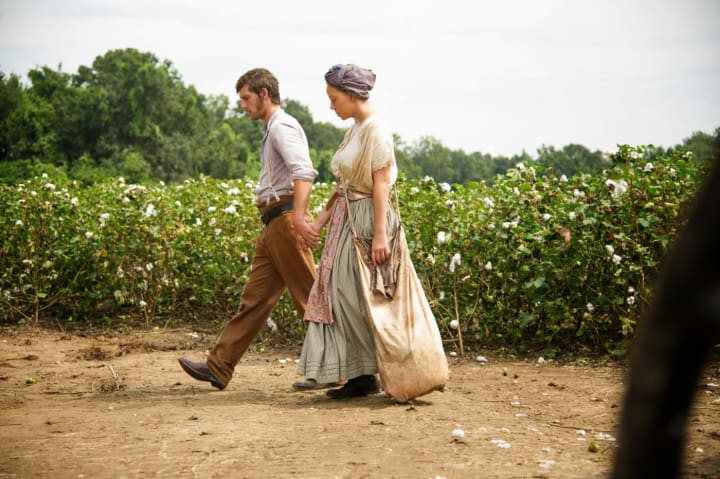
Beginning with his upbringing on a cotton farm (used here as a euphemistic term for plantation) in the 1920's deep south, we learn of Cecil Gaines' early education; a sociological survival code deriving from generations of slavery. These cotton farms with their beautiful, blossoming buds, act as paradoxical signifiers for arenas of the worst displays of human hate, in no way dissimilar to the concentration camps of WWII.
It is here that a young Cecil learns the lessons that will steer the course of his life; for a black male in pre-Civil rights America, openly opposing social positioning, has significant consequences.
Director Lee Daniels juxtaposes micro shifts in Gaines' personal and professional life and mirrors them with macro socio-political events . He begins by showing how a teenaged Gaines (played by Kidulthood's Aml Ameen) leaves the farm behind, having been promoted from "field nigger", to "house nigger" and is now starving on the streets after witnessing his mother go "crazy in the head". It is here that in his desperation and through a twist of fate, he ends up working in a hotel in Washington DC. Eventually he stands out for his excellence and ability to separate his private face from his professional one and is eventually called upon for the role of White House butler.
It's important to note that the character of Cecil is owned by actor Forrest Whitaker. The first time Cecil laughs in front of the white house maitre d', the very man who's interviewing him in a time where black employment existed in its own recession, you realise, as is the case in any interview scenario, that being liked is the true essence of being hired.
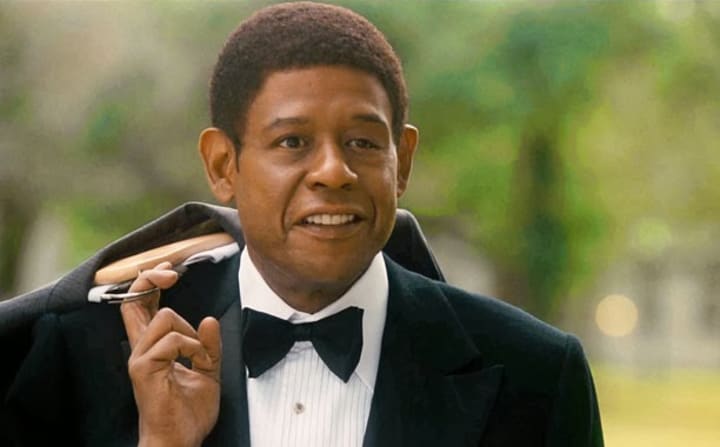
Although being a man of stature, Forest Whitaker conveys Gaines as every bit the subservient he was required to be, in world of perpetual division. The role is also complimented by believable performances from the supporting cast, headed foremost by Oprah Winfrey, playing Gaines' discontented wife. Since her star performance in The Color Purple over 20 years ago, Oprah has become so deeply rooted in modern culture as a mogul, I was skeptical as to how convincing she'd be at this time of increased celebrity transparency. I have to say she played the part of Gloria, the archetypal disgruntled wife and matriarch, extremely well. She was there to highlight the domestic complexities of Cecil's life, a man who was compelled to provide for his family, but in doing so often meant missing out on being a family man.
The film is brimming with star cameos, from film and music. Lenny Kravitz, Mariah Carey and Cuba Gooding Jr all do well to shake off their star status to serve the narrative. Most of these cameos however, come in snippet form as the several presidents/vice presidents Cecil serves during his tenure within the White House walls. Robin Williams and James Marsden portray Presidents Dwight D. Eisenhower and John F. Kennedy respectively. Both actors stand out, for expertly exemplifying how so many a monumental, race related choice, was made within the company of the very people who whose social progression hinged upon their decision making.
The standout performance of the film however, most certainly goes to British actor David Oyelowo. Oyelowo depicts Louis Gaines, the eldest of Cecil's two sons, in a way that invokes a variety of feelings. The first time we meet him as a young student, his inner conflicts are evident. He is an intelligent boy who clearly loves his father, but feels an unshakable embarrassment for his professional acquiescence. I couldn't help but feel a deeper connection with this character's ark, one which undeniably symbolizes a host of experiences, specifically for conscious, black men. Louis shifts from being angry and somewhat petulant, to dabbling in radicalism. He is frequently imprisoned for his burning belief in his right to equality, which is a position that puts him at odds with his family who favour a more subversive and patient route to change. Most significantly though, we witness how a father and son go from being at odds, to rekindling their relationship due to the mutual respect for one another's ultimate aims, regardless of the methods that are implemented to reach them.
The Butler is by no means a flawless film, but it is one you feel all the better for having experienced.
See the trailer here: The Butler Trailer
About the Creator
Lev. Life. Style
I’m fascinated by culture’s ability to shape thought and behaviour. I value creativity as a means of aiding wellbeing and growth. Film, analysis, travel and meaningful discussion, are personal passions that I’m grateful to share.
Lev
Keep reading
More stories from Lev. Life. Style and writers in Critique and other communities.
Charming Classic - “Heat”
“Society invites the crime and criminals accept the invitation.” - Vikrant Parsai Michael Mann's Heat exists in the memory as a remarkable heist film, a standout cops n' robbers thriller, which influenced several quality, crime-pictures following on from it. Matthew Vaughn, Ben Affleck and Christopher Nolan, directors of Layer Cake, The Town and The Dark Knight respectively, admit to their films having been inspired by Heat in varying ways. It can be argued that at the time, it redefined the action-thriller genre. It revised an almost decade-long formula of somewhat gimmicky, machismo fuelled, 80's action cinema, by delivering high octane spectacle, that relied upon sheer authenticity.
By Lev. Life. Style 9 months ago in Critique
Standing While Falling
Quotation from Friedrich Nietzsche "He who wrestles long with monsters should beware lest he himself become a monster. And if you gaze long into an abyss, the abyss also gazes into you. Man is not destroyed by suffering, but by the meaning he makes of it."
By LUCCIAN LAYTH11 days ago in Critique


Comments (1)
This article paints a powerful picture of Cecil Gaines' life. It's eye-opening how the cotton farm, meant to be beautiful, was a place of such hate. The contrast between micro and macro events is well-done. I wonder how Cecil managed to keep his private and professional lives so separate. And how did the social positioning really impact his day-to-day at the White House?