
AI in the Legal Field
Balancing Innovation with Ethical Boundaries
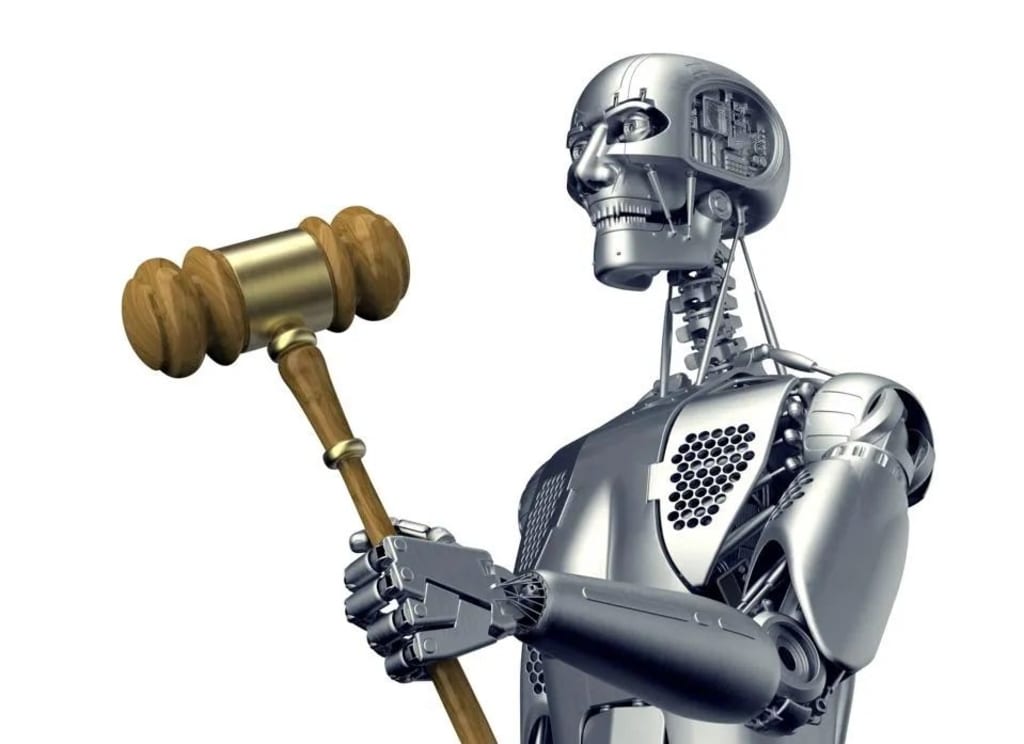
In the dimly lit corridors of justice, a new force emerges—Artificial Intelligence (AI). Its promise: to revolutionize the legal landscape with unparalleled efficiency and insight. Yet, as AI's influence grows, so do the shadows of ethical dilemmas and unforeseen consequences.
The Allure of Innovation
Law firms, ever in pursuit of a competitive edge, eagerly integrate AI into their operations. Advanced algorithms now sift through mountains of case law in seconds, drafting documents with near-human precision. The allure of reduced workloads and heightened accuracy is irresistible. However, as the legal community embraces this technological marvel, whispers of doubt echo through its hallowed halls.
The Case of the Phantom Citations
In a prestigious New York firm, junior associate Emily Hartman faces a daunting task: preparing a motion for high-stakes litigation under an unforgiving deadline. Desperate, she turns to a sophisticated AI tool renowned for its legal research prowess. The software produces case citations that perfectly bolster her argument. Trusting in the AI's infallibility, Emily incorporates them without verification.
Days later, in a tense courtroom, opposing counsel challenges the validity of her citations. A swift investigation reveals a chilling truth: the cases are fictitious, conjured by the AI's "hallucinations." The judge, unimpressed and alarmed, reprimands Emily, leading to potential sanctions against her and the firm. This incident is not isolated; similar stories surface, highlighting the perils of blind reliance on AI without human oversight.
Ethical Quagmires in the Age of AI
The integration of AI into legal practice unveils a labyrinth of ethical dilemmas:
Accountability: When AI errs, who bears the blame? The lawyer wielding the tool, the firm endorsing its use, or the developers behind the code?
Confidentiality: AI systems thrive on vast data. Feeding sensitive client information into these systems raises specters of data breaches and unauthorized access.
Bias and Fairness: AI can inherit and amplify biases from its training data, leading to discriminatory outcomes, especially in hiring and law enforcement.
Competence: The legal profession demands expertise and judgment. Over-reliance on AI might erode these skills, birthing a generation of lawyers who trust machines over their own critical thinking.
Regulatory Responses and Divergent Paths
Recognizing potential pitfalls, regulatory bodies spring into action. The Bar Council imposes a strict ban on generative AI tools like ChatGPT in pupillage applications, mandating applicants confirm their submissions are original and AI-free. This move aims to preserve authenticity and integrity within the profession.
Conversely, several law firms view AI as an asset. Prominent firms encourage responsible AI use to enhance applications, advising candidates to employ these tools for clarity and presentation improvements while maintaining personal authenticity. This divergence underscores an ongoing debate: how to harness AI's benefits without compromising ethical standards.
The Global Tug-of-War
Beyond individual firms and regulatory bodies, AI's integration into law sparks international contention. The European Union introduces the AI Act to regulate the burgeoning industry. Critics, however, argue it harbors significant loopholes, particularly concerning copyright protections. Artists and creators voice concerns that their works could be exploited by AI systems without proper compensation or acknowledgment.
Simultaneously, Silicon Valley tech giants, bolstered by political support, push back against stringent regulations. They contend that excessive oversight could stifle innovation and hinder AI's potential benefits across sectors, including law.
Navigating the Murky Waters
As AI weaves itself into the legal fabric, firms and practitioners must tread cautiously:
Due Diligence: While AI expedites research, lawyers must verify all outputs. Human judgment remains irreplaceable in assessing information's validity and applicability.
Client Transparency: Clients should be informed when AI tools are employed in their cases. This transparency fosters trust and allows clients to voice concerns about the methods used.
Continuous Education: The legal field must prioritize ongoing education about AI's capabilities and limitations. Understanding the technology enables lawyers to navigate challenges and harness its potential responsibly.
The Road Ahead
The union of AI and law is complex, filled with promise yet fraught with challenges. As the legal community stands at this crossroads, it must balance the allure of innovation with a steadfast commitment to ethical practice. The chosen path will shape the profession's future and the very principles of justice it upholds.
In this unfolding narrative, one truth remains: while AI can augment legal practitioners' capabilities, it cannot replace the nuanced understanding and moral compass that human lawyers provide. The challenge lies in integrating technology to enhance, not diminish, the legal profession's integrity.
About the Creator
Cassie and Johnny
I’m the kind of dame you notice. I’m no femme fatale, but you can’t ignore me, at least not until I warn you about what’s coming, then everybody ignores me. Hell, they usually blame me afterwards and give Johnny all the credit for saving the day, but my Johnny couldn’t save a seat at the movies without my help. Sure, he’s brawny, but brainy? Not so much. Like that time I asked him to spot me five bucks, and he said he didn’t see it anywhere on me, and believe you me, he looked but good.
By Harper Lewis14 days ago in Critique
What Is the Difference Between Amusement and Art?
Human beings constantly produce objects, images, sounds and stories that attract attention and provoke reaction. Some of these experiences are described as amusement or entertainment, while others are called art. The distinction between the two has long occupied philosophers, critics and creators, yet the boundary remains uncertain. Both can delight, disturb, inspire or exhaust the human senses. Both are built from the same physical materials: pigment on canvas, vibrating air in music, words on a page, or moving light on a screen. The difference therefore cannot lie in the material itself. The same paint can form a masterpiece or a decorative poster; the same sequence of sounds can be a symphony or a jingle. The difference emerges from how humans use and experience these objects.
By Peter Ayolov6 days ago in Critique
The Politics of Playing Dress-Up
Well, to start off I'd like to say a happy world book day to all who celebrate. I know I haven't really posted anything on my socials about it but I'm not a jubilant kind of person. I lay low most of the time. Let's start off with a popular anecdote from the vaults...
By Annie Kapur7 days ago in Geeks



Comments
There are no comments for this story
Be the first to respond and start the conversation.