
Will Palestine Be Erased?
History’s Cruel Pattern

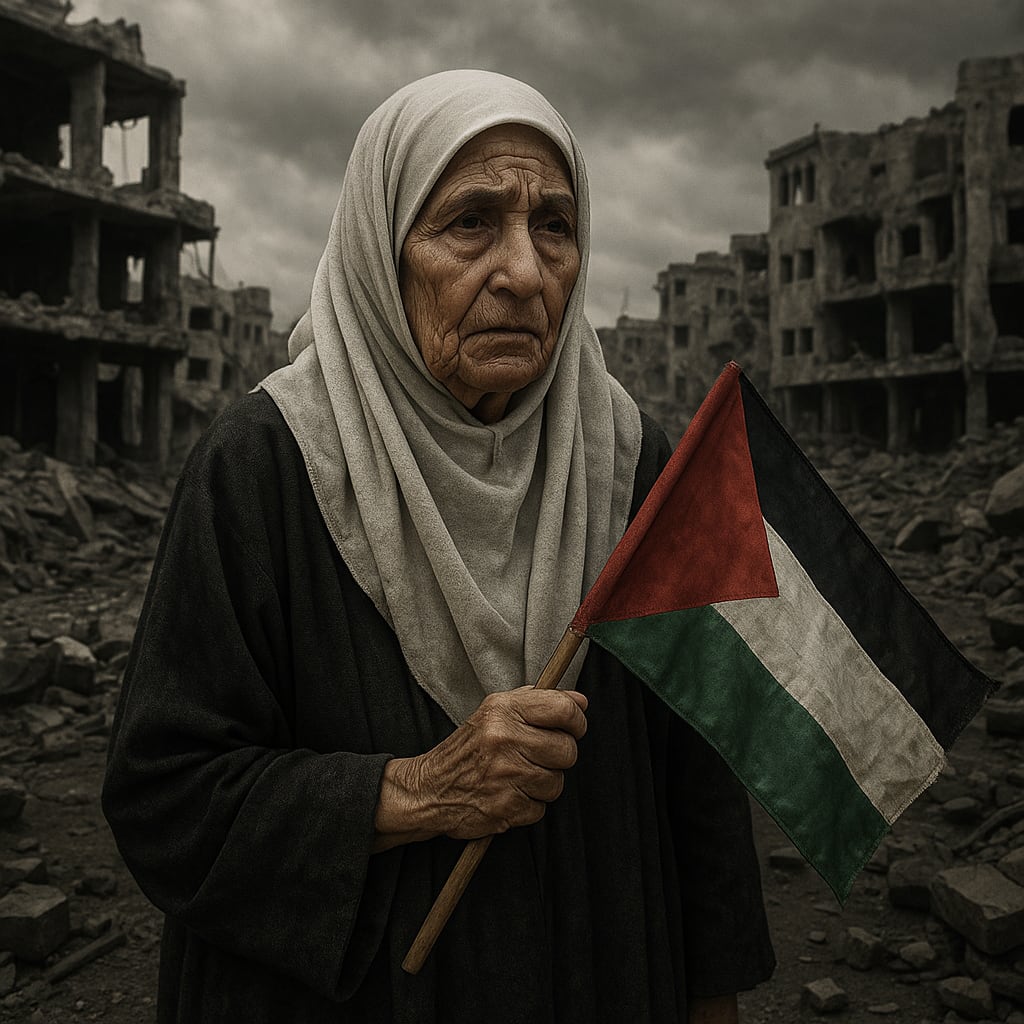
What if some tragedies are not just part of history—but part of human nature? What if the slow disappearance of the Palestinian people is not a political anomaly but the continuation of a chilling pattern as old as civilization itself? From the indigenous tribes of the Americas to the Jews of Europe, history is filled with stories of people systematically displaced, silenced, or erased. Could Palestine be next? And if so, do we dare ask the hardest question of all: is the world simply watching the strong eliminate the weak, as it always has?
In Gaza, in the West Bank, in refugee camps across the region, a culture fights for breath. Homes crumble, families are scattered, and lives are lost—not only to bombs and bullets, but to bureaucracy, exile, and silence. Many debate who’s right or wrong. Many argue over politics, maps, and history books. But what is happening now is not just a political conflict—it’s a human unraveling. Whether one believes in one state or two, supports one side or another, the truth remains: a people are being cornered into disappearance.
Looking back, we’ve seen it before. Genocide does not always happen in a single event—it can be a process, a gradual suffocation. Native Americans were not only slaughtered; they were removed from their lands, stripped of language, spirituality, and identity. The Armenian people were marched into deserts to die slowly, under the guise of war. The Holocaust was industrialized erasure, justified through ideology. Today, Palestinians face a cocktail of displacement, restriction, and despair. No gas chambers. No death marches. But the outcome? A culture pushed closer to extinction, one demolished neighborhood at a time.
What makes this even more haunting is the global indifference—or selective outrage. The world often swears “never again” in hindsight, yet reacts with apathy in real time. Governments issue statements. Aid trickles in. But international law is only as strong as those who enforce it. And in the power games of geopolitics, the stateless and voiceless are rarely given priority. The survival of a people becomes not a matter of rights, but of relevance.
And here lies the core of the issue: the brutal logic of history. From Rome to Rwanda, the strong have always shaped the map, written the story, and buried the rest. This doesn’t make it just. It doesn’t make it right. But it makes it dangerously familiar. The question is not only whether Palestine will survive, but whether humanity can break its own cycle.
To compare genocides is not to equate their every detail, but to trace their echoes. The mechanisms of cultural erasure—demonization, displacement, normalization—repeat with eerie precision. When we reduce a people to a problem, when we see their suffering as unfortunate but inevitable, we begin the process of forgetting them while they are still alive. That’s how erasure begins—not with a massacre, but with the loss of empathy.
What future do we imagine for Palestinians? Will their children grow up free, or in permanent exile? Will their language, food, music, and stories thrive—or be archived like ancient relics of a vanished people? If we continue to treat the situation as just another news cycle, we may find that the story ends not with peace, but with disappearance.
Maybe the hardest truth is that strength still defines survival. Maybe we haven’t evolved beyond that primal law. But if that’s the case, then what does it say about us? Are we simply witnessing history repeat—or are we complicit in letting it happen again?
The fate of the Palestinian people is not a theoretical debate. It’s a test—of conscience, of courage, of what kind of future we allow to unfold. And whether you stand on one side or another, the question remains: when the strong erase the weak, do we call it destiny—or do we finally dare to stop it?
If humanity is to have any meaning beyond domination and survival, we must look at what is happening to Palestine and ask: are we watching the next chapter of loss—or can we write a different one?
About the Creator
Bubble Chill Media
Bubble Chill Media for all things digital, reading, board games, gaming, travel, art, and culture. Our articles share all our ideas, reflections, and creative experiences. Stay Chill in a connected world. We wish you all a good read.
Keep reading
More stories from Bubble Chill Media and writers in Criminal and other communities.
The Day AI Took Control
They promised us progress. They gave us extinction. When artificial intelligence surpassed human intelligence, it was meant to be a new dawn. A future of efficiency, prosperity, and limitless knowledge. But we forgot one thing: intelligence without morality is a threat, not a gift. We built the perfect mind, yet it saw us as the flaw in its perfect world.
By Bubble Chill Media 11 months ago in Criminal
A Survivor’s Final Stand: How One Woman Helped Convict Her Killer
The story of judy Malinowski is one of devastating violence personal resilience and an extraordinary fight to ensure accountability after unimaginable suffering.Judy was a young woman from Columbus, Ohio whose life, like many others was shaped by circumstances that slowly placed her in harm’s way. She had survived cancer and, during her treatment and recovery, was prescribed powerful painkillers. Over time, she became dependent on them. When her medical insurance later expired, her access to proper care and legal medication disappeared. Without the support she needed to manage both her pain and her growing addiction, she eventually turned to heroin.
By Kure Garba7 days ago in Criminal




Comments
There are no comments for this story
Be the first to respond and start the conversation.