
Why the "Worst Prison in America" was also the "Bloodiest Prison in America"
The largest maximum security prison in the United States houses 6,300 prisoners and 1,800 staff on 18,000 acres and is called a “gated community.”

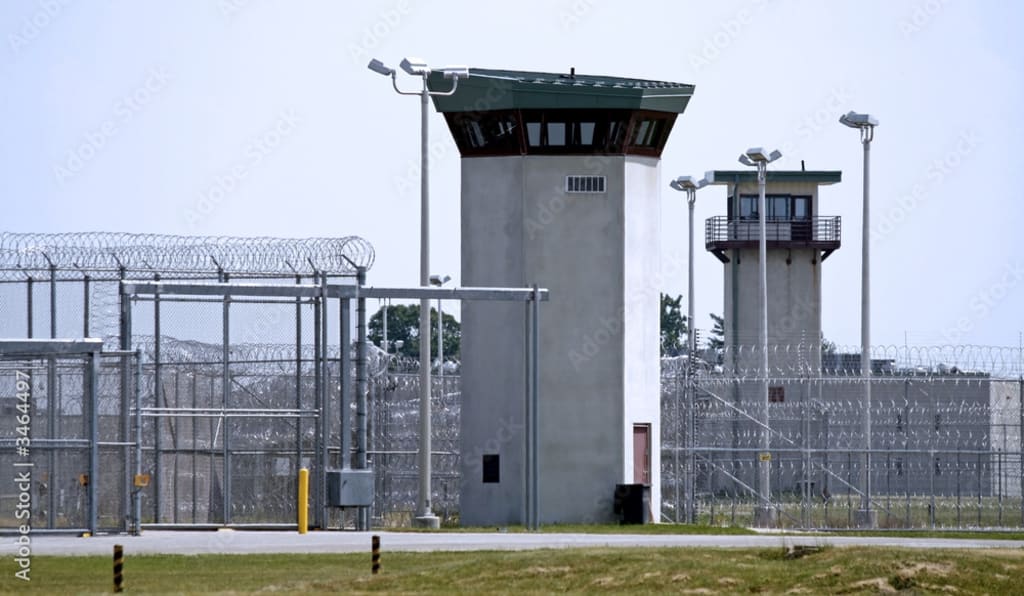
Murders and bloody fights occurred, and prisoners were tortured, beaten, sexually abused, and often kept in solitary confinement — for lengthy periods in this Southern prison, also known as the “Alcatraz of the South.”
The Walls
Louisiana’s first Penitentiary was begun in 1832 in what is now downtown Baton Rouge. It was called “The Walls” because the buildings and yards were behind tall enclosed structures. During the 82 years it was open (1835–1917), it housed thousands of men, women, children, blacks, and whites. The cells were 7 ft. x 3.5 ft. with concrete floors and no bed or mattress!
“In Louisiana, black women were put in cells with male prisoners and some became pregnant. In 1848, legislators passed a new law declaring that all children born in the penitentiary of African-American parents serving life sentences would be the property of the state. The women would raise the kids until the age of ten, at which point the penitentiary would place an ad in the newspaper. Thirty days later, the children would be auctioned off on the courthouse steps ‘cash on delivery.’ The proceeds were used to fund schools for white children. . . many of [the black children] were purchased by prison officials.” (Source: American Prison: A Reporter’s Undercover Journey into the Business of Punishment by Shane Bauer September 18, 2018)
Convict Leasing
After the Civil War, in December 1865, the 13th Amendment to the United States Constitution provided that “Neither slavery nor involuntary servitude, except as a punishment for crime whereof the party shall have been duly convicted, shall exist within the United States, or any place subject to their jurisdiction.”
The War was over, and slavery had been abolished. Still, the Southern States (except in Virginia) began to lease convicts to private companies, railroads, mines, and large plantations where they worked for free, often subjected to cruel punishment for minor infractions.
“The Walls” was unable to sustain itself, and in 1844, Louisiana began utilizing the system of Convict Leasing to produce income for the prison. The system, just another name for slavery, continued until 1900 with a break during the Civil War.
In 1870, the State of Louisiana awarded a lease of the Penitentiary and the convicts to a former Confederate Army Officer, Samuel L. James, to operate the state prison. A few inmates remained at “The Wall.”
James had purchased the 8,000-acre Angola Plantation. The slave quarters were used to house the convicts, and it was called the James Prison Farm.
Most of the inmates were black and did manual labor — on the plantations where they were leased to other landowners to work in the cotton fields — picking cotton and were often literally worked to death.
Convicts were also leased to businesses, where they helped build levees, roads, and railroad tunnels. White convicts (considered more intelligent) were allowed to work as clerks or do craftsmanship.
The convicts suffered abuse under the lease arrangement system. In 1900, the state purchased the Prison from James and, in 1901, began operation. In 1924, more plantations were purchased, and by 2008 the size of Angola Prison was 18,000 acres. Angola is larger than Manhattan Island.
Where Is Angola?
Angola Prison is remotely located 30 miles from St. Francisville, LA, between New Orleans, LA, ?and Natchez, MS. It is surrounded by a swamp on one side and the Mississippi River on three sides.
Angola houses Death Row for men in Louisiana and the Louisiana Execution Chamber for men and women.
Female prisoners are issued two pairs of underwear, but no bras are allowed.
The Atrocities
Brutality in Angola has been longstanding. Samuel James was known to underfeed, abuse, and submit the inmates to torture. According to the Prison Insider, 3,000 inmates died during the James era between 1870–1900.
Angola had earned the title “The Bloodiest Prison in the South” by 1962 because stabbings were common. Prisoners attacked each other with the crude knives they constructed in the prison shops.
In 1972, a 23-year-old corrections officer, Brent Miller, was stabbed to death with homemade knives as he sat, drinking coffee, with another guard.
During an attempted escape, in 1999, by six inmates, three guards were taken as hostages. When Guard David Knapps refused to turn over his keys, he was beaten to death. One of the convicts involved in the escape attempt was shot and killed by Guards.
In 2012, prisoner Shannon Hurd, who had received a life sentence in 2004 for stealing $14, began complaining about not feeling well. His complaints were ignored, and his condition worsened. Three years later, he was examined and determined that he had Kidney Cancer which had metastasized. Hurd died in 2017.
In July of 2022, two inmates got into a fight and a 42-year-old inmate, Carlos McGrew, died.
Burl Cain, Warden at Angola for 21 years, stated, "I think that there has been more human suffering in this place than in any place in the world.”
Kenny “Zulu” Whitmore probably holds the record for being in Solitary Confinement longer than any other prisoner. Convicted of murder in 1973 and sentenced to life in prison, Zulu is kept in a 9 x 6-foot cell 23 hours per day — and has been there for over 30 years according to an article in The Advocate, a Louisiana newsletter.
Zulu is a self-proclaimed Black Panther, and he believes that his political beliefs are what keeps him segregated from other prisoners.
“Louisiana owns the shameful distinction of having its main prison named the worst in the United States in both the nineteenth and twentieth centuries; first by Alexis de Tocqueville in 1831, and then again by Collier’s magazine in 1952.”
About the Creator
Sarah Walker Gorrell
Loves family, history, reading, writing, traveling, cemeteries and churches (plays the organ at hers), her two noisy Poms (who bark at everything and predict the weather), her front porch, and her fireplace. She's humorous and outspoken!
Keep reading
More stories from Sarah Walker Gorrell and writers in Criminal and other communities.
Almost 140K Mississippians May Receive Money
According to ‘Mississippi Today,’ the average Mississippi student college loan of $37,000 is close to the National Average of $37,667 or $1.6 trillion and is among the highest in the nation. Nearly 439,000 Mississippians have Federal Student Loans, which would receive $10,000, or $20,000 if it is a Pell Grant.
By Sarah Walker Gorrell3 years ago in Education
Living in the Blast Zone: The "House of Skulls" and the Collapse of Ephrata’s Luxury Dream
The Morning the Property Value Died On January 6, 2026, the residents of Washington Avenue didn't just wake up to a crime scene; they woke up in a financial blast zone. While the media trucks have packed up and the hazmat suits are gone, the neighbors are left with a permanent scar. In real estate law, this is called "Stigmatized Property."
By Sunshine Firecracker5 days ago in Criminal



Comments
There are no comments for this story
Be the first to respond and start the conversation.