
Why should Prison be abolished?
Rethinking Justice: Exploring Prison Abolition, Reform, and the Future of Incarceration
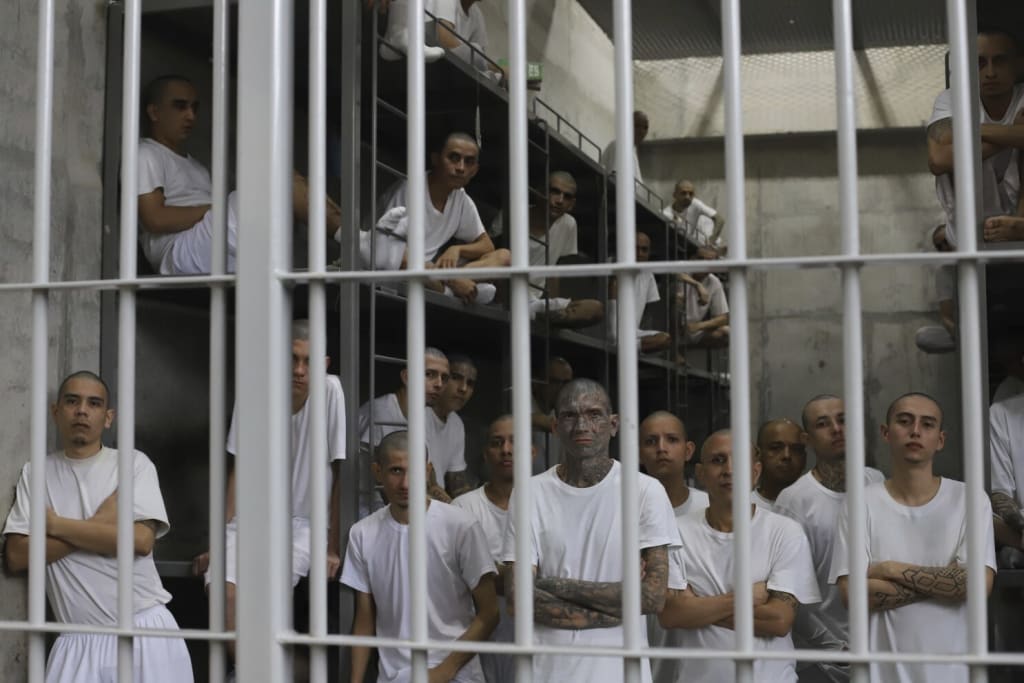
Abolishing the police and prisons has become a significant topic of discussion, especially in recent years. You may have seen these phrases circulating on social media, particularly following the tragic murder of George Floyd in 2020. Since then, the movement advocating for prison abolition has gained substantial traction across the United States, transforming from what many viewed as a fringe idea into a serious social movement. Regardless of your perspective on this matter, it’s natural to have questions. That’s where political theory can offer some clarity.
Prisons, as we know them today, have only existed in the Western world since the late 1700s. While there were certainly jails for short-term confinement before that, they did not resemble the long-term incarceration models we have now. This leads us to the question: what’s the reasoning behind our current prison-based punishment system?
Before the late 1700s in England and colonial America, a majority of offenses were punishable by death—quite alarming when we think about it! In this historical context, some proposed prisons as a more humane alternative to capital punishment.
This idea brings us to the 19th-century philosopher Jeremy Bentham. He argued that the primary purpose of punishing lawbreakers is to deter others from committing similar acts—a concept known as deterrence. There are two main ways to achieve this: first, by establishing a strong enough penalty to dissuade potential criminals from breaking the law; and second, by physically preventing repeat offenders from committing crimes again, which often means incarceration.
Additionally, Bentham suggested an even more impactful approach: surveillance. He envisioned a prison designed so that inmates would always feel as if they were being watched— or at least could be. Picture a circular building with an open space in the center, where cells line the walls, each housing a single prisoner.
This brings us to a deeper exploration of the implications of our justice system and the potential for rethinking how we approach crime and punishment. What are your thoughts on this? Let’s dive into the conversation!
In the center of it all stands a watchtower. A guard stationed there has a clear view into every single cell, yet the prisoners remain unaware of his gaze. While it’s impossible for the guard to monitor every cell at all times, the mere possibility of being watched is enough to keep the prisoners in check. This idea, proposed by philosopher Jeremy Bentham, is known as the “panopticon.” If this concept gives you an uneasy feeling, you’re certainly not alone!
Fast forward about a hundred fifty years, and philosopher Michel Foucault seized upon Bentham's notion, providing a fresh perspective on modern punishment and its ramifications for European society. To Foucault, the panopticon became a metaphor for a pervasive power structure that reaches into various aspects of life—be it prisons, hospitals, or factories. Essentially, wherever we go, there’s a chance that Big Brother is keeping an eye on us.
Foucault suggested that those living under this control system end up becoming their own overseers. People internalize the imposed power dynamics and modify their actions accordingly—no prison cell required.
At first glance, this might seem like deterrence in action. Yet, it also hints at a somewhat dystopian reality. As Foucault aptly put it, “the panopticon presents a cruel, ingenious cage.”
In today’s digital age, some argue that we’re all navigating a kind of panopticon. Observers from across the political spectrum highlight the state’s expanding capacity to surveil its citizens through technology, whether that involves keeping an eye on security camera footage or even reading my chats about The Bachelor. However, we must recognize that even with extensive security measures, we can’t deter everyone from engaging in criminal behavior.
So, what happens when those people do cross the line? What are we hoping to achieve through punishment? I’ve learned that the intended purposes of criminal punishment can generally be grouped into three main categories: retribution, reformation, and restoration. But before we dive deeper into that, let me take a moment to elevate my coffee experience…
Isn’t it almost too beautiful to drink? When the aim of criminal justice is to avenge victims, it’s known as retributive justice—essentially, an eye for an eye. In today’s world, however, very few political theorists or supporters of incarceration would openly endorse this view, as it feels rather antiquated and a bit like something out of Game of Thrones. Instead, many in the modern Western society lean towards a reformative justice model. This approach doesn’t focus solely on punishing the offender; rather, it aims to “correct” their behavior. You can see this reflected in terms like “correctional facility” and “corrections officer.”
Reformative justice perceives criminality .
When we think about the role of prisons and other sentences, it’s often believed that they can help address certain conditions. The idea is that an offender enters prison, regarded as a criminal, and emerges as a law-abiding citizen ready to reintegrate into society. However, here's the reality: if we don’t follow through on efforts to reform those who have committed crimes, we basically end up with a justice system focused solely on retribution, whether we acknowledge it or not.
Recently, there’s been growing interest in an alternative approach: restorative justice. Proponents argue that neither reformation nor retribution meets the needs of everyone affected by a crime. From this perspective, crime is more than just a legal violation; it disrupts social relationships. To truly hold offenders accountable, they must engage in repairing the harm they've caused.
A great example of this is the Victim Offender Education Group, which connects offenders with surrogate victims—individuals who’ve experienced similar crimes—to share their stories. This initiative aims to help both parties find common ground and heal from the situation.
Ultimately, justice here is about much more than punishing one person. It’s about understanding the pain on both sides of the relationship between victim and offender—a concept that reformative justice advocates are striving to normalize. It’s worth mentioning that experiments in restorative justice have typically been on a smaller scale. We haven’t seen many large-scale applications of this model yet. But the prison abolition movement is pushing us to reflect deeply on the role of incarceration and whether the justifications for punishment truly hold up under scrutiny.
Speaking of which, let's revisit Angela Davis, the influential prison abolitionist I mentioned earlier. She coined a term for the interconnected systems that utilize surveillance, policing, and imprisonment to tackle economic, social, and political issues. She called it the Prison Industrial Complex, borrowing from the well-known phrase “Military Industrial Complex.”
It’s important to note that police forces, private prisons, and companies providing food and labor within these facilities are financially benefitting from incarceration. Layered on top of this are the significant racial inequalities present in our society.
Now, let’s consider those who are meant to gain from the existence of prisons—the individuals sent there in hopes of rehabilitation. Prison abolitionists argue that, in reality, these institutions often do more harm than good.
What do you think about this perspective? The increase in the incarcerated population has led to severe overcrowding in US prisons. This situation can significantly impact living conditions, safety, and access to meaningful programs and mental health services. Prisons often isolate individuals, removing them from their families and friends. Unfortunately, the negative effects don’t necessarily end upon release; having a criminal record can make it extremely challenging to secure employment or find stable housing.
If the goal of incarceration is to promote rehabilitation, but instead it creates additional harm, it raises an important question: where does that leave us? This is where the call for prison abolition comes into play. Achieving this would mean working to decrease the number of people behind bars—what we refer to as decarceration.
But what happens next? There are certainly individuals in prison who have committed heinous acts of violence. Do we simply release them? Interestingly, many advocates of prison abolition have given this considerable thought. They often propose alternative approaches to replace traditional incarceration, such as restorative justice methods. They also emphasize the need for more comprehensive services aimed at preventing crime before it takes place, including enhanced mental health and substance abuse programs. It’s also worth noting that some individuals argue for a significant reduction in prisons rather than their complete elimination.
Tommie Shelby, a prominent voice in the prison reform movement, supports many of the alternatives suggested by Angela Davis—such as rehabilitation, mental health support, and restorative justice—arguing that they may be more effective at deterring crime than the current system. However, he also contends that we sometimes need to incapacitate individuals who have committed violent crimes, as reintegrating them into society may not be feasible. Even so, Shelby envisions a future with far fewer prisons.
The concept of “imagine” is critical here. Political theory invites us to envision a better world, which includes temporarily setting aside practical considerations to contemplate the kind of society we aspire to create. Engaging with these ideas is a valuable exercise, even as you, I, and others may reach different conclusions. The current state of mass incarceration might feel inescapable, but the prison abolition movement challenges us to remember that this reality is not predetermined. We have the power to influence the type of world we wish to inhabit.
About the Creator
Keep reading
More stories from writers in Criminal and other communities.
How to Beat Ephrata Borough's Secrecy: A Citizen's Guide
(This is Chapter 21 of the complete Jonathan Gerlach investigation.) The Information War Filing a request under the Pennsylvania Right-to-Know Law (RTKL) in Ephrata Borough is the only legal tool citizens have to pierce the "Wall of Silence" surrounding the Jonathan Gerlach case. While the Mayor ignores emails and the Borough Manager deflects questions about the Associated Building Inspections (ABI) contract, the law is on your side.
By Sunshine Firecracker5 days ago in Criminal
Drones vs Aircraft Carriers
Drones vs Aircraft Carriers For decades, aircraft carriers have symbolized ultimate military power. They are floating cities, armed with fighter jets, guided missiles, radar systems, and layered defenses. A single carrier strike group represents not just military strength, but political will. Wherever it sails, it sends a message: power has arrived.
By Wings of Time 2 days ago in Criminal




Comments
There are no comments for this story
Be the first to respond and start the conversation.