
When Justice Fails
Real Stories of Wrongful Convictions That Changed Lives

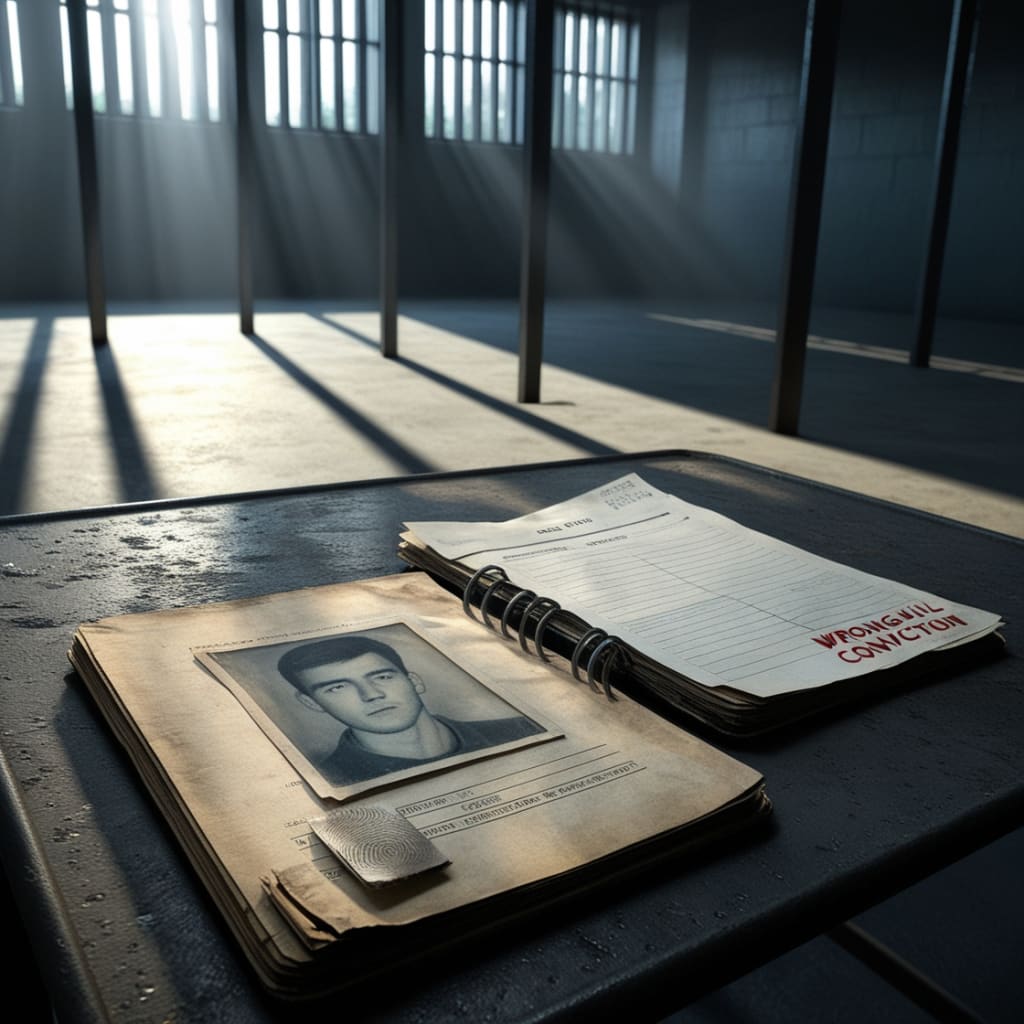
Justice is supposed to protect the innocent and punish the guilty. But sometimes, the system that promises fairness delivers something else entirely—misjudgment, bias, and irreversible consequences. Every time an innocent person is convicted of a crime they didn’t commit, it sends shockwaves not only through their life but through the entire framework of trust we place in the courts. These aren’t just headlines. These are real stories of wrongful convictions that show what happens when justice fails—and why it matters for all of us.
One of the most heartbreaking examples is the story of Anthony Ray Hinton. In 1985, he was convicted of two murders in Alabama and sentenced to death. The evidence? A revolver found at his mother’s house—despite the fact that it couldn’t be definitively matched to the crime. Hinton maintained his innocence for nearly three decades on death row, spending 30 years in a cell smaller than a parking space. Finally, in 2015, new ballistics tests proved what he had said all along: the gun wasn't a match, and there was no physical evidence tying him to the crime. He was exonerated and released. But how do you return three decades of stolen time? You can’t. That’s the irreversible damage of wrongful convictions.
Then there's the case of Central Park Five, now known as the Exonerated Five. In 1989, five teenage boys—four Black and one Latino—were coerced into confessing to a brutal assault and rape in New York's Central Park. There was no DNA evidence linking them to the crime, and their confessions contradicted one another. Still, public pressure and racial bias led to their conviction. It wasn’t until 2002, when the real perpetrator confessed and DNA evidence confirmed his involvement, that the five were exonerated. They had already spent between 6 and 13 years in prison. The media frenzy, societal anger, and flawed police tactics destroyed their youth and nearly their futures.
Wrongful convictions real stories are not rare exceptions. According to the National Registry of Exonerations, over 3,400 people in the U.S. have been exonerated since 1989. That’s thousands of lives impacted—jobs lost, families torn apart, mental health shattered. And behind every statistic is a person who woke up one day to a nightmare they couldn’t escape.
Take the story of Debra Milke, convicted in 1990 in Arizona for allegedly arranging the murder of her four-year-old son. The conviction was based solely on the word of a detective who claimed she confessed to him—but there was no recording, no signed statement, and no witnesses. After 22 years in prison, the court finally ruled the detective’s testimony was unreliable and had a history of misconduct. Milke was released in 2013, but the stigma and trauma remained. The justice system had not only failed her but also ignored every red flag that could have saved her life.
Wrongful convictions happen for many reasons—false confessions, mistaken eyewitness identification, prosecutorial misconduct, poor defense representation, and flawed forensic science. These issues are not just technical glitches; they’re life-altering problems. In many cases, the system leans more toward securing a conviction than discovering the truth. The pressure to close a case, especially in high-profile crimes, can lead police and prosecutors to focus on a suspect instead of evidence.
Korey Wise, the oldest of the Exonerated Five, was only 16 when he was taken in for questioning. He wasn’t even a suspect originally—he went to the station to support his friend. Hours later, without a lawyer or parent present, he confessed to a crime he didn’t commit. He spent 14 years in prison, much of it in solitary confinement. When justice fails, it doesn’t just mislabel someone—it dehumanizes them.
Another shocking case is Richard Phillips, who spent 46 years in prison for a murder he didn’t commit—the longest known wrongful incarceration in U.S. history. His conviction was based on the testimony of a man who later admitted to the killing and said Phillips was not involved. Yet it took nearly half a century to set him free. Released in 2018, Phillips said he had no bitterness—just a desire to live freely again. But no apology or settlement can undo the loss of nearly five decades.
Wrongful convictions also highlight a deep racial bias in the justice system. According to the Innocence Project, Black Americans are seven times more likely than white Americans to be wrongfully convicted of murder. These cases often reflect systemic racism in policing, jury selection, sentencing, and media coverage. The damage is compounded when society turns its back instead of questioning how such errors happen.
What’s even more disturbing is how hard it is to reverse a wrongful conviction once it’s made. Courts rely heavily on finality—once someone is convicted, overturning that decision requires new evidence, new representation, and often, a long battle with a system resistant to admitting mistakes. Some prosecutors fight against DNA testing, even when it could exonerate someone. Others refuse to admit fault, fearing reputational damage or liability. In this way, the system becomes more about protecting itself than protecting the people it serves.
So, what can be done?
First, we need greater accountability in law enforcement and prosecution. Any officer or prosecutor caught hiding evidence or coercing confessions should face serious consequences. Mandatory recording of interrogations can prevent false confessions. Better funding and support for public defenders can reduce convictions based on poor legal representation. And independent conviction review units—like those in Brooklyn and Philadelphia—can offer a way for past cases to be reviewed without bias.
Second, the use of junk science in courtrooms must end. Forensic methods that are not peer-reviewed or scientifically reliable—such as bite mark analysis or hair comparison—should be banned from being used as sole evidence. Courts must hold experts to higher standards to avoid relying on flawed conclusions.
Finally, society must care. These are not just “other people’s problems.” Anyone can be wrongly accused. The safeguards that protect your freedom depend on a system that values truth over quick wins. If we accept wrongful convictions as collateral damage, then justice itself becomes a gamble.
When justice fails, it doesn’t just fail one person—it shakes the foundation of democracy. Every wrongful conviction is a reminder that the system we trust is fragile, and that truth, transparency, and accountability are the only ways to protect the innocent.
Because behind every exoneration is a story of survival, resilience, and the hope that one day, the system will do better.
About the Creator
Muhammad Asim
Welcome to my space. I share engaging stories across topics like lifestyle, science, tech, and motivation—content that informs, inspires, and connects people from around the world. Let’s explore together!
Keep reading
More stories from Muhammad Asim and writers in Criminal and other communities.
How a Small Town Covered Up a Major Crime
Small towns often carry a reputation for charm, closeness, and quiet streets. But sometimes, behind that peaceful surface lies something darker—secrets people are willing to bury to protect their own. In many places, it’s not the size of the crime that determines justice, but the power of those involved and the fear of shattering the town’s image. I never expected to witness it firsthand, but I did. And what I saw changed how I see justice forever. This is the story of how a small town covered up a major crime—and why no one ever talks about it.
By Muhammad Asim8 months ago in Criminal
The Silence Behind Room 307
M Mehran The rain fell heavily over the quiet town of Ravenshade, turning the narrow streets into rivers of shimmering reflections. Most people had already gone home, locking their doors against the stormy night. But inside the old Hawthorne Hotel, the lights of Room 307 still glowed faintly. That room would soon become the center of one of the most chilling criminal mysteries the town had ever known. A Crime That Shocked the Town At 11:42 PM, the hotel receptionist heard a loud crash echo from the third floor. At first, she assumed a guest had dropped something. But minutes later, a terrified scream shattered the silence. When the police arrived, they found the door to Room 307 half open. Inside, the scene was disturbing. A wealthy businessman named Daniel Mercer lay lifeless on the floor beside a broken glass table. The room looked untouched—no signs of forced entry, no robbery, no struggle. Yet Mercer was clearly murdered. Detective Aaron Cole, a veteran investigator known for solving impossible cases, stepped into the room carefully. Years of experience had taught him that the smallest detail could expose the biggest lie. But this case felt different from the beginning. The Impossible Mystery The first strange detail was the door. It had been locked from the inside. The second strange detail was the window. Closed. Sealed. Impossible for anyone to escape through. This meant one thing: whoever killed Mercer had either vanished into thin air… or was still in the hotel. Cole began questioning the staff and guests. Mercer had checked in earlier that evening, arriving alone and carrying only a black leather briefcase. According to hotel records, he had ordered dinner to his room and made two phone calls. After that, nothing. But one witness changed everything. A young waitress named Clara said she saw someone leaving the hallway near Room 307 shortly before the scream. “A man in a gray coat,” she told police. “Tall. Wearing a hat. I didn’t see his face.” The problem? No guest registered at the hotel matched that description. A Secret Hidden in Plain Sight Detective Cole examined Mercer’s belongings carefully. Inside the briefcase were documents related to a major financial investigation. Mercer had been working with authorities to expose a massive corporate fraud operation involving millions of dollars. Someone powerful clearly had a reason to silence him. But how did the killer enter and leave the locked room? That question haunted Cole. Until he noticed something unusual. The bathroom mirror. It wasn’t aligned with the wall like normal hotel mirrors. When Cole touched its edge, it shifted slightly. Behind it was a hidden service panel used by hotel maintenance workers decades ago. A narrow passage ran between the walls of the building. Suddenly, the “impossible crime” wasn’t impossible anymore. The Killer Revealed The passage led to a storage room on the same floor. Inside, detectives discovered a gray coat hanging on a hook. And inside the pocket was a hotel keycard. The card belonged to Victor Hale—the hotel’s night manager. When police confronted him, Hale tried to stay calm. But the evidence was overwhelming. Hale had once worked for the same corporation Mercer was investigating. If Mercer exposed the fraud scheme, several powerful executives—and their accomplices—would face prison. Hale was paid to ensure that never happened. Using the old maintenance passage, he entered Mercer’s room through the hidden panel, confronted him, and killed him before escaping back through the wall. He then locked the door from the inside using a simple wire trick through the gap under the door. A perfect crime. Or so he thought. Justice in the Darkness When Hale finally confessed, he revealed something chilling. Mercer had refused to stay silent even when threatened. “He said the truth was worth dying for,” Hale admitted quietly. The investigation that followed exposed the entire fraud network Mercer had been trying to reveal. Several high-ranking executives were arrested, and millions of dollars in stolen funds were recovered. But for Detective Cole, the victory felt incomplete. Mercer had paid the ultimate price. The Lesson Behind the Crime Criminal cases like the Room 307 murder remind us that crime is rarely random. Behind every shocking act lies a chain of decisions, secrets, and motives. Sometimes the truth hides in shadows. Sometimes it hides behind a mirror. But as Detective Cole often said: “Every crime leaves a whisper of the truth. You just have to listen carefully.” And in the silent hallway of the Hawthorne Hotel, the whisper of justice had finally been heard.
By Muhammad Mehranabout 16 hours ago in Criminal
The Piggy Project
I’ve had so many names in this life I lose track of which ones were ever really mine and which ones I wore because someone needed me to. Some were handed to me before I had words to refuse them, before I knew what they meant, before I knew I could say no. Most weren’t meant to hurt. That doesn’t mean they didn’t leave marks. Marks that told me who I belong to, who I am by way of who claims me, recognizes me in the good and bad, who walks beside me.
By Fatal Serendipity5 days ago in Confessions


Comments
There are no comments for this story
Be the first to respond and start the conversation.