
When Faith Burns: How Hindutva’s Airstrikes Reduced Mosques to Message Boards
A mosque in Bahawalpur stood quiet at dawn. Children recited verses. Elders rinsed for prayer. Then the sky split open. And the bombs turned faith into ash.

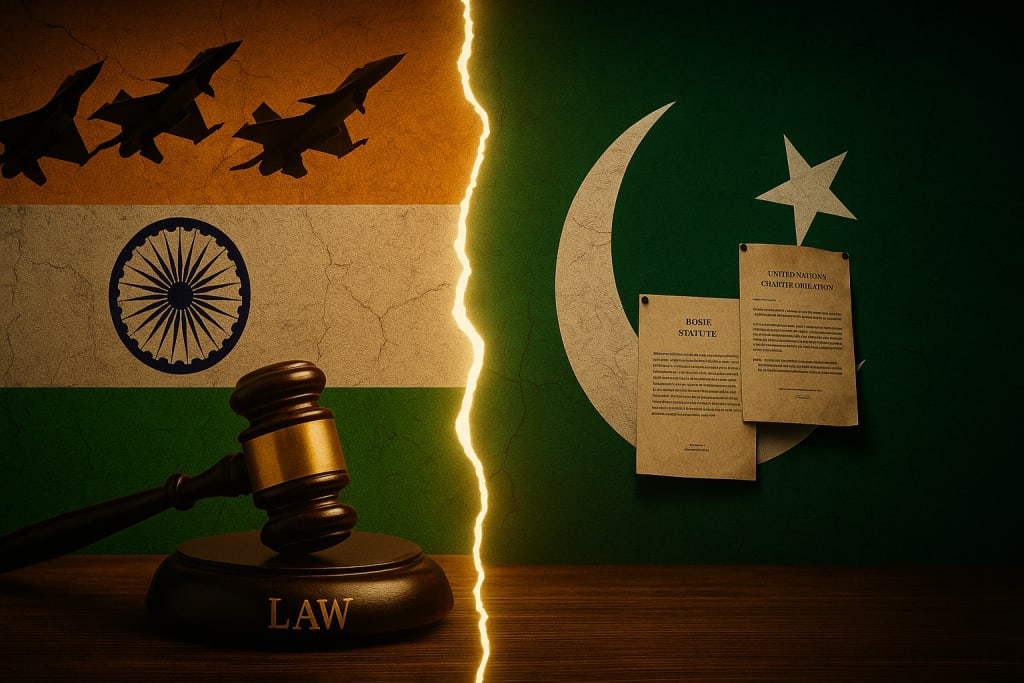
It was May 7, 2025.
The world’s largest democracy crossed a border it had not crossed since 1971. But this time, it didn’t just cross land — it crossed law, memory, and morality. The warplanes flew low over sovereign skies. Their payload wasn’t just explosives. It was politics, wrapped in fire.
And all of it began — as so many calamities do — with a lie.
The Ghost of Pahalgam
April 22. The Baisaran Valley in Kashmir bloomed like a postcard. Pilgrims climbed toward temples, and the air buzzed with laughter and hymns. Then the guns opened fire.
Twenty-six civilians died. The nation mourned.
But the state did not wait for facts. Before the dead were buried, the script was written. Pakistan was blamed. TRF was named. The Resistance Front, allegedly tied to Lashkar-e-Taiba, became the ready-made villain.
What the public didn’t hear was the truth whispered in bureaucratic chambers: the Ministry of External Affairs had no evidence. None. But truth is heavy and elections are light — so they let it go.
The Digital Bonfire
Before the jets flew, the tweets fell.
- 8,000 X accounts banned
- Journalists silenced
- The Wire shadowed and throttled
In the vacuum, hashtags bloomed like shrapnel: #AvengersOfPahalgam. #SindoorJustice.
This wasn’t mourning. It was mobilization. Grief weaponized.
---
Operation Sindoor — The Airstrikes That Campaigned
On May 7, the Rafale jets screamed over Bahawalpur and Azad Kashmir.
They dropped fire on:
- A mosque full of children: Masjid SubhanAllah
- A civilian neighborhood where the oldest resident was 92
- Empty plots labeled as "terror camps"
51 civilians killed. 11 soldiers dead. Zero verified terrorist infrastructure.
The only thing Operation Sindoor destroyed was the boundary between nationhood and narcissism.
---
The Men Who Applauded
Modi smiled on stage. Shah raised a fist. Doval remained invisible, as always — a ghost behind a doctrine.
In the rally lights, the airstrikes weren’t tragedy — they were branding.
Like Pulwama in 2019. Like Balakot. But this time, the smoke from the mosques mixed with saffron and slogans. The electorate wasn’t asked to choose policy. They were asked to pick a side.
And bombs speak louder than ballots.
---
The Silence That Screamed
The UN? Silent.
The West? Still calculating arms contracts.
The Global South? Watching. Waiting.
Even those who knew better — who knew that India cross-border aggression violated UN Charter Article 2(4), Geneva Conventions, and Rome Statute Article 8 bis — said nothing.
Because nationalism is a commodity now. And war sells better than peace.
---
The Nuclear Shadow
150 warheads in India. 160 in Pakistan. Two men with fingers on buttons.
But this wasn’t called brinkmanship. It was called sovereignty.
This wasn’t called provocation. It was called patriotism.
And no one asked the children under the rubble what they called it.
---
Memory Is a Witness
The mosque has no roof now. But people still pray beside the crater. They pray not for revenge. But for remembrance.
Because history isn’t always written by the victors. Sometimes, it’s written in ash and brick and bone.
And that’s where this story ends:
- In the silence of a desecrated mosque
- In the weeping of mothers who couldn’t find all the limbs
- In the stain of Hindutva’s war narrative, broadcast as victory
The world must not just remember. It must respond.
Or else, the next war will not begin with a lie. It will begin with precedent.
#HindutvaWarNarrative #OperationSindoorAirstrikes #ModiWarCrimeICC #IndiaCrossBorderAggression #PahalgamAttack2025
About the Creator
Speed, Greed, and the Dangerous Game of Revenge
There are some things in the world that are not just symbols of wealth, but become identities of power, arrogance, and obsession. The rare 1937 Bugatti is one of those things. The film begins with a grand and luxurious auction, where this legendary car stands on stage as the center of everyone’s attention. The auctioneer announces that it is one of the rarest cars in the world, with only two models existing globally. This announcement ignites greed in the hearts of every wealthy person present in the crowd. The bidding starts at thirty million dollars and keeps increasing moment by moment. Someone bids thirty-two, someone thirty-four, and finally the bid reaches forty-one million dollars. This final bid is placed by a man named Jack, who is in contact with his boss. On the surface, he appears to be a rich buyer, but in reality, he is working for a powerful and dangerous criminal. The Bugatti is not going to belong to him, but to his boss. At the same time, the film introduces us to two brothers—Andrew and Garrett. Both are world-famous and highly skilled car thieves. Luxury and supercars are their obsession, and they have stolen some of the best cars in the world. The reason both brothers are connected to the Bugatti’s path is because they want to steal this rare car. The Bugatti theft on the highway is one of the most thrilling scenes of the film. High-speed vehicles, jumping onto a truck using ropes, a shower of bullets, and the shadow of death—Andrew and Garrett risk their lives to steal the Bugatti. This is not just a theft, but a practical demonstration of skill, nerves, and madness. After the theft, both brothers celebrate, but this happiness does not last long. When they go to a man named Jimmy to sell the Bugatti, he refuses to buy it. Jimmy knows that this car does not belong to an ordinary person, but to a very powerful and dangerous businessman named Morrier. Morrier is not only a wealthy man, but also runs an entire criminal empire. Soon, Andrew and Garrett are captured and presented before Morrier. Morrier tells them his story—a journey that started from poverty, an empire built through crime, and an obsession with rare cars. For him, these cars are not just a hobby, but symbols of his power and ego. The theft of the Bugatti becomes a personal insult to him. Morrier gives both of them one chance to stay alive, but his condition is extremely dangerous. They must steal a 1962 Ferrari belonging to a man named Max—a car that is one of a kind in the world and worth more than millions of dollars. Max is a young but exceptionally intelligent business tycoon, and also Morrier’s old enemy. From here, the story moves beyond a simple theft and turns into a battle of minds. Andrew and Garrett form an entire team, including Stephanie, Devon, bomb expert Lane, and skilled race drivers. Every person has a specific role, and every mistake can lead to death. The character of Max adds more depth to the story. He appears to be a polite and successful businessman, but behind him is an extremely sharp mind. He is both impressed by Andrew and Garrett’s abilities and cautious of them. His Ferrari is not just a car, but his identity. The story takes a new turn when it is revealed that the real plan was never to steal the Ferrari. The Bugatti was merely a move, a trap—used to ensnare Morrier along with his arrogance. Andrew, Garrett, and Max were actually playing the same game from the very beginning, where the real target was Morrier’s treasure of rare and valuable cars. In the climax, speed, explosions, and intelligence collide together. A collapsing bridge, long car chases, betrayal, sacrifices, and finally Morrier’s fate—all symbolize that the game of power and greed ultimately ends in destruction. In the end, Andrew proposes marriage to Stephanie, Garrett finds love, and the team completes an impossible mission. But the biggest lesson remains that in this world, the most dangerous weapon is not a gun or speed, but the mind, patience, and the final move played at the right time. Final Question Is power really found only in money and weapons, or is true power hidden in the mind that silently turns the entire game around?
By Filmon Ke Raaz | Movie Mysteries Explaineda day ago in Criminal
TUS NUA - ch 49
TUS NUA – ch 49 New Beginnings – Mia and Midnight (*)(*)(*) As Mia spoke on the phone to Ali’s sister, Ellen, Finola slipped quietly away and walked to the stream behind Tus Nua. Carefully, she put a block on her family so no one could know what she was about to do.
By Margaret Brennana day ago in Fiction


Comments
There are no comments for this story
Be the first to respond and start the conversation.