
What were the true motivations behind Putin's invasion of Ukraine?
Russia and Ukraine Confrontation
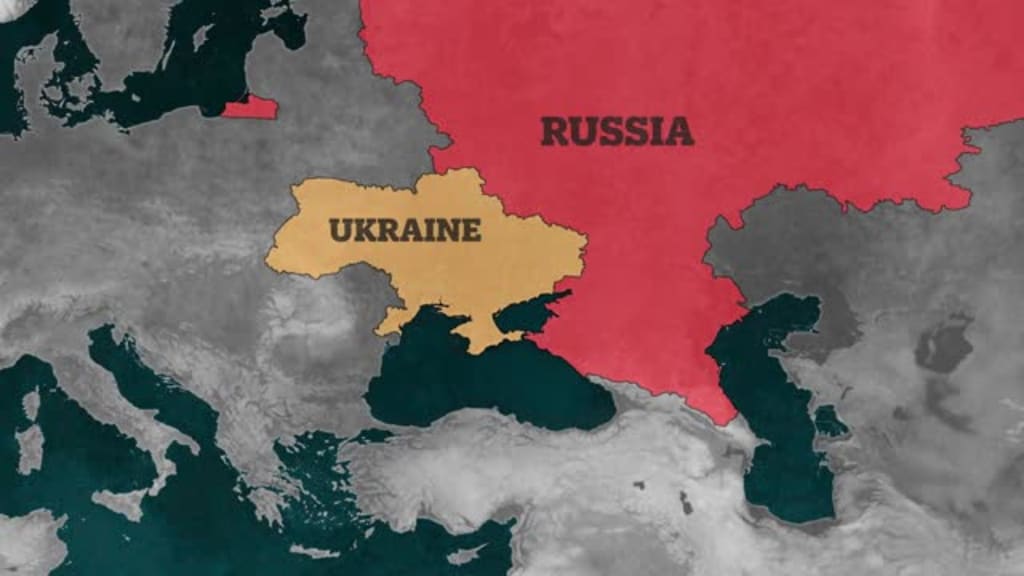
The invasion of Ukraine by Russia cannot be solely attributed to NATO; however, NATO shares a degree of responsibility. The conclusion of the Cold War marked a significant shift in global history, where the West achieved victory over the Soviet Union without resorting to military confrontation. As the new millennium approached, ensuring lasting peace was a priority, and NATO sought to avoid a renewed Cold War. With the fall of the Berlin Wall, it became evident that the Soviet order was in its final stages. In an effort to mitigate the risk of a catastrophic war, NATO and the Soviet Union collaborated on various initiatives to reduce nuclear and conventional military capabilities in Europe. Some of these efforts had been in progress for years and culminated in the Treaty on Conventional Armed Forces in Europe. The treaty aimed to establish specific limits on military hardware, striving for a level playing field between NATO and the Warsaw Pact. However, unbeknownst to the Soviet Union, this arrangement significantly favored the technologically advanced Western militaries, as demonstrated during the conclusion of Desert Storm.
As revolution swept through the western flank of the declining Soviet Union, one of their significant concerns was the potential expansion of NATO towards their borders, a prospect viewed as entirely unacceptable by the Soviets. The Soviet Union had valid reasons for desiring a certain distance between itself and NATO. Throughout history, the Soviet Union's territory had been invaded by Western armies twice in two World Wars and numerous times in preceding centuries. Positioned at the far end of the European plain, the direct routes into the core of Soviet territory were largely indefensible. The Warsaw Pact nations provided the Soviets with a protective barrier against another invasion from the West.
The West German foreign minister, Hans-Dietrich Genscher, declared on February 6th, 1990, that "NATO does not intend to expand its territory to the East." In spite of the fact that many western officials have noted, this iconic declaration did not reflect actual NATO policy, and the emerging Russian nation would later view it as a broken promise. The NATO secretary general made a historic visit to Moscow in July 1990 to discuss cooperation between NATO and the Soviet Union, which temporarily improved tensions in Europe. However, shortly after the Soviet Union collapsed, Russia was formally born from its ashes.
At first, things looked good because Russia had formally pacified its cooperation with NATO. Russia's entry into the Partnership for Peace program in 1994 marked a warming in ties between the east and west. But the same year, Russia established the Collective Security Treaty Organization, which was modeled after NATO and included nations like Belarus, Armenia, Kazakhstan, Kyrgyzstan, and Tajikistan. In addition to aiming to regain some of the political authority it lost when these former Soviet countries split away, Russia was once more seeking to create a barrier between itself and NATO. But despite objections to including nations like the Czech Republic and Hungary in NATO, which Russia still regarded as being inside its own sphere of influence, ties between Russia and NATO continued to improve.
It is not as absurd as it may seem that Russia would join NATO on its own. In fact, Mikhail Gorbachev first suggested that the Soviet Union join NATO to US Secretary of State James Baker in 1990. But both logistically and politically, the situation was hopeless. A country had to meet a stringent set of requirements before it could join NATO, which included upholding a number of fundamental human rights and having a democratically elected government. In the Soviet Union, these circumstances weren't present. However, Russia ostensibly adopted democracy after the fall of communism. This opened the door for NATO membership, and during a visit to Moscow by President Bill Clinton in 2000, Russian President Vladimir Putin, who had just taken office to prevent Boris Yeltsin from serving a lengthy prison sentence, floated the idea of joining NATO to Clinton. Vladimir Putin told reporter David Frost in a BBC interview that "Russia is a part of European culture" prior to detonating a number of innocent bystanders to support his campaign for the Russian presidency. I also find it impossible to picture my own nation separate from Europe and what we commonly refer to as the civilized world. When President Putin called US President George Bush in 2001 to express his condolences for the attack on the World Trade Centers, relations between the two countries were at an all-time high. President Bush even gave Putin a tender look in his eyes on at least one occasion as the two were well on their way to becoming best friends. The US military entered Kabul the following year with the assistance of crucial intelligence provided by Russia. Putin was the new darling of the west, and after a grueling five decades of the cold war, the west was more than willing to entertain the fantasy of Russia joining NATO. However, a lot of people in the west recognized Putin for the young, un-botoxed, and un-steroid-using mass murderer that he actually was.
They cited the atrocities committed by Russian forces in Chechnya, where entire cities had been reduced to ruins. Russian weapons targeted civilians on purpose in an effort to wage a war of terror and intimidate the Chechens into submission. Every day, crimes against humanity were committed with the express approval, and sometimes even on the government's orders, of Russia. One could not allow this country to join NATO in a practical sense. Things were about to change. Midway through the 2000s, former Soviet Republics like Latvia, Estonia, and Lithuania started to join NATO, prompting immediate criticism from Russian hardliners. They claimed that NATO had broken promises made to refrain from expanding east at the end of the Cold War and saw this as a provocative act. NATO, however, quickly denied these charges. As things heated up, there was less chance of Russia joining NATO. Western nations expressed outrage immediately after learning of the death of Anna Politkovskaya, a human rights activist and Russian journalist who had covered Russian war crimes during the second Chechen War. While covering the war, Politkovskaya had endured numerous threats to her life and intimidation attempts. At one point, the Russian military had even arrested her and subjected her to a mock execution. She was poisoned in 2004 while departing from Moscow, but prompt medical attention saved her life. She was found dead in her elevator on October 7—totally by coincidence, Putin's birthday. Nobody has yet figured out who had ordered the contract killing, but it's safe to assume that it was probably Putin himself. The incident paved the way for revelations about the workings of Russia, where intimidation and violence against journalists, political dissidents, and those who opposed Putin's rule were as common as they had been during the Soviet Union's era. The truth would eventually leave the country as a result of additional high-profile murders and unexplained disappearances, though some dismissed this as Russophobia.
Simply put, Russia did not share the same values as NATO. The Polish foreign minister proposed that Russia join NATO in an effort to revive the idea of genuine peace in Europe in March 2009. The Russian NATO representative retorted that although they hadn't ruled it out for the future, they preferred to simply cooperate at the moment. Russia aspired to be a significant player on the international stage, and it was unseemly for Russia to join an alliance of nations that it saw as comparable to or even inferior to itself—certainly not as a greater power. The dream had completely vanished by the middle of the decade. Putin had abandoned the west and criticized its liberal values. Instead, he concentrated on Asia, which led to the revival of NATO's and Russia's fierce rivalry. NATO, meanwhile, had reached as far north as Russia's doorstep and included many former Soviet countries. The western alliance now included client states. The Ukraine in particular is in Russia's sights, so NATO shouldn't dare move any closer, the country repeatedly warned. Russia made a concerted effort to support a pro-Russian government in Ukraine, but by 2016, Ukrainians sick of being used as a pawn by Russia rose up and toppled their pro-Russian president after he rejected an EU membership proposal. Instead, he had accepted a different treaty that would have brought Ukraine much closer to Russia. In a matter of days, the Ukrainian government was overthrown as a result of the populace's explosion into a frenzy of revolutionary spirit. Ukraine incorporated provisions that ensured the country would be put on a path toward membership in both the European Union and NATO into its constitution, and pro-western leaders started taking the necessary steps to reform the nation in order to qualify for NATO membership. However, the country was also engaged in a war as a result of Russia's invasion and occupation of Crimea, which is now igniting a conflict in the region's secessionist east. Even so, Russia forewarned Ukraine that joining NATO would result in conflict, which did not deter Ukraine from wanting to do so.
Despite this, NATO would not rule out the idea of Ukraine joining, even sending soldiers directly to train Ukrainian troops while offering minimal military assistance. There is no denying that NATO is at least partially to blame for Russia's invasion of Ukraine. It was the logical outcome of Ukraine's growing desire to join institutions in the west as it grew apart from Russia. All NATO members were aware that this was a firm boundary that Russia would not cross, yet the alliance did nothing to prevent Ukraine from joining and ease tensions. Putin would later use this as reason for attributing his invasion to the west. However, NATO is an alliance of the willing that supports liberal values.
About the Creator
KeepMakingProgress
"Keep Making Progress" is a call to action, a reminder that growth is a lifelong journey with no fixed destination. It encourages us to embrace change, overcome obstacles, foster innovation, and contribute to the society.
Keep reading
More stories from KeepMakingProgress and writers in Criminal and other communities.
What Will Happen to Your Body If You Do 100 Push-Ups Every Day
Push-ups are a classic and effective exercise that targets multiple muscle groups in your upper body. Engaging in a challenge like doing 100 push-ups every day can yield remarkable results. In this article, we will explore the transformative effects that performing 100 push-ups daily can have on your body. From increased strength and muscle development to improved posture, functional fitness, and mental well-being, understanding the changes occurring within your body can serve as motivation and encouragement on your fitness journey.
By KeepMakingProgress3 years ago in Education
The ICE Shooting in Minneapolis A Closer Look at Federal Enforcement and Rising Tensions
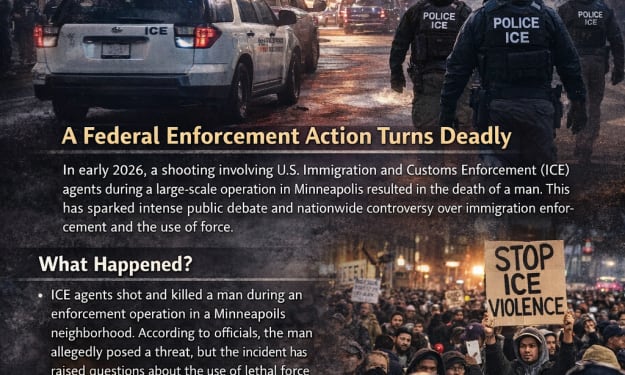
The ICE Shooting in Minneapolis A Closer Look at Federal Enforcement and Rising Tensions In early 2026, Minneapolis found itself at the center of national attention following a shooting involving agents from U.S. Immigration and Customs Enforcement, widely known as ICE. The incident quickly moved beyond a single law enforcement encounter and became a symbol of broader debates surrounding immigration policy, federal authority, and the use of force in American cities. As details emerged, the shooting sparked intense public discussion, protests, and renewed scrutiny of federal operations carried out within local communities.
By America today about 17 hours ago in Criminal
Man Escaped Death Row, But He Could Not Escape Death: The Story of Troy Leon Gregg
The story of Troy Leon Gregg is one of the most haunting and ironic episodes in the history of the American criminal justice system. It is a narrative that seems almost fictional in its cruel symmetry: a man sentenced to die by the state escapes death row mere hours before his scheduled execution only to lose his life later that same night in a violent confrontation. Gregg’s story continues to resonate not only because of its dramatic events, but also because of the deeper questions it raises about fate, justice, violence, and the limits of human escape.Troy Leon Gregg was a death row inmate in the state of Georgia, convicted of serious crimes that ultimately led to a capital sentence. After years of legal proceedings and appeals, his execution date was set. For the prison system it was meant to be the final chapter in a long process. For Gregg, however the night before his execution would take an unexpected and shocking turn.
By Kure Garba6 days ago in Criminal



Comments