
What Happened to the Lost Colony of Roanoke?
The British tried to colonize Roanoke Island three times, and each ended in disaster

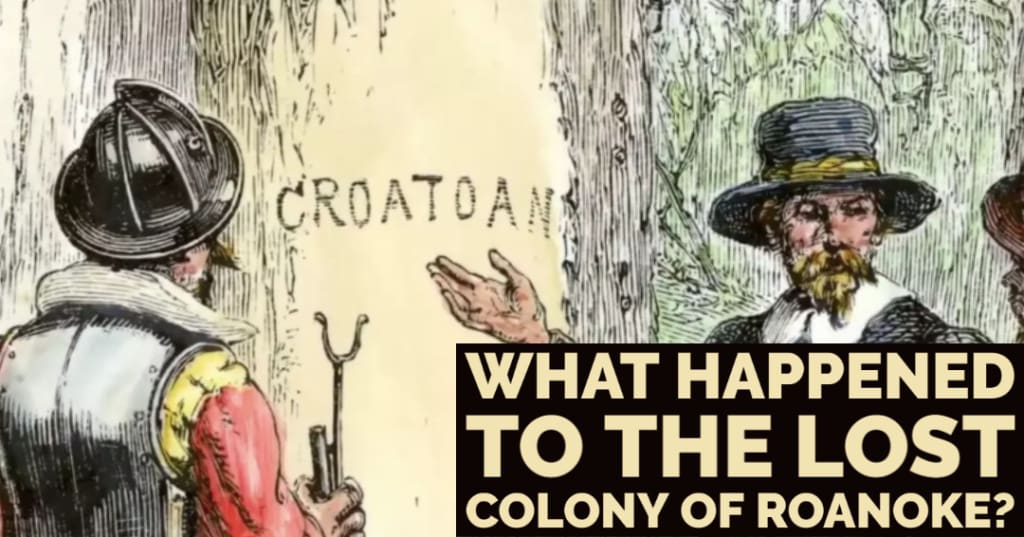
In the late 1500s, England tried three times to establish a colony on Roanoke Island. All attempts failed, but the last ended mysteriously, with over 100 people going missing along with critical pieces of the settlement itself. What befell the lost colony of Roanoke and its inhabitants?
How it Began
On April 27, 1584, Captains Philip Amadas and Arthur Barlowe left England in two well-stocked ships to explore the New World for Sir Walter Raleigh. By July 13, they landed on what would become the North Carolina coast about 24 miles north of Roanoke Island and claimed the land for Queen Elizabeth I and England.
The explorers set off and came upon Roanoke Island, which lay beyond a natural jetty created by Nags Head Island. The explorers found a peaceful Indian village on the island and had a short welcoming ceremony with them.
The First Colony 1585-86
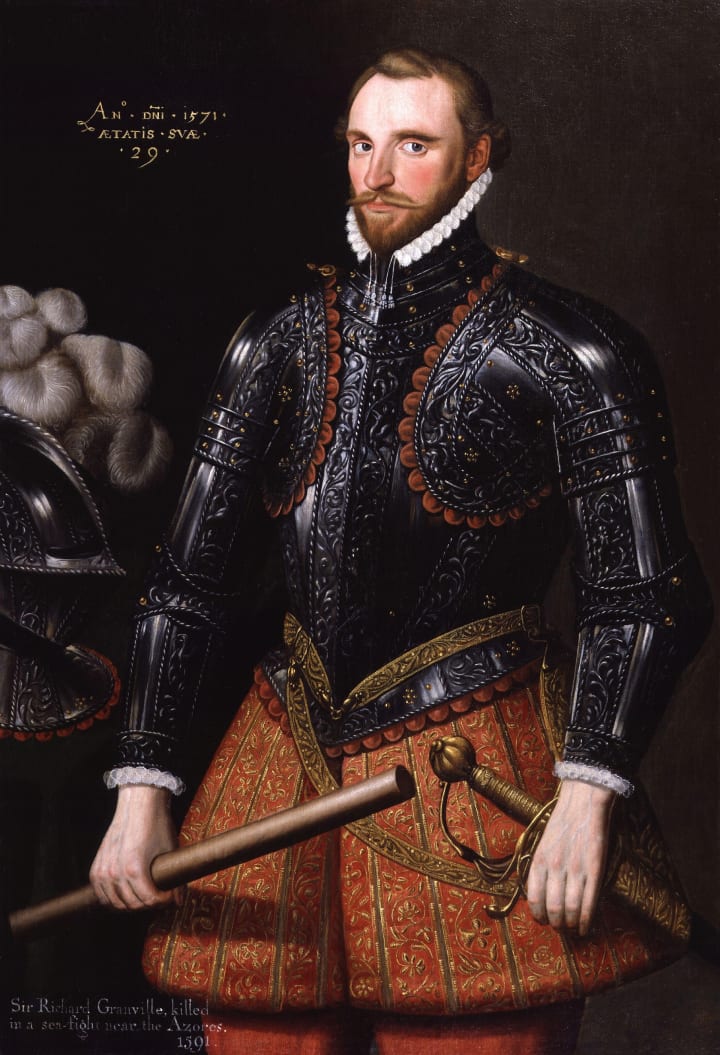
The following spring, Sir Walter Raleigh sent 108 skilled journeymen to settle Roanoke for the crown. Raleigh’s cousin, Sir Richard Grenville, captained the voyage. In June 1585, the settlers began exploring the island near Rohanoak when an Aquascogok tribal member stole a silver cup from the settlers. In a startling act of retaliation for the theft, Grenville burned the Aquascogok village.
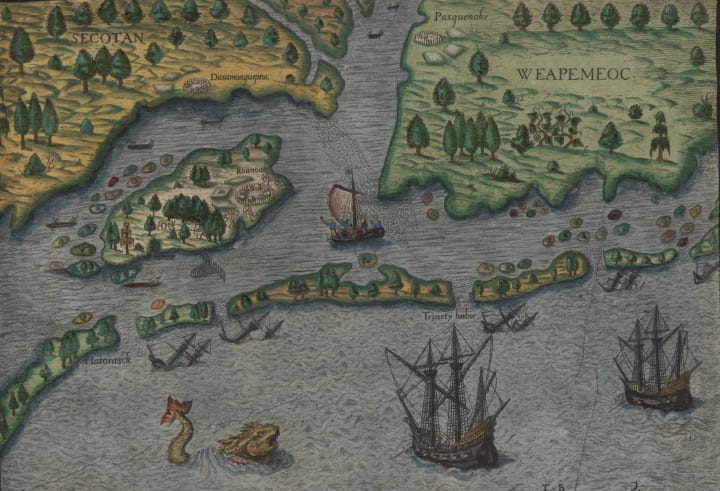
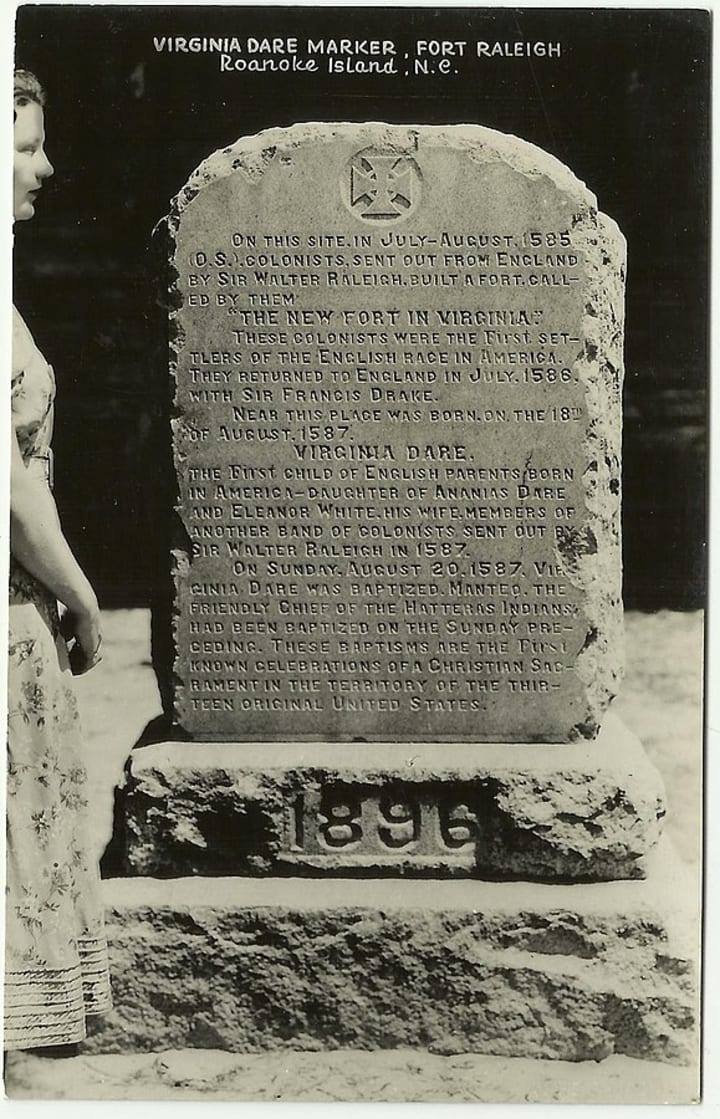
The explorers broke ground near the northern shore of Roanoke and built a fort under the leadership of Ralph Lane, who they appointed mayor. With a blinding flash of originality, the settlers christened the fort “The new Fort in Virginia.” The mind boggles at their staggering imaginations.
The site of the first fort is now where Fort Raleigh National Historic Site stands. The remains of the original fort remained visible as late as 1896.
Life in the First Colony
For a while, relations with the Roanoke tribe remained friendly. The Indians made fish traps and planted corn for the English colonists. However, the lack of female settlers (no women had accompanied the journeymen) made the permanence of the colony impossible.
It didn’t take long for most of these first colonists to grow tired of sleeping on hard beds and eating strange food. As the seasons wore on and supplies dwindled, relations with the Roanoke broke down. Upon the English arrival, the initial burning of the Aquascogok village set the tone for how these pale invaders viewed the indigenous peoples of the New World and the hierarchy they expected.
Abandonment of the First Colony
A year after their arrival, the colonists were in an all-out war with the Roanoke Indians, leaving many indigenous dead. Lane, the mayor of the colony, returned to England for supplies and became delayed. Tired and demoralized, the settlers got word that Sir Francis Drake was off the coast with 23 ships he’d stolen from the Spanish. Drake offered to take the settlers back to England. They jumped at the chance and peaced out.
While Drake ferried the colonists home, Grenville's supply ship arrived at the now abandoned settlement. Unwilling to lose the land for the crown, Greville left 15 men behind to hold the fort, so to speak.
The Lost Colony of Roanoak - 1587
By 1587, Sir Walter Raleigh organized a second expedition to "settle" America. It's hard to settle a land where 60 million people have lived for thousands of years, but I digress. Raleigh assembled 150 people, including 124 men, 17 women, and nine children, for the effort. Instead of an assortment of skilled laborers like before, this group consisted mainly of farmers.
Another difference with this new expedition was backers. This enterprise was corporate in nature, and many investors funded the colonists. With so many untapped resources like tobacco, wood, fur, and minerals, the New World was a literal gold mine of business opportunities.
Arrival at the Original Roanoke Fort
When the new colonists arrived at the fort, the only sign of the 15 men Grenville had left behind were the skeletal remains of one individual; it appeared Indians had killed him. What had happened to the other fourteen is lost to history.
Doomed from the Beginning
From the start of the new colony, the indigenous tribes in the area were outright hostile, as you can imagine. Soon after making land, an identified Indigenous group killed colonist James Howe.
Manteo, an indigenous man who'd spent time in England with Walter Raleigh, had learned English while there. He worked as an interpreter between the Roanoke tribe and the settlers. However, Manteo was unable to foster peace between the groups. In retaliation for the missing men Grenville had stranded and the murder of Howe, Governor John White planned to attack the Roanoke village with “fire and sword,” but the battle was an epic blunder. By the time White showed up at the village, the Roanoke had left. Instead of his adversaries, White found a group of peaceful Croatoan sifting through what the Roanoke left behind. Manteo managed to smooth things over between the Croatoan and the English colonists, and it appeared that the Croatoan forgave the colonists.
The Roanoke Colony Disappears
On 27, 1587, Governor White returned to England for supplies. Before White set sail, the colonists discussed relocating the colony 50 miles inland. White detailed what markers should be used in case this happened in his absence. One such symbol included the Maltese cross, which denoted danger and that the colonists had felt to preserve their lives.
While White returned to England, the war brewing between England and Spain broke out in earnest. The crown commandeered all large ships for the war effort. This included the White's ship, delaying his return with supplies. By April of 1588, eight months after he left the colony, White managed to convince the crown to allow him to return to the Roanoke colony with two small ships and a meager store of supplies. However, the ship’s captain decided that he’d rather pursue Spanish treasure ships than deliver supplies to the colony. While at sea, the sailors used up their supplies and then dug into those slated for the colony. In the end, White was forced to return to England.
Finally, in March of 1590, White, who’d lost credibility and favor with the court, secured passage via trade routes through the West Indies. After completing their trading, the ship landed on the shores of Hatoraske Island in August, three years after he’d left. From the ship, the sailors spotted smoke rising from Roanoke Island, giving hope that the colonist lived.
Three days after arriving, White and a small group of men left the ship for the colony. On the way, they spotted another column of smoke near the dunes on Nags Head. The company decided to divert and investigate this second column of smoke first, which took the whole day and revealed a small forest fire.
On August 17, 1590, the group headed again to Roanoke Island, only to have one of the boats capsize, resulting in the death of six men. By the time White finally made it to the shores of Roanoke Island, it was dark. They spotted a light in the darkness on the island and rowed towards it, blowing horns and singing English songs, but received no call in return.
The following daying, they made land on Roanoke Island and searched for the colony. White found the letters CRO carved into a tree near the mouth of where the settlement once stood. The colonists' homes had been dismantled and removed. A fortification constructed from tree trunks (palisade) now enclosed the settlement. In a gatepost of the fort, White found the word CROATOAN carved into the wood. However, White did not find a Maltese cross, the agreed-upon symbol for danger.
White still hoped to find his daughter and granddaughter, Virginia Dare (the first child born to the colony), at the nearby Croatoan village with Manteo. They planned on searching for the colonists the following day, but a storm hit, preventing their search. They instead headed to the West Indies (now known as the Caribbean) for fresh supplies. The storm turned out to be a hurricane that blew White way off course. When the storm broke, the sailors found themselves in the Azores off the coast of Portugal. From there, the ship limped back to England.
White was never able to return to Roanoke Island to search for his daughter or the lost colonist.
What happened to the lost colony of Roanoke?
Theory 1: Captured by the Spanish
At this time, the war between England and Spain raged. Spain had settled in nearby Florida, which might have caused strife between the competing countries to colonize the area. The idea that Spanish soldiers came across the settlement and took the villagers as hostages or slaves seemed plausible. At the time of the first settlement in 1585, Raleigh knew that setting up an English colony would circumvent Spain’s efforts to colonize America, thus placing English settlers in harm’s way. We do have written records that the Spanish had planned to cruise by the English colony, but from their own accounts, they never got around to it.
Theory 2: Assimilation or death
The colonists assimilated into Indigenous society, most likely the Croatoan tribe, or were killed by hostiles - perhaps the unfriendly Wanchese tribe. We’ll never know what the colonists meant by leaving the word Croatoan behind. Without the Maltase cross signifying distress, it's possible they left the village willingly.
Theory 3: Lost at sea
The colonists built a ship to return to England, but the vessel capsized, and everyone drowned. While this is a nice theory, there are no signs of boat building in or around where the colony stood.
Theory 4: Cover up
When the supply ship returned three years later, they discovered the colonists’ bodies. The death of the whole colony would cause trouble with financiers. Settling the New World needed to look profitable for investors, and a bunch of dead colonists wouldn’t encourage the next wave of settlers to roll the dice, so White quietly covered up that everyone in the colony had died and let the rumors swirl. Those investing in the colonies needed them the look like a risk worth taking, and it worked. Settlers from England flocked to the New World in droves.
What's Happening Now?
Archaeologists had digs scheduled for late 2019 and early 2020, but many fear that the colony is gone forever.
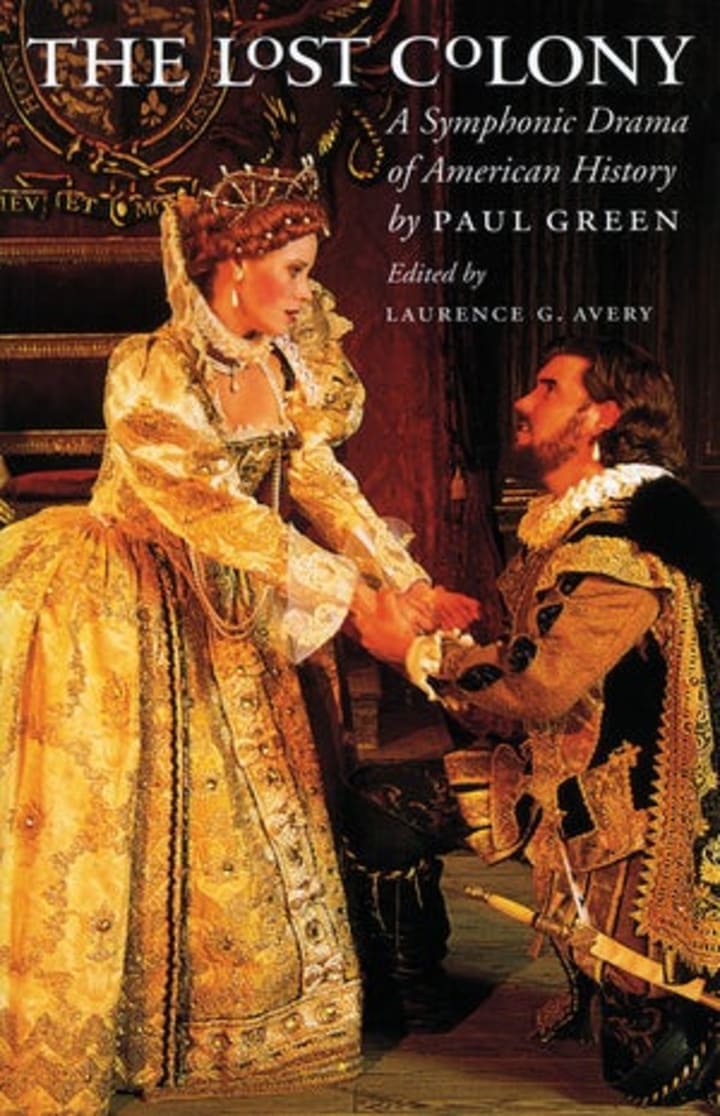
Since 1937, the mysterious Roanoke disappearance has been relived every year in the play entitled, The Lost Colony. It is performed outdoors at Wayside Theatre at Fort Raleigh in North Carolina.
About the Creator
Cynthia Varady
Award-winning writer and creator of the Pandemonium Mystery series. Lover of fairy tales and mythology. Short stories; book chapters; true crime. She/Her.
Keep reading
More stories from Cynthia Varady and writers in Criminal and other communities.
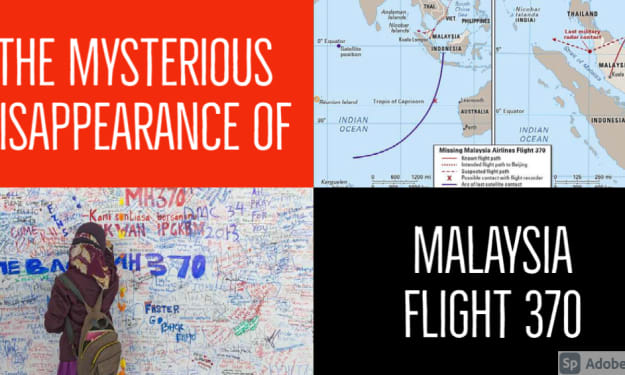
The Disappearance of Malaysia Airlines Flight 370
On March 18, 2014, Malaysia Airlines Flight 370 was scheduled to depart Kuala Lumpur International Airport at 12:35 a.m. and arrive at Beijing Capital International Airport at 6:30 a.m. The aircraft never arrived. Nearly a decade later, we still don't know what happened to MH370 or the circumstances behind its disappearance, but theories abound. Was there a mass-murder-suicide plot, a hijacking, or an onboard fire? Its disappearance remains one of the greatest mysteries in aviation history.
By Cynthia Varady5 years ago in Criminal
Donald Trump and the Iranian File: Policies, Tensions, and Public Questions
Donald Trump and the Iranian File: Policies, Tensions, and Public Questions Donald Trump’s approach to the Iranian file marked one of the most controversial chapters in modern US foreign policy. During his presidency, relations between the United States and Iran shifted dramatically, moving away from diplomacy toward pressure and confrontation. Trump’s decisions reshaped the Middle East landscape, affected global energy markets, and sparked intense debate both inside and outside the United States. Understanding Trump and the Iranian file requires examining his strategy, its consequences, and the questions people most frequently ask.
By America today 7 days ago in Criminal



Comments
There are no comments for this story
Be the first to respond and start the conversation.