
Vanished in the Fog: The London Girl Who Was Never Found
In the heart of the UK’s capital, one girl disappeared without a sound — but everyone heard the silence she left behind.
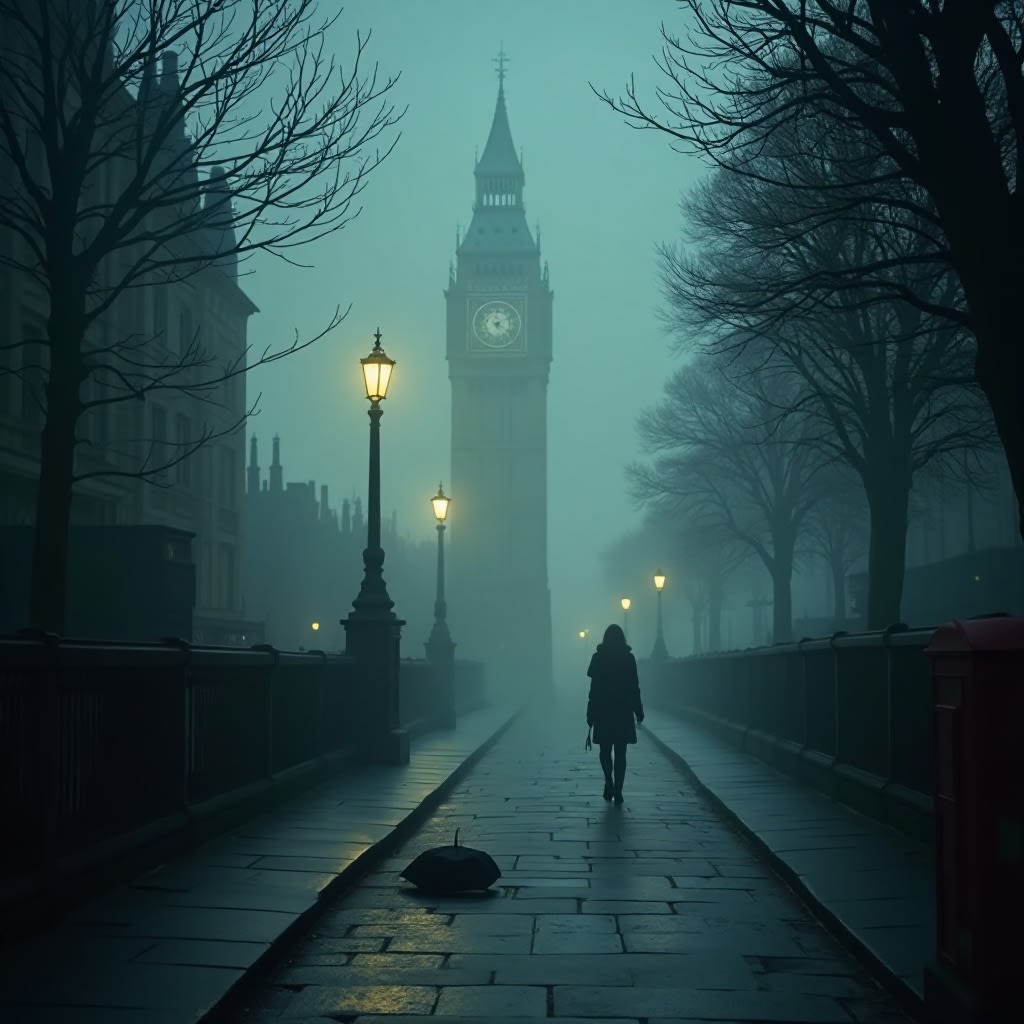
It was a fog-choked morning in late November when 17-year-old Isobel Hart left her flat in Southwark and vanished.
At first, no one noticed. Isobel was quiet, self-contained — the kind of girl who didn’t draw much attention. She wasn’t the sort to stir drama on social media or dominate group chats. Her world was small but stable: her mother, her best friend Ava, her part-time job at a café on Borough High Street, and her notebooks, which she carried everywhere.
The last confirmed sighting of her was at 7:38 a.m., caught on a grainy security camera. She was wearing a navy duffel coat, grey scarf, and Converse trainers. The footage showed her stepping onto the sidewalk near London Bridge Station, disappearing seconds later into the thick morning fog that blanketed the city like a secret.
She was never seen again.
The Hart family lived in a modest flat above a newsagent, a short walk from the river. Isobel’s mother, Marlene, a nurse at Guy’s Hospital, raised her daughter alone after Isobel’s father died in a scaffolding accident when she was six. The two were close in the way single-parent households often are — a quiet symbiosis born out of necessity. But Isobel, by 17, was already becoming her own person. She read Sylvia Plath and Virginia Woolf. She listened to obscure Icelandic bands. She drew strange, haunting charcoal sketches that sometimes left her mother uneasy.
“She had a soft sadness,” Ava once said in an interview. “Not depression, just... depth. Like she could see things the rest of us couldn’t.”
She was supposed to meet Ava that morning for breakfast before school. They’d made plans to study for their A-level English exam. Ava waited at the Pret by the station until nearly 8:30 before texting her:
“Where are you?”
No response.
By 10:00 a.m., when Isobel hadn’t shown up for their first lesson, a few teachers assumed she was ill. But when Marlene returned home from a long shift that evening to find her daughter’s bed still made and her phone charger untouched, she knew something was wrong.
By midnight, the police were called.
At first, officers weren’t overly alarmed. Teenagers go missing. They have fights with friends, break down under school pressure, or just need a break. “She’ll turn up,” someone said. “Give it 24 hours.”
But 24 hours became 48. Then a week. Then a month.
Posters went up across London: “Have You Seen Isobel Hart?” Ava launched a social media campaign, and within days, #FindIsobel began trending. Celebrities amplified the message. Candlelit vigils were held on the South Bank. Her story was featured on BBC London, and The Guardian ran a profile titled “The Girl Who Walked Into the Fog.”
Leads came in. A woman in Camden said she saw a girl matching Isobel’s description on a bus days after she vanished. A security guard in Canary Wharf claimed she asked him for directions. A man in Liverpool swore he’d seen her in a cafe, sketching.
But none of it held.
There were no bank withdrawals. No activity on her phone or social media. Her Oyster card was last used that morning at 7:36 a.m. at Southwark Station. Then — nothing.
She had vanished as completely as breath in the fog.
The investigation deepened. Police scoured her laptop, her phone records, her search history. They found little of note: essays for school, art references, Spotify playlists of moody indie music. One folder labeled “Mirrors” contained scanned pages of her sketchbook — dark, eerie drawings of people with no faces, of crumbling buildings, of a single figure standing in the mist with eyes wide open.
Then came the journal.
Discovered beneath a loose floorboard in her bedroom two weeks into the investigation, it contained entries that read more like poetry than diary. She never named names, never offered direct insight. But there were phrases that struck investigators:
“I feel like I’m living in the gaps between everyone else’s sentences.”
“The city is full of ghosts — some people just don’t know they’re one yet.”
“There’s a place in the fog where everything stops. I think I saw it once when I closed my eyes.”
These entries fueled speculation.
Some said she’d run away. That she was escaping the mundane, the suffocating ordinariness of city life. Others whispered darker theories — that she’d been abducted, trafficked, killed. Rumors spread online that she had a secret boyfriend, a second phone, even ties to an underground cult. None of it was substantiated.
Forensic psychologists suggested she may have had dissociative tendencies — an internal detachment from the world around her. One profiler theorized that Isobel had planned her disappearance meticulously, leaving behind just enough breadcrumbs to ensure she’d be remembered, even if she never intended to return.
Her mother refused to believe any of it.
“She didn’t run away,” Marlene told the press. “She left for school. That’s all. She was in the wrong place, at the wrong time, and something happened. And I won’t stop until I find out what.”
By the second year of her disappearance, most leads had dried up. The case was quietly closed, reclassified as “inactive but unsolved.” The fog that swallowed Isobel had long since lifted, but the city carried the weight of her absence.
The only lasting clue was a drawing.
In 2018, two years after she vanished, a piece of street art appeared on a wall in Shoreditch — unsigned, stenciled in black paint. It showed a girl in a duffel coat walking into a swirl of mist. Her hand was outstretched behind her, fingers just brushing the air.
Beneath it were five words:
“Some girls become the fog.”
The image went viral. Some believed it was by Banksy. Others thought it was the work of Ava, now an art student. She denied it. But the piece sparked renewed interest, and for a time, people spoke of Isobel again. The theories returned. Old interviews resurfaced. A podcast episode dedicated to her case — “Vanished in the Fog” — gained millions of streams.
But no answers followed.
Today, nearly a decade later, her room remains untouched. Her sketchbooks are preserved in boxes. Her case file sits among thousands of others — a girl who walked into the fog and was never seen again.
But Isobel Hart is more than a missing person now. She has become a story London tells itself when the mist rolls low and the streets grow quiet. A reminder of what the city can hide, of how easily someone can vanish even when surrounded by millions.
Sometimes, on foggy mornings, Ava still walks the path Isobel took that day. Past the station, toward the bridge, into the lingering grey.
“I don’t know if she meant to disappear,” Ava says now. “Maybe the world just didn’t hold her the right way. Maybe she slipped through a crack no one else could see.”
Whatever the truth, one thing remains:
The fog that took Isobel never gave her back. And the silence she left behind still echoes through London like a question no one can answer.
About the Creator
Keep reading
More stories from Muhammad Wisal and writers in Criminal and other communities.
Echoes of Justice: Inside the Court of America
Washington, D.C., 7:42 a.m. The sun had barely crept over the horizon, casting long golden beams across the marble steps of the Supreme Court of the United States. It was a cold spring morning, but the air hummed with a certain electricity—as if the wind itself were whispering the significance of what was to come.
By Muhammad Wisal7 months ago in Criminal
In Cold Blood: Anatomy of a True Crime Classic
The True Crime Reader: Truman Capote’s 'In Cold Blood' Welcome to The True Crime Reader, the podcast where literature meets real life—and the line between truth and narrative blurs. I’m your host, and today we’re journeying into the heart of rural 1950s America to examine Truman Capote’s genre-defining work, In Cold Blood. This episode, we’ll peel back the layers of a book that didn’t just recount a murder—it transformed journalism, challenged the ethics of true crime, and left a profound mark on how we tell stories about violence, psychology, and the American Dream.
By Kristen Barenthaler5 days ago in Criminal
The Town That Slept: How Ephrata's Obsession with "Curb Appeal" Hid a House of Horrors
The "Perfect" Borough Ephrata, Pennsylvania, prides itself on its image. It is the home of the historic Ephrata Cloister, a site of religious devotion and discipline. It is a town of "Main Street" revitalization projects, boutique coffee shops, and carefully managed public relations. The Borough Council and its various sub-committees spend hours debating the aesthetics of the town. They want Ephrata to look safe, prosperous, and inviting.
By Sunshine Firecracker5 days ago in Criminal



Comments
There are no comments for this story
Be the first to respond and start the conversation.