
Unraveling the Mystery: The Jack the Ripper Murders in Whitechapel
The Unsolved Case that Terrified London and Continues to Fascinate the World

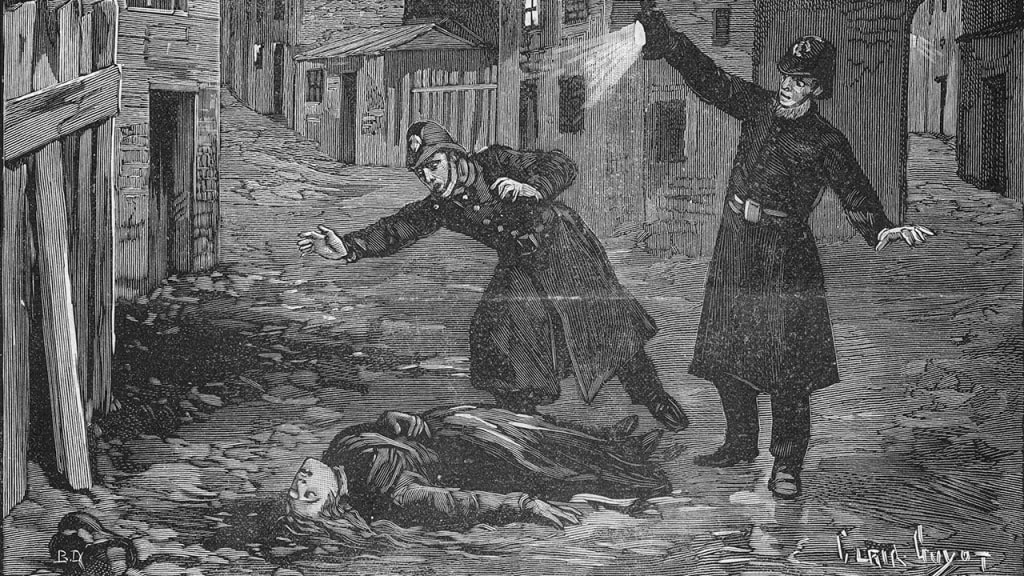
The Jack the Ripper murders, also known as the Whitechapel murders, were a series of brutal and gruesome killings that took place in the Whitechapel district of London in 1888. At least five women were murdered, and their bodies were left mutilated and discarded in public places, sparking fear and panic throughout the city.
The victims of Jack the Ripper were all women, and most of them were prostitutes who frequented the streets of Whitechapel. The first victim was Mary Ann Nichols, who was found dead on August 31, 1888, in a gateway on Buck's Row. She had been stabbed multiple times in the abdomen and throat.
The second victim was Annie Chapman, who was found dead on September 8, 1888, in the backyard of a house on Hanbury Street. She had been disemboweled and had her uterus removed.
The third victim was Elizabeth Stride, who was found dead on September 30, 1888, on Berner Street. She had been stabbed in the neck.
The fourth victim was Catherine Eddowes, who was found dead on the same night as Stride, in Mitre Square. She had been mutilated, with her throat cut and her intestines removed.
The fifth and final victim was Mary Jane Kelly, who was found dead on November 9, 1888, in her room on Dorset Street. She had been mutilated beyond recognition, with her face completely disfigured.
The killings were attributed to an unidentified perpetrator known as Jack the Ripper. Despite the efforts of the police and the public, the killer was never caught, and his identity remains a mystery to this day.
The Jack the Ripper murders captured the attention of the public and the media, both in London and around the world. The brutality and violence of the killings, as well as the fact that the killer remained at large, created a sense of fear and paranoia in the city.
The police investigation into the Jack the Ripper murders was one of the largest and most extensive in British history at the time. The investigation was led by Detective Inspector Frederick Abberline, who worked tirelessly to solve the case.
Abberline and his team interviewed hundreds of witnesses and suspects, and they collected and analyzed vast amounts of forensic evidence. However, despite their efforts, they were never able to identify Jack the Ripper or bring him to justice.
One of the reasons that the Jack the Ripper murders remain unsolved is the lack of reliable evidence. Many of the crime scenes were contaminated by curious onlookers, and much of the evidence was lost or destroyed over time.
Another challenge that the police faced was the fact that the killer seemed to have an intimate knowledge of the area and was able to blend in with the local population. This made it difficult for the police to identify potential suspects or track down the killer.
In addition, the media coverage of the case created a public frenzy and led to the circulation of many false leads and rumors. This made it even more difficult for the police to separate fact from fiction and to focus on the most credible leads.
Over the years, many theories and suspects have been proposed in connection with the Jack the Ripper murders. Some have suggested that the killer was a doctor or a member of the royal family, while others have pointed to specific individuals who were active in the Whitechapel area at the time.
Some of the most popular theories are:
Aaron Kosminski: One of the most famous suspects in the case, Kosminski was a Polish immigrant who lived in Whitechapel at the time of the murders. He was known to have a history of mental illness and had been a patient at a local asylum. In 2019, DNA evidence was used to link Kosminski to one of the victims, Catherine Eddowes, but the evidence has been disputed by some experts.
Walter Sickert: Sickert was a British artist who lived in Whitechapel at the time of the murders. Some have suggested that he may have been Jack the Ripper, as his paintings contain some disturbing and violent imagery. However, there is no concrete evidence linking Sickert to the crimes.
Montague John Druitt: Druitt was a barrister and teacher who committed suicide shortly after the final murder attributed to Jack the Ripper. Some have speculated that he may have been the killer, but there is no hard evidence to support this theory.
Francis Tumblety: Tumblety was an American quack doctor who was in London at the time of the murders. He was known to have a hatred of women and a collection of uteri, which some have suggested may have belonged to the victims. However, there is no concrete evidence linking Tumblety to the crimes.
Masonic conspiracy: Some have suggested that Jack the Ripper was part of a Masonic conspiracy, and that the killings were part of a larger ritualistic plot. However, there is no evidence to support this theory, and it is widely considered to be a fringe idea.
Multiple killers: Some have suggested that there may have been more than one killer responsible for the Jack the Ripper murders. This theory is based on the fact that the killings differed in some ways, such as the level of mutilation and the method of attack.
Despite the many theories and speculations, however, the identity of Jack the Ripper remains a mystery. The case has become one of the most famous and enduring unsolved mysteries in history, and it continues to fascinate and intrigue people around the world.
In recent years, there have been new efforts to solve the case using modern forensic techniques and advanced technology. Some researchers have attempted to analyze the DNA evidence from the crime scenes, while others have used geographic profiling to try to identify potential suspects.
One of the most promising new leads in the case came in 2014, when a shawl believed to have belonged to Catherine Eddowes was discovered in a private collection. The shawl was stained with what appeared to be blood and semen, and it was suggested that the DNA evidence could be used to identify the killer.
However, subsequent analysis of the DNA evidence has been inconclusive, and the identity of Jack the Ripper remains a mystery.
Despite the fact that the killer was never caught, the Jack the Ripper murders had a lasting impact on society and law enforcement. The case highlighted the need for better forensic techniques and investigative methods, and it led to the creation of the Criminal Investigation Department (CID) within the Metropolitan Police.
The case also had a profound impact on the public consciousness, inspiring countless books, movies, and television shows. The legend of Jack the Ripper has become a cultural icon, and his name has become synonymous with violence, brutality, and mystery.
Today, the sites of the Jack the Ripper murders are popular tourist destinations, attracting visitors from around the world who are fascinated by the history and mystery of the case. The area around Whitechapel has been transformed over the years, but the legacy of Jack the Ripper lives on, reminding us of the enduring power of a great unsolved mystery.
About the Creator
Keerthana Thirumalairaj
An Independent Solitude girl, who recently found the interests in writings and converts Facts and imaginations into writings.
Keep reading
More stories from Keerthana Thirumalairaj and writers in Criminal and other communities.
The Isdal Woman
Introduction The Isdal Woman, also known as the "Unknown Woman of Isdal," is one of the most intriguing and mysterious cases of an unidentified person in the history of Norway. This case, which dates back to 1970, has remained unsolved for more than half a century, leaving behind a plethora of unanswered questions and theories.
By Keerthana Thirumalairaj3 years ago in Criminal
The Shocking Case of Brian Stewart:
The Shocking Case of Brian Stewart: When a Father Injected His Own Son with HIV In 1992, the quiet city of St. Charles County, Missouri, became the backdrop for one of the most chilling and unsettling crimes in modern medical history. Brian Stewart, a trained phlebotomist, used his knowledge and access to medical resources to deliberately harm his infant son. The case is not only a tragic story of parental betrayal but also a cautionary tale about the vulnerabilities inherent in medical access, the motivations that drive horrifying decisions, and the resilience of the human spirit.
By Dakota Denise a day ago in Criminal
Oil at War: The Strait of Hormuz Crisis and the Rising Iran–Israel–US Conflict
Oil at War: The Strait of Hormuz Crisis and the Rising Iran–Israel–US Conflict The Middle East has once again become the center of global attention as tensions between Iran, Israel, and the United States intensify. At the heart of this crisis lies one of the world’s most strategic waterways: the Strait of Hormuz. This narrow maritime corridor carries a huge portion of the world’s oil supply, and any disruption here has the power to shake the global economy.
By Wings of Time about 15 hours ago in Criminal
Hottest in the Office
Dear Rafi, You’re very distracting to work around. For the first second I saw you the other day, I thought you were some type of executive. It took a moment to realize no, you were just the new guy, dressed up for the job he wants. Be still, my heart.
By Gabriel Shames6 days ago in Pride



Comments
There are no comments for this story
Be the first to respond and start the conversation.