
Too Beautiful to Keep: The Crime of Cutting Noses in the Name of Honor
In the tribal regions, beauty once became a curse — and for some women, it cost them their face, their marriage, and their future.

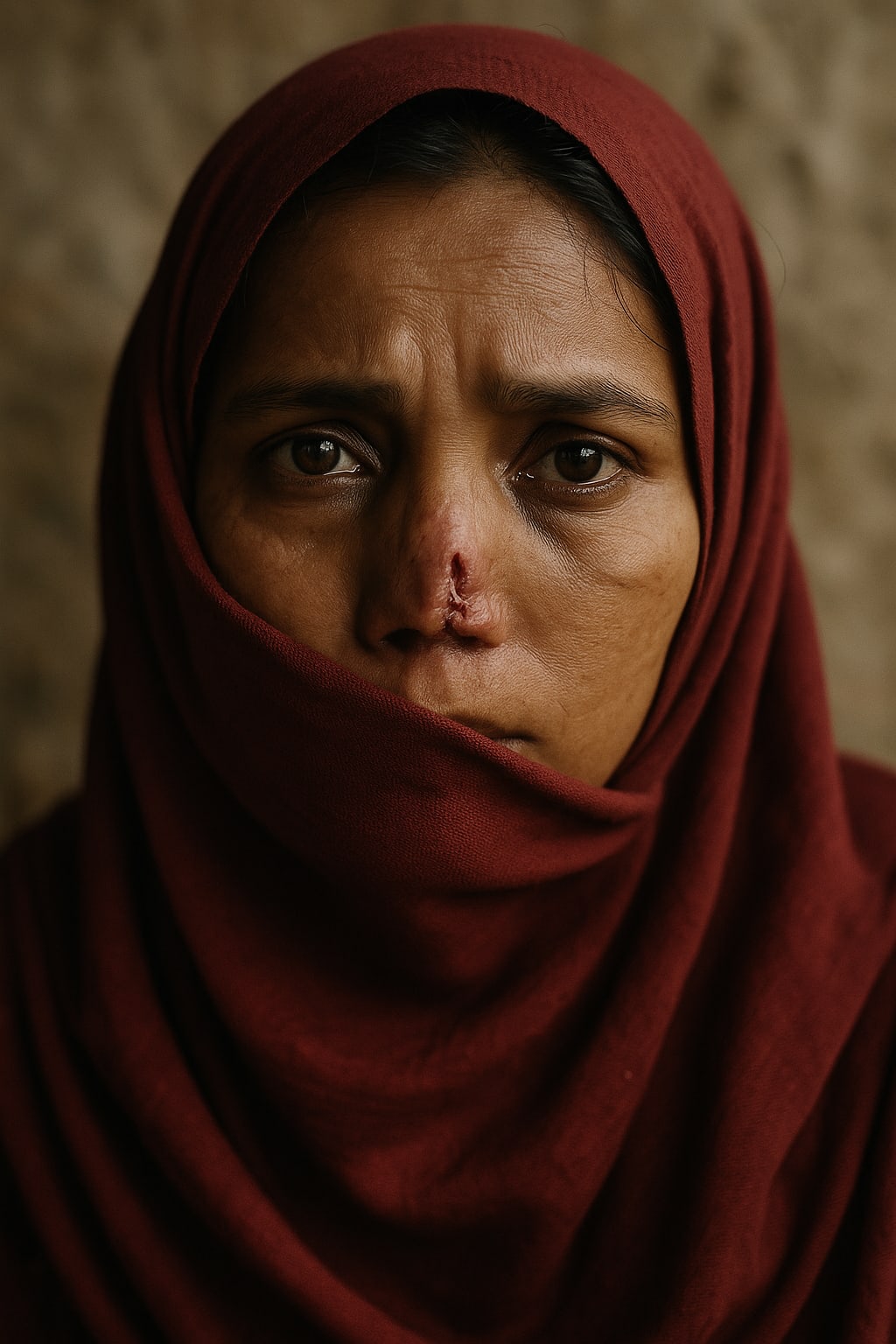
In some far-off tribal lands where mountains meet tradition, a dark chapter of history whispers through the silence. It is not written in textbooks. It is not shown in films. But it is real — and heartbreaking.
This is the story of women who were punished for being beautiful.
Yes, you read that right. Not for cheating. Not for lying. Not for anything they did wrong. But simply because they were too beautiful — and that beauty made some men feel insecure, jealous, or afraid.
A Hidden Crime
Many years ago, in some tribal areas, a horrifying act took place behind closed doors. Some men, instead of protecting their wives, would cut off their noses.
The reason?
Because they thought their wives were too attractive, and other men might look at them.
Because they wanted to “protect their honor.”
Because they believed that disfiguring a woman would stop others from noticing her — and would make her completely their own.
This act was not just cruel — it was criminal.
The Fear Behind Control
In many traditional societies, especially in old tribal systems, a woman’s actions were seen as the family's honor. If she was admired, spoken to, or even looked at, it was often blamed on her — not the men who stared.
Some husbands were so consumed by fear and jealousy that they took the most violent step possible: they cut off their wife’s nose.
It was a way of saying: “If others find you beautiful, I will take that beauty away.”
This is not love.
This is not culture.
This is a crime.
Not the Whole Society — But a Real Part
It is important to say that not all people from tribal areas supported this. Many families were respectful, loving, and proud of their women. But in some areas, especially where old traditions were twisted into tools of control, these crimes happened — sometimes in silence, sometimes with pride.
And the saddest part? Many of the women who suffered stayed quiet. Some believed they had no choice. Others feared even worse punishment. Very few ever got the chance to speak for themselves.
A Ruler’s Justice
There was a time, however, when a brave local ruler decided that enough was enough.
He passed a law to fight back against this cruelty.
According to the order:
- Any man who cut his wife’s nose would have to pay a fine of Rs. 2,000 — which was a huge amount of money at that time.
- He would also face 7 years of jail time.
- And most importantly, he would be forced to free the woman from marriage — because he no longer deserved her.
This law was not just about punishment — it was about sending a strong message:
“If you harm a woman, you will lose her. You cannot keep what you choose to destroy.”
This ruling became a turning point in history. It showed that even in the hardest places, justice could grow.
Real Women, Real Wounds
Some of these women survived. They lived with scars — not just on their faces, but deep in their hearts. Some of them hid behind veils for the rest of their lives. Others, years later, gathered courage to speak in interviews and documentaries.
Their stories are not just stories. They are evidence of what silence can hide, and what power can destroy.
One woman shared, “He said I was too pretty. So he made sure no one would ever look at me again.”
What kind of world does that?
The Present Is Learning
Thankfully, times have changed. These acts are now seen for what they truly are — brutal crimes.
Human rights groups, local activists, and even ordinary people now speak out. In many tribal regions, girls are going to school. Women are starting businesses. Fear is slowly being replaced by hope.
But we must still tell these stories. Because somewhere in the world, someone might still believe that honor means control. That beauty is a threat. That a woman’s face is his to claim.
And we must remind them:
A woman’s face is not a threat. Her beauty is not your burden. Her life is not your property.
Author’s Note:
This article is based on real oral histories and past rulings from tribal areas. It is a tribute to the brave women who suffered in silence — and to those who still rise, with or without a nose, with or without fear.
About the Creator
Muhammad Adil
Master’s graduate with a curious mind and a passion for storytelling. I write on a wide range of topics—with a keen eye on current affairs, society, and everyday experiences. Always exploring, always questioning.
Keep reading
More stories from Muhammad Adil and writers in Criminal and other communities.
The View Was Beautiful. But I Was Not in It
The view was perfect. From the top of Hill Nine, you could see the entire valley below — green fields stretching like a velvet cloth, a small lake shining like a silver mirror, and tiny houses scattered like children's toys. The sky was a soft blue, almost unreal, and the clouds looked like they had been painted with careful strokes.
By Muhammad Adil6 months ago in Fiction




Comments
There are no comments for this story
Be the first to respond and start the conversation.