
Timeline of Scottsboro Boys
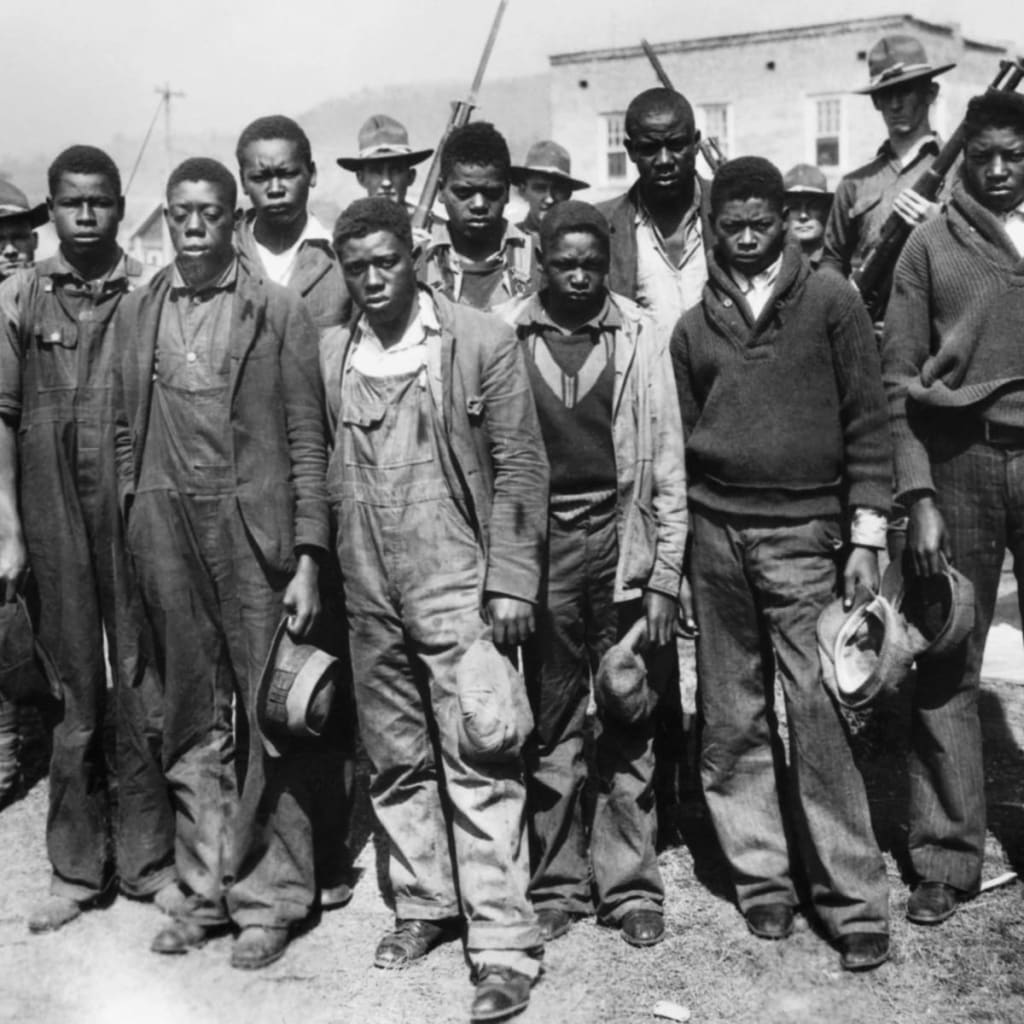
March 25, 1931 Nine African American boys were wrongfully accused of crime that sentenced them to death.

March 25, 1931
Posse stops Southern Railroad train in Paint Rock, Alabama. Scottsboro boys are arrested on charges of assault. Rape charges are added against all nine boys after accusations are made by Victoria Price and Ruby Bates.
March 26, 1931
Scottsboro boys are nearly lynched by crowd of over 100 gathered around Scottsboro's jail.
March 30, 1931
Grand jury indicts the nine Scottsboro boys for rape.
April 6, 1931
Trials begin in Scottboro before Judge A. E. Hawkins.
April 7-9,1931
Clarence Norris, Charlie Weems, Haywood Patterson, Olen Montgomery, Ozie Powell, Willie Roberson, Eugene Williams, and Andy Wright are tried and convicted, and sentenced to death. The trial of Roy Wright ends in a mistrial when some jurors hold out for a death sentence even though the prosecution asked for life imprisonment.
April -Dec., 1931
NAACP and International Labor Defense (ILD) battle for the right to represent the Scottsboro boys.
June 22, 1931
Executions are stayed pending appeal to Alabama Supreme Court.
July 10, 1931
On the date first set for their executions, the Scottsboro boys listen to the execution of Willie Stokes, the first of ten blacks to be executed at the prison over the next ten years. After hearing gruesome reports of the execution, many of the boys report nightmares or sleepless nights.
January, 1932
NAACP withdraws from case.
January 5, 1932
Ruby Bates, in a letter to a Earl Streetman, denies that she was raped.
March, 1932
Alabama Supreme Court, by a vote of 6-1, affirms the convictions of seven of the boys. The conviction of Eugene Williams is reversed on the grounds that he was a juvenile under state law in 1931.
May, 1932
The U. S. Supreme Court announces that it will review the Scottsboro cases.
November, 1932
The Supreme Court, by a vote of 7-2, reverses the convictions of the Scottsboro boys in Powell vs. Alabama. Grounds for reversal are that Alabama failed to provide adequate assistance of counsel as required by the due process clause of the 14th Amendment.
January, 1933
Samuel S. Leibowitz, a New York lawyer, is retained by the ILD to defend the Scottsboro boys.
March 27, 1933
Haywood Patterson's second trial begins in Decatur before judge James Horton.
April 9, 1933
Haywood Patterson found guilty by jury and sentenced to death in the electric chair.
April 18, 1933
Judge Horton postpones the trials of the other Scottsboro boys because of dangerously high local tensions.
May 7, 1933
In one of many protests around the nation, thousands march in Washington protesting the Alabama trials
June 22, 1933
Judge Horton sets aside Haywood Patterson's conviction and grants a new trial.
October 20, 1933
The Scottsboro cases are removed from Judge Horton's jurisdiction and transferred to Judge William Callahan's court.
Nov.-Dec., 1933
Haywood Patterson and Clarence Norris are tried for rape, convicted, and sentenced to death.
June 12, 1934
Judge Horton, who had faced no opposition in his previous race, is defeated in his bid for re-election.
June, 1934
Alabama Supreme Court affirms the convictions of Haywood and Norris.
October, 1934
Two lawyers are charged with attempting to bribe Victoria Price in order to change her testimony.
January, 1935
The U. S. Supreme Court agrees to review the most recent Scottsboro convictions.
April 1, 1935
The U.S. Supreme Court overturns the convictions of Norris and Patterson because African Americans were excluded from sitting on the juries in their trials. Patterson v. State of Alabama, 294 U.S. 600 (1935); Norris v. State of Alabama, 294 U.S. 587 (1935)
December, 1935
The Scottsboro Defense Committee is organized.
January 23, 1936
Haywood Patterson is convicted for a fourth time of rape and is sentenced to 75 years in prison.
January 24, 1936
Ozzie Powell is shot in the head by Sheriff Jay Sandlin while attacking Deputy Sheriff Edgar Blalock.
December, 1936
Thomas Knight meets with Samuel Leibowitz in New York to discuss a possible compromise.
June 14, 1937
Conviction of Haywood Patterson is upheld by the Alabama Supreme Court.
July, 1937
Clarence Norris is convicted of rape and sentenced to death. Andy Wright is convicted and sentenced to 99 years for rape. Charlie Weems is convicted and sentenced to 75 years. Ozzie Powell pleads guilty to assaulting the sheriff and is sentenced to 20 years.
July 24, 1937
Roy Wright, Eugene Williams, Olen Montgomery and Willie Roberson were released after all charges were dropped against them
June, 1938
Alabama Supreme Court upholds the death sentence for Clarence Norris.
July 5, 1938
Clarence Norris's death sentence is reduced to life in prison by Governor Graves.
August, 1938
Alabama Pardon Board declines to pardon Patterson and Powell.
October, 1938
Pardon Board denies the pardon applications of Norris, Weems, and Roy Wright.
October, 1938
Governor Graves interviews Scottsboro boys.
November, 1938
Governor Graves denies all pardon applications.
September, 1943
Charlie Weems is paroled.
January, 1944
Norris and Andy Wright are paroled.
September, 1944 Norris and Wright leave Montgomery in violation of their paroles.
October, 1944
Norris is returned to prison.
June, 1946
Ozzie Powell is paroled.
September, 1946
Norris, paroled again, leaves Alabama.
October, 1946
Andy Wright is returned to Kilby prison.
July, 1948
Haywood Patterson escapes from prison.
June, 1950
Andy Wright is paroled. FBI arrests Patterson, but Michigan's governor refuses extradition to Alabama.
December, 1950
Patterson is involved in a barroom fight resulting in the death of another man. Haywood is charged with murder.
September, 1951
Patterson is convicted of manslaughter and sentenced to 6 to 15 years. He dies of cancer less than a year later.
October, 1976
Clarence Norris is pardoned by Alabama Governor George Wallace.
July, 1977
Victoria Price's suit against NBC for its movie "Judge Horton and the Scottsboro Boys," which she claimed defamed her and invaded her privacy, is dismissed. Price dies five years later.
Jan. 23, 1989
Clarence Norris, the last surviving Scottsboro boy, dies at age 76.
April 19, 2013
Alabama Governor Robert Bentley signs legislation officially pardoning and exonerating all nine Scottsboro Boys.
Source
All sources goes to Famous Trails
Coming Soon BOYS LIKE US

A one act play explores an imaginary dream sequence where the Exonerated Central Park Five (Kevin Richardson, Raymond Santana Jr., Antron McCray, Yusef Salaam, and Korey Wise.) meets the Scottsboro Boys (Haywood Patterson, Charlie Weems, Ozie Powell, Clarence Norris, Olen Montgomery, Willie Roberson, Eugene Williams, Andy Wright, and Leroy “Roy” Wright) from the 1930s who were accused of raping two white women in Alabama. They befriended each other and shared their similar tragic injustice events with each other and the audience.
About the Creator
Keep reading
More stories from Gladys W. Muturi and writers in Criminal and other communities.
Brock Turner & Christopher Belter
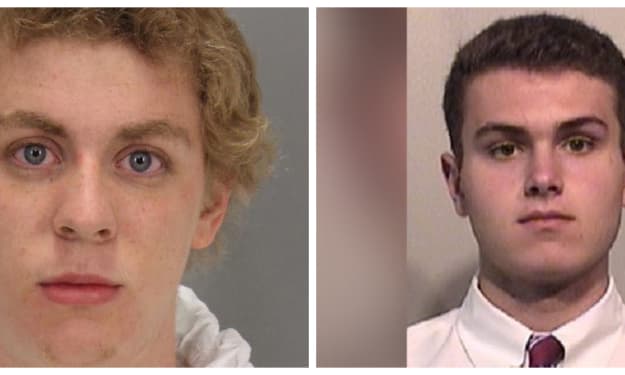
Two disgusting convicted Caucasian young men, both ages 19 & 20, both committed a serious crime. Brock Turner, a promising Stanford athlete sexually assault an unconscious woman at the campus. Another, Christopher Belter, a New York man from a wealthy family committed rape and sexual assault with four teenage girls at the home he shares with his rich parents. Turner was sentenced to three months in prison and was later was released on good behavior. While Belter was given no prison time after he pleaded guilty.
By Gladys W. Muturi4 years ago in Criminal
Push To Prevent Catapults Being Bought By Children
MP’s have been warned to put new legislation in place that will help to close a loophole in the law which allows people including children to legally buy weapons which is capable of killing wildlife. The alert was issued during a briefing in parliament which set out growing evidence that catapults were being misused against animals and to damage other people’s private property. The Naturewatch Foundation who hosted the session expanded on their message that at the moment there is a completely unregulated system where people of any age can buy weapons and there are no meaningful controls on sale or power.
By Ashish Prabhu3 days ago in Criminal


Comments
There are no comments for this story
Be the first to respond and start the conversation.