
Thief who stole $3.5 billion but lost all in one phone call
Thief who stole $3.5 billion but lost all in one phone call

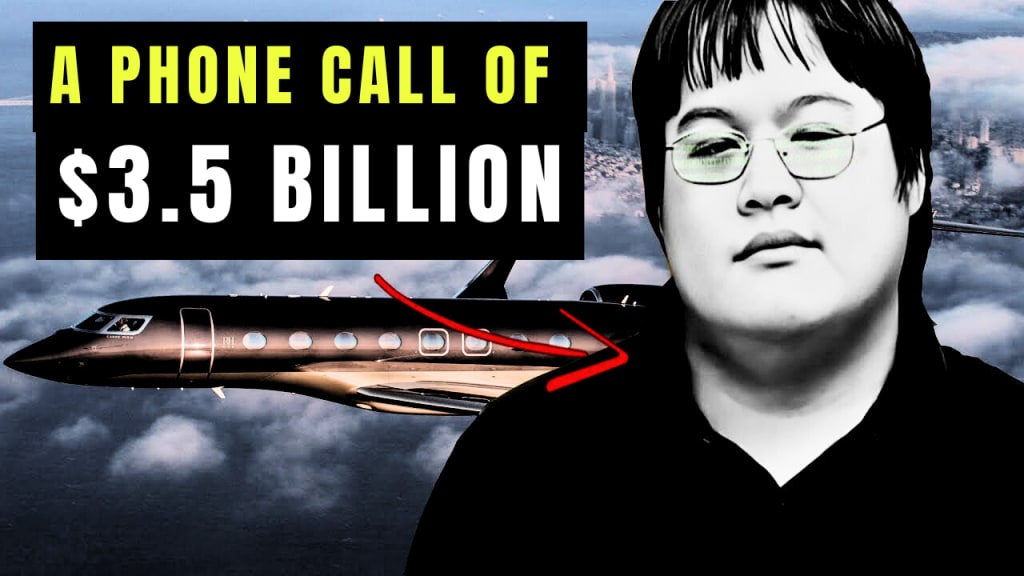
This is the story of a theft that didn’t let one of the world’s top investigation agencies breathe easy for six years. It wasn’t just any theft—it was worth ₹29,000 crores (around $3.5 billion).
How did a single phone call bring the thief down?
How did he hide such a massive amount in a small Cheetos container?
And most importantly, after the money was recovered, why did the actual owners of the money refuse to claim it?
It began on September 13, 2019.
A young man named Jimmy Zhong made a 911 emergency call.
It was a phone call that would soon land him in massive trouble.
Jimmy lived in Athens, Georgia, USA, and he had called the police to report a burglary at his home.
When asked, he told them that $400,000 had been stolen.
The officer was shocked to hear about such a large amount.
Jimmy had a high-tech security system at his home, and he even had CCTV footage of the masked burglar.
Jimmy was a University of Georgia graduate, known among his friends as a “party boy.”
He used to blow up to $500,000 per party—around ₹1.25 crores.
At bars, he’d buy drinks for everyone.
Most of his friends stayed with him only because of money and lavish lifestyle.
Once, just to watch his favorite football team play, he chartered a private jet to fly his friends to Los Angeles.
In short—Jimmy had way too much money for someone his age, more than he could handle.
When police failed to find the burglar, Jimmy hired a private investigator named Martinelli.
The detective suspected that someone from Jimmy’s inner circle was behind the theft.
To investigate further, he examined Jimmy’s social media, lifestyle, and bank transactions.
Everyone believed Jimmy’s claim that he was a Bitcoin trader and crypto investor, especially given how fast Bitcoin prices were rising at the time.
But Martinelli was suspicious.
The burglar in the footage seemed to know exactly when Jimmy wouldn’t be home—suggesting it was someone close.
Jimmy had prior interactions with Athens police—he’d been caught with cocaine earlier.
Since then, he had maintained good relations with law enforcement.
Sometimes, police even used his CCTV footage for other cases.
But now, this 911 call made him a prime suspect in their eyes.
At the same time, the Regional Cyber Crime Unit learned of the theft.
They had been investigating the infamous Silk Road crypto heist for the last 7 years—without a single breakthrough.
For context, Silk Road was an illegal dark web marketplace for drugs, weapons, and more—where transactions were done in Bitcoin.
In 2012, the site was hacked and 51,680 bitcoins were stolen.
Due to its illegal nature, no one reported the theft.
In 2013, the owner was caught, and the FBI seized the site and took control of 170,000 bitcoins.
But those 51,680 missing bitcoins remained unaccounted for.
The FBI believed the Silk Road owner might be hiding them, but had no proof.
While blockchain transactions are public, the owners remain anonymous—so the trail always went cold.
Now, the Cyber Crime Unit suspected that Jimmy Zhong may be linked to the stolen Silk Road bitcoins.
To investigate, police visited Jimmy’s home again.
Pretending to follow up on the $400,000 burglary case, they gained his trust.
Three plainclothes officers with bodycams visited him.
During casual conversation, they asked about his income source.
Jimmy proudly showed them his room, which had two Bitcoin mining machines.
But the team included a blockchain expert, who instantly realized that two or three mining rigs couldn’t explain Jimmy’s lavish spending.
While distracting Jimmy, an officer copied the Bitcoin address from his laptop.
This address had no large balance, but its transaction history matched the stolen Silk Road bitcoins.
Now, they had solid evidence that Jimmy was connected to the Silk Road heist.
All that was left was to find the 51,000 missing bitcoins.
The officers visited Jimmy again—this time with a search warrant.
Jimmy panicked.
They checked every part of the house—even tapping tiles in search of a hidden compartment.
Finally, they found a Cheetos snack container.
Inside it, under a towel, they discovered a small computer chip—a Bitcoin hardware wallet.
That wallet contained 51,680 bitcoins, worth $3.5 billion in 2020.
Jimmy was caught red-handed.
Ironically, in trying to catch a $400,000 thief, he ended up losing billions.
Jimmy confessed everything.
He admitted he used Silk Road to buy drugs.
In 2012, while withdrawing his own Bitcoins, he spotted a loophole in the website.
Being technically savvy, he exploited the flaw to withdraw other users’ bitcoins.
When the Silk Road owner realized this, he messaged Jimmy privately.
Jimmy explained the loophole, and the owner forgave the theft, knowing he couldn’t report it legally.
In 2023, Jimmy Zhong was sentenced to 1 year and 1 day in prison for wire fraud.
This became one of the biggest Bitcoin heists in U.S. history.
Had Jimmy not called 911 that day, he might still be enjoying life with all that money.
But that one phone call brought him crashing down from the skies.
What happened to the $3.5 billion in seized Bitcoin?
The FBI published a notice inviting rightful owners to come forward.
But not a single person claimed it.
Why?
Because anyone stepping up would be admitting to having an account on Silk Road—a marketplace for illegal activities.
So, the funds remain unclaimed, a reminder of the deep, digital underworld that exists just beneath the surface.
About the Creator
Keep reading
More stories from Jehanzeb Khan and writers in Criminal and other communities.
The Man Who Wouldn’t Die
In the early 1930s, New York City was drowning in despair. The Great Depression had turned its once-bustling streets into corridors of hunger and hopelessness. Soup kitchens snaked around blocks. Children begged on corners. Men who once held steady jobs now wandered the boroughs, hollow-eyed and aimless.
By Jehanzeb Khan6 months ago in Criminal
The $1 Deed: Did Jonathan Gerlach Transfer His Ephrata Property to Hide Assets?
The Paper Trail While the investigation into the Mount Moriah Cemetery grave robberies was quietly building, Jonathan Gerlach was already making moves to separate himself from his most valuable asset.
By Sunshine Firecracker3 days ago in Criminal



Comments (1)
wow amazing